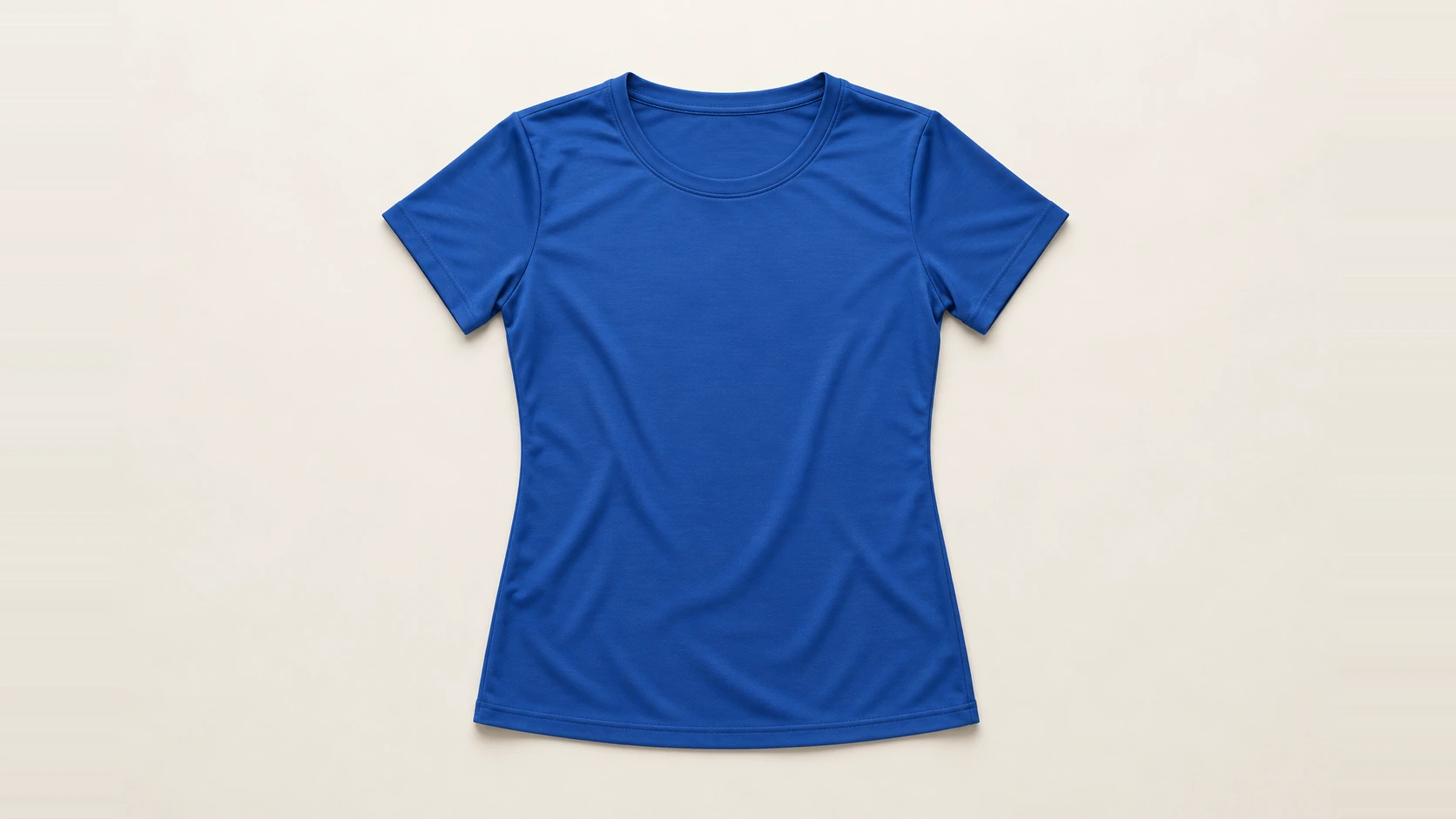
Team 365 TT11W wholesale evaluation should begin with the exact received shirt, the roster brief, and a production-equivalent decoration test. The current Beytees product page describes a lightweight 100% polyester interlock women’s performance T-shirt with a team fit, cationic dyes for brightness and color fastness, moisture-wicking wording, UPF 40+, a changing label format, and facility-level FLA certification. Those published details help buyers screen the style, but they do not prove one decoration method, one fit result, or one finished-program outcome.
This guide turns that specification set into a practical qualification workflow for decorators, schools, clubs, leagues, event teams, and branded activewear programs. Use it to inspect a sample, test artwork, map wearer needs, document label differences, and create repeatable reorder controls without treating a catalog statement as a production guarantee.
Quick Answer: Is the TT11W a Useful Teamwear Candidate?
The TT11W is worth sampling when a brief calls for a lightweight women’s-cut polyester performance tee and the buyer is prepared to qualify fit and decoration. Beytees publishes 3.5 oz/yd² for the US, 5.8 oz/L yd for Canada, 100% polyester interlock, team fit, cationic dyes, moisture-wicking language, and UPF 40+. These are model facts from the live Team 365 TT11W product page, which is the controlling specification source for this guide.
A useful buying decision still depends on evidence from the exact shirt in hand. Test representative wearers, artwork coverage, equipment access, heat response, ink or transfer behavior, laundering, and label treatment before releasing a decorated run. Use Beytees’ performance T-shirt selection guide for broader category comparison, while keeping the TT11W approval tied to this model.
TT11W Specifications at a Glance
| Published item | Current Beytees wording | Buyer control |
|---|---|---|
| Style | Team 365 TT11W Women’s Zone Performance T-Shirt | Match the received style code and purchase record |
| Fabric | 100% polyester interlock | Read the received label and inspect the actual surface |
| Weight | 3.5 oz/yd² US and 5.8 oz/L yd CA | Keep the market-specific notation in the product record |
| Fit wording | Team fit | Approve on representative wearers rather than inferring measurements |
| Dye wording | Cationic dyes for brightness and color fastness | Test the chosen shirt and decoration combination |
| Moisture statement | Moisture-wicking performance pulls sweat away from skin | Treat as seller wording, not a finished-program guarantee |
| Sun-related statement | UPF 40+ | Preserve the exact wording and avoid extending it to unsupported uses |
| Label transition | Transitioning from heat-seal label to tear-away label | Record which label format each received unit carries |
| Facility statement | Made in a facility that is FLA certified | Describe it as a facility statement, not a product certification |
The weight values are two regional expressions published together, not evidence of two different constructions. Do not convert or “correct” one notation in customer copy without a documented reason. Keep the original product-page language in the purchasing file and record any received-label wording separately.
The direct Team 365 catalog route currently redirects to S&S Activewear and returns HTTP 403. It is therefore excluded from this article’s link set and is not used to support any specification. The exact Beytees page is the sole authoritative live product source here.
Women’s Team Fit and Roster Qualification
“Team fit” is useful positioning, but it is not a measurement chart, a universal-fit promise, or proof that one roster ratio will work for every group. A women’s-cut performance tee can interact with shoulder shape, chest ease, sleeve opening, torso length, layering, and movement differently across wearers. Qualify the model against the actual activity and uniform policy rather than translating the fit label into an unsupported outcome.
Build a wearer panel that represents the program’s real range and intended underlayers. Ask participants to reach, rotate, bend, sit, and perform role-specific motions. Record comfort feedback, mobility, hem behavior, sleeve feel, neckline position, artwork distortion, and any request to change the proposed roster allocation. Preserve individual privacy by recording fit decisions rather than unnecessary personal detail.
For a school or club program, separate the style decision from quantity planning. Beytees’ schools and teams bulk-ordering guide offers broader program context, but the TT11W roster should be based on approved samples and a written substitution rule. Do not swap another women’s or unisex shirt merely because a listed label sounds similar.
Decoration Decision Matrix for the TT11W
Polyester interlock, low published weight, cationic dye wording, and performance positioning all make process control important. They do not guarantee sublimation, DTF, another heat transfer, or screen printing. Each method introduces different heat, pressure, opacity, hand, registration, and laundering questions. The correct choice comes from the artwork, shirt, equipment, and acceptance standard working together.
| Method under review | Why a buyer may test it | Main qualification questions | Release evidence |
|---|---|---|---|
| Sublimation | Polyester construction may make it a candidate | Artwork color, shirt shade, heat response, migration, visibility, and hand | Approved decorated sample after laundering and wear review |
| DTF or other transfer | Can support detailed or multicolor artwork | Adhesion, edge quality, press marks, opacity, stretch, hand, and heat effect | Recorded transfer system, equipment, placement, and sample result |
| Screen printing | May suit repeat team marks and controlled spot colors | Ink selection, migration control, cure verification, opacity, detail, and hand | Documented ink system and production-equivalent sample |
| Mixed roster workflow | One program may include several garment styles | Visual consistency across different fabrics, cuts, and process settings | Separate approval for every garment and decoration configuration |
Start artwork planning from a measured received sample. Confirm seam, collar, sleeve, side, and curvature clearances on the exact placement. The blank T-shirt weight guide can help frame equipment and hand considerations, but it does not replace a TT11W test.
Sublimation Qualification Without Assumptions
The published 100% polyester construction makes sublimation a reasonable process to investigate, not an automatic approval. Sublimation results depend on shirt shade, artwork color, press behavior, substrate response, and the buyer’s visibility standard. A design that reads clearly on one sample may not retain the intended contrast on another shirt shade or under different production conditions.
Use a controlled test file containing the real artwork, critical brand colors, fine detail, gradients when relevant, and an identification mark for the trial. Inspect color appearance, sharpness, alignment, show-through, gloss, texture, scorching, press marks, dimensional change, and any unexpected dye movement. Review the sample under the lighting used for approval and after the documented laundering cycle.
Keep the process decision specific. Record the shirt identifier, received label, shirt shade, artwork revision, transfer paper and ink system, equipment identity, placement references, operator, and acceptance findings. Follow the current equipment and consumable instructions rather than copying settings from another blank. Beytees’ polyester sublimation buying guide provides category-level background, while the physical TT11W sample remains the approval authority.
DTF and Heat-Transfer Qualification
DTF and related transfer systems should be treated as test workflows. No exact time, temperature, pressure, peel, post-press, or wash formula is approved by the product facts used here. Begin with the current instructions for the chosen transfer system and calibrated equipment, then use the lowest-risk test plan your production lead considers appropriate for the exact shirt.
Inspect adhesion, edge lift, press gloss, platen or seam marks, distortion, stretch recovery, opacity, color interaction, surface feel, and artwork readability. Lightweight fabric can make a large, rigid decoration feel different from a compact mark, so test the planned physical dimensions rather than a convenient miniature. Compare the decorated sample with an undecorated control.
The Beytees DTF blank-shirt guide can support method screening. It does not certify the TT11W, a particular transfer, or a finished result. Retain the approved sample with the transfer batch or material identity, equipment, artwork revision, placement, test observations, laundering record, and QC limits.
Screen-Printing Qualification
Screen printing can be evaluated for team marks, sponsor layouts, staff identifiers, and repeat artwork, but polyester requires a deliberate production trial. Do not assume a standard cotton workflow will control opacity, cure, hand, or dye interaction on the TT11W. The cationic dye statement is a product fact, not permission to skip migration and heat checks.
Build the trial around the actual artwork and shirt. Document the selected ink system, screens, underbase decision, flash approach, cure-verification method, print order, placement, and inspection criteria. Review small text, fine lines, solid areas, registration, surface feel, shade interaction, and the appearance of the garment around the printed area. Launder using the written test basis and inspect again.
Approve only the tested combination. A changed shirt shade, received label, artwork coverage, ink component, screen, press, cure method, operator workflow, or placement can justify requalification. The practical objective is not to declare screen printing compatible in general; it is to prove that one documented configuration meets the buyer’s defined standard.
Team, School, and Activewear Program Controls
A strong teamwear file connects wearer approval, decoration approval, and purchasing control. Create one line per approved configuration rather than treating “TT11W” as the whole specification. The line should identify the exact style, shirt shade, received label form, artwork revision, placement, method, QC threshold, and approved sample.
| Program decision | Evidence to collect | Failure prevented |
|---|---|---|
| Roster allocation | Representative wearer trial and confirmed ordering list | Using catalog fit wording as a body-measurement promise |
| Artwork placement | Physical dimensions, stable reference points, and worn-view photo | Unbalanced or distorted placement on the women’s cut |
| Decoration release | Production-equivalent decorated and laundered sample | Assuming method compatibility from fiber content alone |
| Label handling | Received-label photo and approved treatment for each format | Missing a mixed heat-seal and tear-away transition |
| Receiving check | Style, fabric, label, shade, construction, and count verification | Decorating an unapproved substitution or changed unit |
| Reorder release | Current purchase record, retained sample, and change review | Extending an old approval across a material change |
Plan logistics around inspection time, decoration capacity, and the event’s real deadline without publishing a delivery promise. The Beytees blank-apparel logistics guide offers broader receiving context. Keep contingency options documented, but require a new fit and process decision before substituting another style.
Label Transition, QC, and Reorder System
The product page says the TT11W is transitioning from a heat-seal label to a tear-away label. That means different received units may require different inspection and finishing decisions. Photograph the label on the qualification sample and check the production receipt before decoration. Do not promise one label format across a program unless the exact received goods support that statement.
If a private-label or relabeling project is planned, preserve the source information, document what is removed or covered, and obtain qualified compliance guidance for the actual selling context. “Tear-away” describes a label feature, not a complete legal or production plan. Confirm the effect of label handling on wearer comfort, garment appearance, traceability, and QC.
The FLA wording also needs precision. Beytees states that the product was made in a facility that is FLA certified. Do not rewrite that as a garment certification, a guarantee about every supply-chain outcome, or proof beyond the statement’s scope. Preserve the current source capture in the purchasing file if the facility claim matters to the program.
Create a reorder checkpoint that compares incoming units with the retained approved sample. Inspect style identity, polyester interlock wording, weight notation, fit presentation, construction, label form, shade consistency, print surface, and any material change visible to the team. Beytees’ custom apparel reorder-control guide can support broader operational planning.
Release decoration only after the blank, artwork, placement, process, and acceptance sample are all current. Stop when an unapproved change appears. That discipline makes the TT11W commercially useful as a controlled teamwear candidate without turning a seller specification into a fit, print, protection, or performance guarantee.
Frequently Asked Questions
What fabric and weight does Beytees publish for the Team 365 TT11W?
Beytees lists 100% polyester interlock at 3.5 oz/yd² for the US and 5.8 oz/L yd for Canada. Keep both published regional notations in the product record, verify the exact received label, and use the physical shirt for decoration approval.
What does “team fit” mean for a TT11W order?
It is the fit wording on the product page, not a measurement chart or a universal-fit promise. Test representative wearers in the intended activity and record movement, comfort, layering, hem, sleeve, neckline, and artwork-position findings before finalizing a roster.
Does the TT11W use moisture-wicking fabric?
Beytees states that its moisture-wicking performance pulls sweat away from the skin to help keep the wearer dry and comfortable. Treat that as attributed seller wording, not a guarantee for every wearer, activity, environment, decoration, or finished program.
What sun-related specification is published for the TT11W?
The exact Beytees page lists UPF 40+. Preserve that wording exactly and do not expand it into unsupported medical, occupational, or all-condition protection claims. Confirm whether the complete uniform and intended use require separate guidance.
Do cationic dyes guarantee a decoration result?
No. Beytees associates the cationic dyes with brightness and color fastness, but that does not approve sublimation, DTF, another heat transfer, or screen printing. Test the exact shirt, shade, artwork, equipment, process, and laundering basis.
Can the TT11W be sublimated?
Treat sublimation as a qualification workflow, not guaranteed compatibility. The 100% polyester construction makes the method reasonable to investigate, but shirt shade, artwork color, heat response, visibility, equipment, and the buyer’s standard still require a production-equivalent test.
Can the TT11W be decorated with DTF?
DTF should be tested on the exact shirt with the chosen transfer system and calibrated equipment. Inspect adhesion, edges, opacity, press marks, distortion, stretch recovery, hand, artwork readability, and the documented laundering result before release.
Can the TT11W be screen printed?
Screen printing should also be qualified rather than assumed. Document the ink system, screen, underbase decision, flash and cure controls, placement, artwork coverage, and sample findings, then requalify when a material production variable changes.
Which label will a TT11W order have?
Beytees says the style is transitioning from a heat-seal label to a tear-away label. Inspect and photograph the received label because a program may encounter either format during the transition. Approve label handling for the exact units in hand.
What should buyers approve before a TT11W reorder?
Approve the exact style record, received label, wearer trial, shirt shade, artwork revision, physical placement, decorated and laundered sample, QC limits, receiving checks, and substitution rule. Compare incoming units with the retained sample and stop on an unapproved change.
Leave a Reply