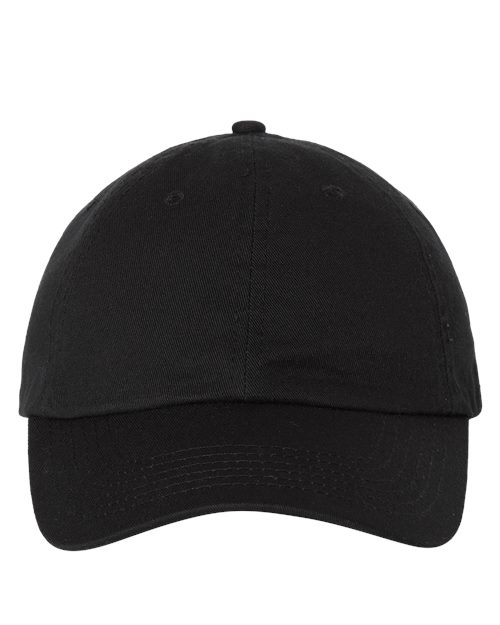
Garment-washed and pigment-dyed caps have become reliable building blocks for vintage merch, outdoor collections, lifestyle brands, breweries, coffee shops, school organizations, and company uniforms. The appeal is easy to understand: a washed cap already looks relaxed before a logo is added. It can feel like a favorite piece instead of a stiff promotional giveaway, which helps embroidered and patched headwear fit naturally into retail collections.
The best wholesale garment-washed caps are not interchangeable, however. A soft cotton dad hat, a pigment-dyed low-profile cap, and a garment-washed trucker cap create different silhouettes and require different decoration decisions. This 2026 guide compares three catalog-backed options, explains how wash and construction affect embroidery, patches, and heat-applied graphics, and gives buyers a practical process for sampling and ordering. For current color availability and wholesale pricing, use the linked Beytees product pages before approving a production run.
Best Wholesale Garment-Washed and Pigment-Dyed Caps at a Glance
The right starting point depends on the look, airflow, closure, decoration method, and audience you need. These three styles cover the most useful washed-cap categories in the Beytees catalog.
| Style | Construction | Profile and closure | Best use |
|---|---|---|---|
| Valucap VC300A Bio-Washed Classic Dad Hat | 100% cotton bio-washed chino twill | Unstructured, six-panel, low-profile; self-fabric tri-glide buckle | Classic dad-hat merch, retail collections, events, and broad color programs |
| Valucap SP500 Pigment-Dyed Cap | 100% cotton twill | Unstructured, six-panel, low-profile; tri-glide buckle | Vintage color stories, lifestyle brands, tonal embroidery, and boutique merch |
| Richardson 111 Garment-Washed Trucker Cap | 100% cotton twill front with 100% polyester soft mesh back | Unstructured, six-panel, low-pro profile; adjustable snapback | Outdoor brands, crews, breweries, patches, and breathable warm-weather merch |
All three are adjustable, but their finished personalities are different. Choose the VC300A when you want the familiar all-cotton dad-hat shape, the SP500 when pigment-dyed color is the main merchandising feature, and the Richardson 111 when a washed cotton face and soft mesh back better fit the brand.
What “Garment-Washed,” “Bio-Washed,” and “Pigment-Dyed” Mean
These terms describe related but distinct finishing ideas. Buyers should understand the practical result without assuming that every manufacturer uses an identical process.
Garment-washed caps
A garment-washed cap is washed after much or all of its construction is complete. The finish usually softens the fabric and reduces the crisp, factory-new appearance. Seams, panels, and edges can develop subtle tonal differences that support a broken-in aesthetic. The exact amount of variation depends on the textile, color, wash process, and production lot.
Bio-washed cotton
In apparel terminology, bio-washing commonly refers to a finishing process used to create a smoother, softer cotton surface. For purchasing purposes, focus on the verified outcome and construction of the specific blank. The Valucap VC300A is listed as 100% cotton bio-washed chino twill and is designed as a soft, unstructured dad hat. Do not treat the word “bio” by itself as a complete environmental certification.
Pigment-dyed caps
Pigment-dyed goods are chosen for a faded, dimensional color effect rather than perfect flat uniformity. Pigment color tends to emphasize seams and high-contact areas as the item wears. That variation is part of the product story, but it also means a buyer should not promise that every cap will look mathematically identical. Sample the actual color and communicate the intentional washed character in product photos and descriptions.
Top Pick 1: Valucap VC300A Bio-Washed Classic Dad Hat
The Valucap VC300A is the most versatile all-cotton choice in this comparison. Its 100% cotton bio-washed chino twill, unstructured six-panel build, low profile, and pre-curved visor create the recognizable dad-hat silhouette. A self-fabric tri-glide buckle with an antique-brass finish keeps the back visually cleaner than a plastic snap closure.
The style is especially useful for brands that need a broad color strategy. The current product record includes core neutrals, earth tones, brights, pastels, camouflage options, and several contrast-stitch combinations. Inventory changes, so color depth should be checked on the product page when the order is placed. For a first program, a restrained mix of black, navy, stone, olive, and one brand color is easier to replenish and photograph consistently than a large untested assortment.
The tear-away label is another practical feature for brands that want a cleaner private-label presentation. It does not eliminate the need to review all labeling obligations, but it can simplify the process of replacing or supplementing the original label with approved brand identification.
Best decoration approach for the VC300A
Standard embroidery is the natural first choice. The unstructured crown benefits from proper hooping and support because it does not hold itself as rigidly as a structured cap. Compact left-chest-style logos adapted for headwear, short wordmarks, initials, and small icons usually sew more cleanly than tall, highly detailed artwork. Woven or embroidered patches also work well when a vintage retail look is desired.
Heat-applied graphics may be possible, but the curved crown, seams, cotton finish, and metal closure make a cap-specific platen and careful testing important. Follow the transfer supplier’s current time, temperature, and pressure instructions, then test the finished cap for shine, discoloration, adhesive edge lift, and crown distortion before producing the order.
Top Pick 2: Valucap SP500 Pigment-Dyed Cap
The Valucap SP500 Pigment-Dyed Cap is the strongest option when color character is central to the collection. It uses 100% cotton twill in an unstructured, six-panel, low-profile shape, with a pre-curved visor and tri-glide buckle closure. The current catalog color set includes vintage-friendly choices such as aqua, mustard, olive, periwinkle, seafoam, stone, wine, and Texas orange alongside core colors.
This style can support a premium-looking capsule with relatively simple decoration. A one-color cream wordmark on olive, a tonal navy mark on navy, or a small burgundy emblem on stone can feel more considered than a large multicolor logo. The pigment-dyed ground supplies visual texture, so the decoration does not have to do all the work.
How pigment color changes design decisions
Approve the cap and thread or patch together. A thread color selected from a monitor may behave differently against a washed surface than it does against a flat solid blank. Tonal embroidery should still have enough separation to remain legible. High-contrast embroidery should be reviewed for whether it feels intentionally bold or visually disconnected from the faded base.
Photograph and retain an approved sample under neutral light. For repeat programs, note that normal lot-to-lot and piece-to-piece shade variation can be more noticeable on pigment-dyed goods. Merch pages should describe that variation as an intentional characteristic instead of presenting every unit as an exact clone of one product image.
Top Pick 3: Richardson 111 Garment-Washed Trucker Cap
The Richardson 111 combines a 100% cotton twill front with a 100% polyester soft-mesh back. It is an unstructured six-panel, low-pro cap with a pre-curved contrast-stitch bill and adjustable snapback closure. The mesh makes it the obvious choice for outdoor events, warm-weather crews, fishing and recreation brands, breweries, ranch and workwear programs, and casual team merchandise.
The 111 is not simply a softer version of the structured Richardson 112 trucker cap. Its washed, unstructured front produces a more relaxed profile, while the 112 is known for a more classic structured trucker presentation. If a logo needs a tall, rigid billboard effect, sample the 112 family. If the goal is an already-broken-in outdoor cap, start with the 111.
Best decoration approach for the Richardson 111
Embroidery and patches both fit the style. A rectangular woven patch, small leather-look patch, or compact embroidered emblem can complement the contrast stitching and mesh. Before approving a genuine leather or specialty patch, confirm the patch material, adhesive, stitch method, cleaning expectations, and any claim the final seller plans to make. “Leather-look” and genuine leather should never be used interchangeably in a product listing.
The front is cotton twill, but the back is polyester mesh. Keep heat sources controlled and away from mesh whenever possible. A cap press operator should confirm platen contact, closure position, seam placement, and protection of the bill. The finished sample—not a flat swatch—is the correct approval standard.
How to Choose the Right Washed Cap for Your Brand
Choose the VC300A for an all-purpose dad hat
Use the VC300A when the buying brief calls for soft cotton, a low profile, a fabric-and-metal closure, a broad color selection, and a classic retail silhouette. It suits coffee shops, nonprofits, creator merch, casual uniforms, boutiques, alumni groups, and event merchandise.
Choose the SP500 for the strongest vintage color story
Use the SP500 when garment color is one of the main reasons a customer will buy. It works well for limited capsules, destination merch, music and art projects, lifestyle brands, and tonal logo systems. Build the collection around a small coordinated palette rather than treating each color as an unrelated SKU.
Choose the Richardson 111 for ventilation and outdoor character
Use the Richardson 111 when mesh airflow, a snapback, two-tone combinations, and outdoor credibility matter. It is a logical choice for crews, landscapers, guides, breweries, sports communities, summer events, and brands that already use trucker-cap language.
Embroidery Tips for Unstructured Washed Caps
Unstructured crowns require more process control than their casual appearance suggests. The following rules reduce sampling surprises:
- Digitize for the cap, not for a shirt. A file that sews well on flat fleece may need a different pathing, underlay, density, and sequence on a curved cotton crown.
- Work from the center outward. Cap embroidery is commonly sequenced to control movement around the center seam, but the exact path should be chosen by an experienced digitizer for the artwork and machine.
- Respect seams and curvature. Fine details placed across the center seam can distort or disappear. Move critical microtext away from the seam or simplify it.
- Use appropriate support. Backing, hooping, tension, needle choice, and speed should be matched to the cap and design. A soft crown should not be forced into the settings used for every structured cap.
- Keep lettering realistic. Tiny letters, narrow gaps, and hairline strokes are common causes of unreadable samples. Enlarge or simplify before production.
- Run a finished-cap sample. A digital proof shows composition, not sew quality. Approve actual thread, placement, crown shape, and backing cleanup.
For retail work, also inspect the inside. Excessive backing, sharp thread tails, and messy trimming lower perceived quality even when the front looks acceptable.
Patches, DTF, and Other Decoration Methods
Embroidered and woven patches
Patches provide predictable small detail and can create a heritage, workwear, or outdoor look. Woven patches are useful for fine lines and small text; embroidered patches offer more thread texture. The patch can be sewn, heat applied, or attached with a combination method depending on its construction and the production equipment. Test edge security around the full perimeter and inspect how the patch follows the crown curve.
DTF and heat-applied transfers
DTF can reproduce color and detail without thousands of stitches, but a cap is a more demanding surface than a T-shirt. The usable front area is smaller, seams interfere with even pressure, and washed cotton may react visibly to heat. Use a cap-specific setup and a conservative artwork footprint. After application, check adhesion along every edge, stretch the crown gently, and inspect for heat marks in several lighting conditions.
Screen printing
Direct screen printing on a finished cap is specialized because of curvature, seams, and limited printable area. It can make sense for a properly equipped shop and simple art, but it should not be selected merely because a garment screen-printing line already exists. Transfers or patches are often easier to standardize for short and mixed-color cap runs.
Sublimation
Sublimation is not the normal choice for the cotton front panels of these caps. Sublimation dye requires a compatible polyester surface and typically performs best on light substrates. The Richardson 111 has polyester mesh at the back, but that does not turn its cotton front into a suitable sublimation panel. Choose an intentionally sublimation-ready cap if full-color sublimated decoration is the goal.
Logo Placement and Artwork Planning
Front-center decoration is not the only option. A small offset mark can make a washed cap feel more retail-oriented, while side embroidery can support a secondary symbol, date, location, or team identifier. Back decoration must account for the buckle or snapback opening. Always measure the actual blank because low-profile crowns provide less vertical space than tall structured caps.
Create a cap-specific proof that shows the front seam, bill, crown boundary, and decoration dimensions. Avoid scaling artwork only by eye. A design can look balanced in a square mockup and appear oversized once wrapped across a low-profile crown. If the collection includes both dad hats and trucker caps, approve separate placements instead of assuming one coordinate works across both shapes.
Color Planning for Vintage Merch
Washed headwear works best when the blank, decoration, and apparel collection share a coherent palette. Consider these practical approaches:
- Tonal: pair navy thread with a washed navy cap or olive thread with olive. Use enough value difference to keep the logo readable.
- Heritage neutral: combine stone, khaki, olive, brown, or washed black with cream, tan, muted gold, or dark green decoration.
- Destination color: use one locally relevant accent, such as Texas orange, while keeping the rest of the assortment neutral.
- Two-tone trucker: coordinate front-panel and mesh colors with a patch border or thread accent.
- Limited capsule: launch two or three related cap colors with one repeatable decoration instead of carrying every possible option.
If the caps will sit beside T-shirts or sweatshirts, compare them under the same light. “Navy,” “olive,” and “stone” are not universal formulas across materials and brands. The broader 2026 blank apparel color guide can help structure a palette, but physical samples remain the decision tool.
Wholesale Buying and Inventory Strategy
Start with the decoration outcome and selling channel, then build the order. A disciplined wholesale cap program should answer the following questions before purchasing:
- Who is wearing the cap, and do they expect a dad-hat or trucker shape?
- Does the logo require embroidery, a patch, or a full-color transfer?
- Which two or three colors match the brand and can be photographed together?
- Has each blank color been tested with the actual decoration?
- What quantity is needed for launch, replacement, and defects?
- Will the seller offer one adjustable size, or explain fit limitations?
- Is current inventory deep enough for the initial order and likely reorder?
- What is the approved substitute if a color becomes unavailable?
Do not build a sales promise around a snapshot of today’s inventory. Wholesale availability can change between sampling and production. Recheck the exact style and color before accepting a deadline-sensitive customer order. For multi-location programs, document the approved style, color name, logo file, thread or patch specification, placement, and packaging so later reorders can be compared against the same standard.
Costing a Decorated Cap Correctly
The blank cost is only one line in the calculation. Include digitizing or patch setup, decoration labor, sample cost, spoilage allowance, label work, folding or shaping, individual packaging, inbound freight, outbound shipping, payment fees, and customer-service overhead. Embroidery pricing may also depend on stitch count, while patches introduce minimums and setup costs of their own.
A lower-priced blank is not automatically the best-margin choice. A cap that fits the collection, decorates consistently, and earns a stronger retail price can outperform a cheaper blank that generates remakes or looks generic. Calculate gross margin from the landed, decorated unit—not from the undecorated wholesale price shown during product selection.
Quality-Control Checklist Before Shipping
- Confirm the style and named color against the purchase order.
- Expect intentional washed variation, but isolate stains, damage, or extreme inconsistencies for review.
- Check that front panels, visor, seams, mesh, buckle, and snapback are undamaged.
- Verify decoration placement against the approved physical sample.
- Inspect small lettering, thread tension, patch edges, and transfer adhesion.
- Remove loose threads and production debris without damaging the finish.
- Check the inside for uncomfortable backing, sharp edges, or incomplete cleanup.
- Confirm that closures operate and caps have not been crushed during production.
- Count by style and color before packing.
- Use packaging that protects the crown and bill in transit.
Shipping method and carton packing matter because an unstructured crown can arrive misshapen if compressed carelessly. Review the Beytees wholesale shipping guide when planning a deadline, and leave time for sampling, decoration, quality control, and carrier transit rather than treating the blank’s ship date as the customer’s delivery date.
Frequently Asked Questions About Wholesale Washed Caps
What is the best wholesale garment-washed cap for a classic dad-hat look?
The Valucap VC300A is the strongest general-purpose option in this comparison. It uses 100% cotton bio-washed chino twill, has an unstructured low-profile crown, a pre-curved visor, and a self-fabric tri-glide buckle with an antique-brass finish. Sample the exact color and decoration before ordering production quantities.
What is the best pigment-dyed cap for vintage merch?
The Valucap SP500 is built around a pigment-dyed look and offers a useful range of muted and vintage-friendly colors. It is particularly effective with tonal embroidery, simple wordmarks, small icons, and patches that allow the cap color to remain a major part of the design.
What is the best washed trucker cap in this guide?
The Richardson 111 is the dedicated washed trucker option. It combines a cotton twill front with a soft polyester mesh back, low-pro unstructured construction, a pre-curved contrast-stitch bill, and an adjustable snapback.
Are washed caps good for embroidery?
Yes. Embroidery is one of the best decoration methods for washed cotton caps, but unstructured crowns need cap-specific digitizing, hooping, backing, placement, and machine settings. Approve a sewn sample on the actual cap rather than relying only on a digital mockup.
Can DTF transfers be applied to garment-washed caps?
DTF may work on a suitable cotton front panel when applied with the correct cap equipment and transfer instructions. Test first for adhesion, discoloration, press marks, seam interference, and crown distortion. Do not assume settings developed for flat T-shirts will transfer directly to caps.
Are pigment-dyed caps supposed to have color variation?
Some shade and finish variation is part of the pigment-dyed aesthetic. Buyers should review samples and describe the intentional washed character accurately. That does not mean every defect is acceptable; damaged, stained, or unusually inconsistent pieces should still be isolated during quality control.
Should I choose a buckle or snapback closure?
A fabric strap with a tri-glide buckle supports a classic dad-hat and lifestyle look. A plastic snapback is familiar on trucker caps and makes quick adjustment easy. Choose based on silhouette, audience, and brand presentation rather than treating either closure as universally better.
How many cap colors should a new merch brand launch?
Two or three coordinated colors are usually easier to merchandise, photograph, stock, and reorder than a large assortment. Start with one or two dependable neutrals and one brand-relevant accent, then expand only after sales data shows which combinations customers prefer.
Do washed caps work for private-label brands?
They can. The VC300A includes a tear-away label, which can support a cleaner rebranding workflow. The seller still needs to confirm applicable labeling, fiber-content, origin, safety, and consumer-information requirements for the final product and market.
Where can I buy wholesale garment-washed and pigment-dyed caps?
Beytees carries the Valucap VC300A, Valucap SP500, and Richardson 111. Open each product page to review current colors, inventory, and pricing before placing an order.
Final Recommendation
For the widest classic dad-hat use case, start with the Valucap VC300A. For a collection where faded color is the hero, choose the Valucap SP500. For outdoor, warm-weather, and trucker-cap programs, choose the Richardson 111. Each can produce strong retail merchandise when the blank, artwork, decoration process, and quality standard are approved together.
The most important step is a physical sample. Select the exact style and color, decorate it with production-ready art, check it under realistic lighting, test the closure and crown shape, and calculate the landed decorated cost. Once that sample passes, use it as the control for the full order. Check the three Beytees product pages above for current wholesale availability and build the collection from verified inventory rather than assumptions.
Leave a Reply