Category: Wholesale Guides

Comprehensive buying guides for wholesale blank apparel

  • Independent Trading Co. EXP20PQ vs SS4600QZ: Performance vs Fleece Quarter-Zip Pullovers

    Independent Trading Co. EXP20PQ vs SS4600QZ: Performance vs Fleece Quarter-Zip Pullovers

    The Independent Trading Co. EXP20PQ is the better quarter-zip when mobility, four-way stretch, a smooth French terry interior, and a clean performance silhouette lead the brief. The SS4600QZ is the better choice when buyers want the warmer, familiar feel of midweight fleece, ribbed sweatshirt construction, and a classic unisex resort or team layer. Both weigh 8.5 oz, or 280 gsm, both run from XS through 3XL, and both provide cotton face yarns intended to support decoration. The important differences are fabric, stretch, trim, fit language, zipper construction, color count, and how each garment behaves during embroidery, DTF, screen printing, and daily wear.

    This Independent Trading Co. EXP20PQ vs SS4600QZ guide is for print shops, embroiderers, team dealers, schools, corporate-apparel buyers, uniform programs, resorts, golf shops, and merchandise brands. It compares the current manufacturer specifications and Beytees catalog records as of September 4, 2026. Because color-size inventory changes, use the specifications to choose a sample and verify live stock before promising a decorated-order deadline.

    Start with the Beytees EXP20PQ wholesale product page and the Beytees SS4600QZ wholesale product page. For a deeper single-style review, read the complete SS4600QZ embroidery and DTF guide.

    EXP20PQ vs SS4600QZ: Quick Answer

    • Choose the EXP20PQ for: Stretch, movement, active officewear, travel, training-adjacent apparel, modern retail collections, and a cleaner open hem with side splits.
    • Choose the SS4600QZ for: Traditional fleece warmth, sweatshirt-like comfort, school spirit wear, resort merchandise, cool-weather uniforms, and ribbed cuffs and waistband.
    • Shared weight: Both are published at 8.5 oz, or 280 gsm. Equal weight does not mean equal texture, warmth, drape, or stretch.
    • EXP20PQ fabric: 60% cotton, 35% polyester, and 5% spandex four-way-stretch French terry with 100% ring-spun cotton face yarns.
    • SS4600QZ fabric: Solid colors use 80% cotton and 20% polyester fleece with a 100% cotton, 32-singles face; Grey Heather and Ash Heather are published at 75% cotton and 25% polyester.
    • Best embroidery starting point: A restrained left-chest design on either style, digitized and stabilized for the exact material.
    • Best DTF starting point: A smaller chest, sleeve, or back design that stays clear of the zipper and seams, followed by a complete wash test.
    • Fit difference: The manufacturer calls the EXP20PQ a men’s standard fit; Beytees catalogs the SS4600QZ as unisex and the manufacturer calls it a standard fit.
    • Current manufacturer assortment: Seven EXP20PQ colors and thirteen SS4600QZ colors, with seven sizes for each style.

    Table of Contents

    1. Side-by-side specifications
    2. Fabric, feel, and warmth
    3. Stretch and mobility
    4. Fit and sizing
    5. Zippers, hems, and construction
    6. Colors and current availability
    7. Embroidery comparison
    8. DTF printing comparison
    9. Screen-printing comparison
    10. Best use cases
    11. Decision matrix
    12. Sample and production test
    13. Wholesale ordering plan
    14. Frequently asked questions
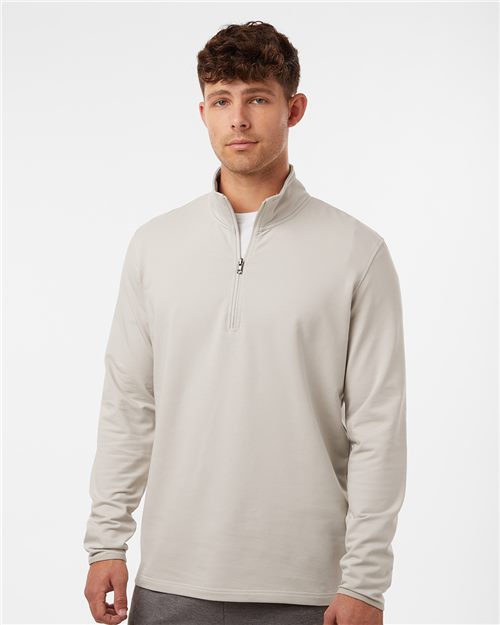
    Independent Trading Co. EXP20PQ performance quarter-zip pullover
    The EXP20PQ uses four-way-stretch French terry, a reverse-coil zipper, and a split open hem.
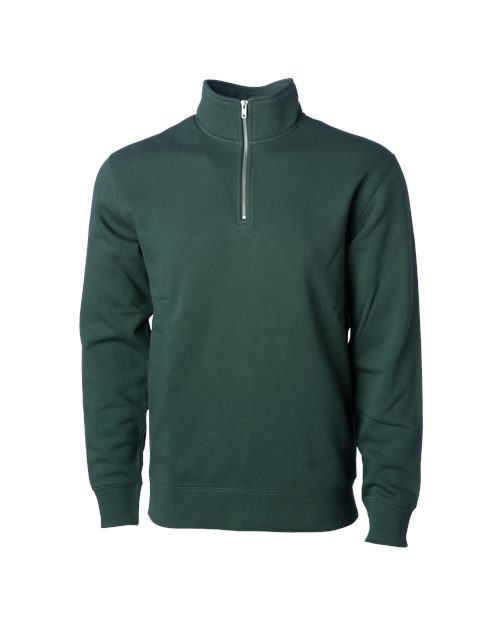
    Independent Trading Co. SS4600QZ midweight fleece quarter-zip pullover
    The SS4600QZ uses classic cotton-polyester fleece, a metal zipper, and ribbed cuffs and waistband.

    Independent Trading Co. EXP20PQ vs SS4600QZ Specifications

    Specification EXP20PQ Perform Quarter Zip SS4600QZ Midweight Quarter Zip
    Published weight 8.5 oz, 280 gsm 8.5 oz, 280 gsm
    Fabric type Four-way-stretch French terry Cotton-polyester blend fleece
    Main composition 60% cotton, 35% polyester, 5% spandex Solid colors: 80% cotton, 20% polyester
    Face yarn 100% ring-spun cotton face yarns Solid colors: 100% cotton, 32-singles face yarn
    Heather note No separate heather composition published on the current product record Grey Heather and Ash Heather: 75% cotton, 25% polyester
    Fit language Men’s standard fit Unisex product title; standard fit
    Sizes XS through 3XL XS through 3XL
    Current manufacturer colors 7 13
    Zipper Reverse coil zipper #5 exposed metal zipper; Beytees calls it a kissing zipper
    Hem and cuffs 1-inch double-needle waist hem with split sides 1×1 ribbing at cuffs and waistband
    Other construction details Pre-laundered fabric to reduce shrinking Split-stitch double-needle sewing on all seams and twill neck tape
    Label Tear-away neck label Tear-away neck label
    Primary advantage Mobility and modern performance styling Classic fleece comfort and broader color assortment

    The table uses the live Independent Trading Company EXP20PQ specification, the live Independent Trading Company SS4600QZ specification, and the corresponding Beytees records. These are catalog specifications, not a substitute for approving the physical production lot.

    Fabric, Feel, Drape, and Warmth

    The most important difference is not the number on the scale. Both garments are published at 8.5 oz, but the EXP20PQ is four-way-stretch French terry while the SS4600QZ is fleece. French terry typically presents a smoother outer face and a looped inner surface. Fleece is brushed for a softer, warmer sweatshirt feel. That structural difference affects how the garment drapes, traps warmth, moves, and accepts decoration.

    The EXP20PQ’s 60/35/5 cotton-polyester-spandex blend is built around flexibility. Its 5% spandex is a meaningful design feature, not a minor fiber footnote. The fabric can move with the wearer and recover after ordinary motion, which supports travel, active workplaces, warmups, and modern everyday apparel. The open bottom hem and side splits reinforce that less-restrictive silhouette.

    The SS4600QZ uses an 80/20 blend on solid colors and finishes the garment with ribbed cuffs and waistband. That gives it a more familiar sweatshirt shape and a closer visual relationship to crewnecks and hoodies. It is the natural pick when a buyer says, “I want a comfortable fleece quarter-zip,” rather than, “I need a stretch performance layer.”

    Do not infer exact warmth, breathability, or moisture-management performance from fabric weight alone. Independent Trading Company markets the EXP20PQ for movement and active lifestyles, but the current product specification does not publish a laboratory moisture-wicking rating. If a uniform bid requires a measured performance standard, request documentation instead of turning marketing language into a technical guarantee.

    Stretch and Mobility: Why the EXP20PQ Is Different

    The EXP20PQ wins when the wearer must reach, bend, travel, layer, or move repeatedly. Four-way stretch means the fabric is engineered to give in both directions rather than behaving like conventional sweatshirt fleece. That can matter for coaches, fitness staff, event crews, sales teams moving equipment, warehouse leads, field technicians, and employees who alternate between a desk and active work.

    Stretch also changes production. An embroidery design that is too dense can resist the fabric’s movement and create a rigid patch. A large heat transfer can reduce the stretch exactly where the garment is supposed to flex. A screen-print ink system that works beautifully on stable fleece may crack or feel restrictive on a stretch panel if it is not formulated and cured for that use.

    Preserve the reason the customer selected the performance style. Keep large decorations away from high-movement zones when possible, use artwork with negative space, and qualify the selected thread, stabilizer, ink, or transfer on the actual garment. “Decoratable” does not mean every production recipe preserves four-way stretch.

    Fit and Sizing for Uniforms, Teams, and Merch

    Both products run from XS through 3XL on the current manufacturer pages, creating seven nominal sizes. The fit labels are not identical. EXP20PQ is described as a men’s standard fit. The SS4600QZ is presented by Beytees as unisex and described by the manufacturer as a standard fit. Buyers should not assume that the same letter size creates the same chest width, sleeve shape, body length, or layering room in both styles.

    A performance quarter-zip may be worn closer to the body over a T-shirt. A fleece quarter-zip may be selected with more room for a polo, uniform shirt, or base layer. Fit testing should reflect the real outfit. Ask sample wearers to sit, reach, zip the collar fully, layer the intended undergarment, and move through the tasks they will perform.

    For a large roster, approve at least one small, one core, and one extended size in each style being considered. Record flat chest width, body length, sleeve length, shoulder behavior, collar height, zipper length, and hem opening. The wholesale school and team ordering guide explains roster collection, sample approval, and replacement planning in greater detail.

    Zippers, Collars, Hems, and Construction

    The EXP20PQ uses a reverse coil zipper. Its teeth are oriented toward the inside, leaving a cleaner coil line visible from the outside. The garment also has a cadet collar, a 1-inch double-needle waist hem, and split sides. Those choices support a streamlined shape that can move from a gym or practice environment to an office, restaurant, airport, or casual evening setting.

    The SS4600QZ uses a #5 metal zipper. Independent Trading Company currently describes it as exposed, while Beytees describes it as a kissing zipper. Its twill neck tape, split-stitch double-needle seams, and 1×1 ribbed cuffs and waistband reinforce the classic fleece construction. The ribbed bottom pulls the silhouette toward the body more than the EXP20PQ’s open split hem.

    Both zippers create a central obstruction for printing and pressing. The SS4600QZ’s metal zipper especially must remain outside the heat-press pressure zone. The EXP20PQ’s reverse coil creates a cleaner profile, but it is still a raised component that can disrupt even pressure, screen contact, hooping, or artwork placement. Build the placement template from an actual zipped garment.

    Colors, Sizes, and Live Availability

    On September 4, 2026, the manufacturer’s live EXP20PQ data listed seven colors: Black, Classic Navy, Pine, Smoke, Storm Blue, Agave, and Orchid. It listed all seven sizes from XS through 3XL across 49 color-size combinations, and all 49 manufacturer combinations were marked available when this guide was prepared.

    The manufacturer’s live SS4600QZ data listed thirteen colors: Agave, Orchid, Grey Heather, Ash Heather, Asphalt, Black, Classic Navy, Storm Blue, Alpine Green, Brown, Cement, Bone, and Ivory. Across 91 color-size combinations, 82 were marked available and nine were unavailable at the same check. That is a broader palette, but a buyer still needs every required size in the chosen color.

    The manufacturer added Storm Blue, Agave, and Orchid to the EXP20PQ in August 2026, according to its official EXP20PQ color announcement. Those softer seasonal colors make the performance style more relevant to retail and resort collections, while Black and Classic Navy remain practical for corporate and team programs.

    At the time of this review, both Beytees product records displayed an out-of-stock class even though the manufacturer showed available combinations. That difference can reflect distributor inventory, catalog synchronization, or sourcing status. It is not a promise that Beytees can immediately fulfill manufacturer stock. Contact Beytees or recheck the exact product page before quoting availability, accepting a nonrefundable deposit, or announcing a ship date.

    EXP20PQ vs SS4600QZ for Embroidery

    Both quarter-zips can support professional embroidery, but they need different production thinking. A compact left-chest logo is the safest first placement because it complements the collared silhouette, avoids the zipper, and suits companies, schools, teams, clubs, resorts, and hospitality programs. Right chest, upper sleeve, and upper back can also work after confirming seams and collar clearance.

    Embroidery on the EXP20PQ

    The French terry face is smoother and less lofty than brushed fleece, but the fabric stretches. Control distortion without making the decorated area unnaturally stiff. Digitize for the actual logo size, use appropriate underlay, reduce unnecessary density, select stabilizer that supports the design, and avoid over-hooping. After sewing, confirm that the panel still hangs naturally and recovers after moderate movement.

    Embroidery on the SS4600QZ

    The SS4600QZ is more stable in ordinary wear but has fleece loft. A suitable topping may help small lettering and fine details remain visible instead of sinking into the surface. Stabilizer, underlay, needle, thread, hoop tension, and stitch density should be qualified on the exact garment. Inspect for puckering, crushed fleece, tunneling, and zipper interference.

    For a corporate program, start with a modest left-chest mark on either style. The EXP20PQ looks more athletic and streamlined; the SS4600QZ looks more like premium branded fleece. Buyers also comparing collared uniform options can use the wholesale polo embroidery guide.

    EXP20PQ vs SS4600QZ for DTF Printing

    DTF can reproduce full color, gradients, short-run personalization, and fine details on both quarter-zips. Each style provides a cotton face intended to help printability: the EXP20PQ uses 100% ring-spun cotton face yarns, and the solid SS4600QZ colors use a 100% cotton 32-singles face. The complete garments still contain polyester, and the EXP20PQ also contains spandex, so a cotton face does not remove the need for a controlled production test.

    DTF on the EXP20PQ

    Choose a transfer system qualified for stretch fabrics and the garment’s blend. A rigid, high-coverage transfer can fight the four-way-stretch panel, feel heavy, or crack when the fabric flexes. Smaller artwork, negative space, segmented shapes, and a flexible transfer film can help preserve wearability. Follow the transfer supplier’s exact time, temperature, pressure, peel, and repress instructions, then test cooled stretch and laundering.

    DTF on the SS4600QZ

    The key issues are fleece loft, raised trim, and press geometry. Use a platen, pad, pillow, or other approved fixture that lets the zipper and seams fall outside the pressure area. The least aggressive qualified recipe can reduce shine, flattening, pressure boxes, color change, and zipper impressions while still achieving complete adhesion. Test heather colors separately from solid colors because the published composition differs.

    Do not press over either zipper. Do not assume a recipe from a T-shirt transfers directly to a midweight quarter-zip. The wholesale sweatshirt DTF guide provides additional fleece testing and artwork-planning context.

    Screen Printing the EXP20PQ and SS4600QZ

    Screen printing can make sense when order quantity, artwork, and color count justify setup. The best uninterrupted placement is usually the back. A compact left-chest print can also work if the screen, platen, and ink deposit stay clear of the zipper. A wide center-front design is the least natural choice because the zipper divides the upper body and disrupts a flat print surface.

    For the EXP20PQ, the ink system must accommodate stretch and recovery. Confirm opacity, hand feel, adhesion, elongation, cure, and wash durability. Excessive ink coverage can remove much of the fabric’s performance advantage. For the SS4600QZ, qualify the cotton face while controlling fleece texture, fibrillation, ink penetration, cure temperature, and possible dye interaction.

    Measure actual cure conditions instead of relying only on a dryer dial. Wash and dry the approved sample according to the garment’s attached care instructions. Inspect the print after cooling and again after laundering for cracking, edge lift, migration, color shift, distortion, and changes in hand feel.

    Best Uses for Each Quarter-Zip

    Corporate offices and sales teams

    Choose EXP20PQ when the team travels, moves between indoor and outdoor environments, or wants a modern performance look. Choose SS4600QZ when the brief calls for a warmer fleece layer with a traditional uniform feel. Either style can carry a restrained embroidered logo; approve how it looks over the intended polo or T-shirt.

    Schools, coaches, and athletic programs

    The EXP20PQ is stronger for coaches, travel, meetings, and movement-oriented staff apparel. The SS4600QZ is stronger for cool-weather spirit wear, faculty fleece, booster merchandise, and sidelines where warmth matters more than stretch. A program may use both while keeping logo size and thread colors consistent.

    Golf, resort, and hospitality

    The EXP20PQ’s clean zipper and split hem fit active resort, golf, and service environments. The SS4600QZ’s fleece hand and broader color assortment fit cool-weather resort retail and employee programs. Sample the garment with required name tags, aprons, radios, or outer layers before standardizing it.

    Retail merchandise and lifestyle brands

    The EXP20PQ supports a contemporary active-casual story, especially in Storm Blue, Agave, Orchid, Pine, and Smoke. The SS4600QZ supports a classic fleece and resort-wear story across thirteen manufacturer colors. Retail brands should photograph texture, zipper, collar, hem, and layered fit rather than relying on a flat front image alone.

    Warehouses, field teams, and active workplaces

    The EXP20PQ’s stretch can be useful where employees reach, bend, drive, carry light equipment, or alternate between tasks. The SS4600QZ may be preferred in a cooler stationary environment. Neither product should be represented as protective workwear unless it is separately documented for the exact hazard or standard involved.

    Decision Matrix: Which Style Should You Buy?

    Buyer priority Better starting choice Reason
    Four-way mobility EXP20PQ 5% spandex four-way-stretch French terry
    Classic fleece warmth SS4600QZ Traditional cotton-polyester fleece construction
    Modern open hem EXP20PQ 1-inch hem with split sides
    Ribbed sweatshirt silhouette SS4600QZ 1×1 ribbing at cuffs and waistband
    Broad manufacturer color palette SS4600QZ 13 current colors compared with 7
    Active office and travel EXP20PQ Stretch and streamlined performance styling
    School and resort fleece SS4600QZ Classic feel and wider color selection
    Stretch-compatible DTF design EXP20PQ Strong option after transfer flexibility is qualified
    Stable compact embroidery Either Choose by fit and feel, then digitize for the exact fabric
    Private-label neck finishing Either Both publish a tear-away neck label

    If movement is the first requirement, start with EXP20PQ. If fleece comfort is first, start with SS4600QZ. If decoration is first, test both because the smoother stretch French terry and the stable cotton-face fleece present different advantages and risks.

    Private Label and Compliance Considerations

    Both styles have a tear-away neck label. That can simplify a compliant private-label workflow, but “tear-away” is a construction feature, not permission to discard required information. A brand may still need accurate fiber content, country of origin, care instructions, manufacturer or dealer identity, and other disclosures appropriate to the product and market.

    Review the United States Federal Trade Commission’s textile and wool labeling guidance before replacing or relocating labels. Inspect the actual received garment because catalog descriptions can change and production lots can carry different label arrangements. Keep size identification and care information understandable after any brand label is added.

    The Beytees records state that both products meet OEKO-TEX Standard 100 and are made in WRAP-certified facilities. Represent those claims narrowly. OEKO-TEX Standard 100 addresses testing for harmful substances, while Worldwide Responsible Accredited Production describes a facility-certification program. Neither statement alone proves every broad “sustainable,” “ethical,” or environmental marketing claim.

    Seven-Step Sample and Production Test

    1. Confirm the brief: Record wearer, environment, layering, size range, color, decoration, deadline, reorder expectation, and budget.
    2. Order physical samples: Evaluate EXP20PQ and SS4600QZ in the same intended size and representative colors.
    3. Test fit in context: Add the real underlayer, zip the collar, sit, reach, bend, and perform ordinary work or team movement.
    4. Decorate the actual style: Use production artwork, equipment, thread, stabilizer, ink, transfer, platen, and operator settings.
    5. Inspect immediately: Check placement, opacity, hand feel, puckering, shine, press marks, zipper clearance, stretch, and drape.
    6. Wash and dry: Follow the attached garment care instructions and repeat the inspection after a complete laundering cycle.
    7. Lock the specification: Save the approved blank style, color, size chart, supplier, artwork version, placement measurements, decoration recipe, packaging, and approval date.

    Do not combine the two products under one undocumented production recipe. Even though both are 8.5 oz, their fiber percentages, interior structures, stretch, trims, and hems differ. A controlled sample prevents an attractive catalog comparison from becoming a production problem.

    Wholesale Ordering, Inventory, and Reorders

    Begin with the complete size curve, not the headline stock status. A style is not usable for a uniform program if one essential size is missing. Confirm the exact color-size quantities, expected replenishment, decoration lead time, blank transit time, and replacement policy before the customer approves the schedule.

    For a new program, keep the color count disciplined. Black and Classic Navy cover many corporate and team applications in both styles. Add a seasonal color only when demand justifies the extra size inventory. The custom apparel inventory management guide explains how to control assortment growth and protect reorder consistency.

    Build time for samples and inbound variability. Do not promise a decorated completion date based only on manufacturer availability. Use Beytees’ live product status, confirm the sourcing path, and account for blank transit, receiving, quality control, decoration, curing or finishing, packaging, and outbound delivery. The wholesale blank apparel shipping guide provides a practical planning framework.

    Copy-and-paste quarter-zip sourcing brief

    Program name:
    End user and use case:
    Preferred style: EXP20PQ / SS4600QZ / sample both
    Approved color:
    Required sizes and quantities:
    Intended underlayer:
    Decoration method:
    Artwork version:
    Placement and dimensions:
    Personalization fields:
    Sample approval date:
    Wash-test result:
    Blank inventory confirmed at:
    Required delivery date:
    Replacement and reorder plan:

    Common Buying and Decoration Mistakes

    • Choosing by weight alone: Both are 8.5 oz, but French terry with spandex and classic fleece wear differently.
    • Assuming identical fit: Men’s standard and unisex standard language should be confirmed with measurements and samples.
    • Printing across the zipper: Both styles need a clear, level decoration zone.
    • Using one DTF recipe: EXP20PQ stretch and SS4600QZ fleece loft create different risks.
    • Over-densifying embroidery: Excess stitch density can stiffen stretch fabric or pucker fleece.
    • Treating manufacturer stock as Beytees stock: Supplier availability and Beytees availability are separate facts.
    • Ignoring heather composition: SS4600QZ Grey Heather and Ash Heather have a published 75/25 blend.
    • Skipping the wash test: Immediate appearance does not prove adhesion, cure, recovery, or durability.
    • Promising technical performance without data: Do not invent moisture-wicking, protective, or laboratory ratings.

    Final Verdict: EXP20PQ or SS4600QZ?

    Choose the Independent Trading Co. EXP20PQ when the program needs a flexible, polished performance quarter-zip that moves easily and transitions between active, travel, office, and retail use. Choose the SS4600QZ when the program needs a comfortable midweight fleece quarter-zip with traditional sweatshirt construction, ribbed trim, and a wider manufacturer color assortment.

    The EXP20PQ vs SS4600QZ decision is not about which garment is universally better. It is about which structure serves the end user. Both offer an 8.5 oz weight, XS–3XL sizing, cotton face yarns for printability, a standard-fit foundation, and tear-away labels. The EXP20PQ differentiates with 5% spandex, four-way-stretch French terry, a reverse-coil zipper, pre-laundered fabric, and a split hem. The SS4600QZ differentiates with cotton-rich fleece, a metal zipper, reinforced seams, twill neck tape, and ribbed cuffs and waistband.

    The Independent Trading Co. EXP20PQ vs SS4600QZ comparison should end with physical evidence. Before a bulk order, compare samples, approve fit with the intended underlayer, decorate the exact style and color, complete a wash test, and verify live Beytees inventory. Buyers still considering other silhouettes can review the best wholesale blank quarter-zip guide and the blank apparel weight and print-method guide.

    Frequently Asked Questions About EXP20PQ vs SS4600QZ

    What is the biggest difference between EXP20PQ and SS4600QZ?

    The EXP20PQ uses 60/35/5 cotton-polyester-spandex four-way-stretch French terry for mobility and a performance look. The SS4600QZ uses cotton-polyester fleece with ribbed cuffs and waistband for a warmer, classic sweatshirt feel. Both are published at 8.5 oz, or 280 gsm.

    Which quarter-zip is warmer?

    The SS4600QZ is the more natural starting choice when fleece warmth and a cozy interior are priorities. Both share the same published weight, but fabric structure changes how a garment feels. Test samples in the intended environment because neither current product page publishes a comparative thermal rating.

    Which quarter-zip stretches more?

    The EXP20PQ stretches more because it contains 5% spandex and is specifically described as four-way-stretch French terry. The SS4600QZ is conventional cotton-polyester fleece and is not marketed as a four-way-stretch garment.

    Are EXP20PQ and SS4600QZ the same weight?

    Yes. Independent Trading Company publishes both at 8.5 oz, or 280 gsm. The equal weight does not make them interchangeable: EXP20PQ is stretch French terry, while SS4600QZ is fleece with ribbed cuffs and waistband.

    What sizes are available?

    The current manufacturer records list both styles from XS through 3XL: XS, small, medium, large, XL, 2XL, and 3XL. Always verify the required color-size combinations because a size range does not guarantee live inventory in every color.

    Is the EXP20PQ unisex?

    The current manufacturer page describes EXP20PQ as a men’s standard fit. It may work for many wearers, but a buyer should not silently relabel that fit. Publish garment measurements, provide samples, and let the intended group approve fit and layering.

    Is the SS4600QZ unisex?

    Beytees catalogs SS4600QZ as a unisex midweight quarter-zip, and the manufacturer describes a standard fit. Fit remains subjective, especially when layered. Approve physical samples and actual measurements before personalizing a bulk roster.

    Which style is better for embroidery?

    Both can be strong embroidery blanks. EXP20PQ needs digitizing and stabilization that respect stretch and drape. SS4600QZ needs control of fleece loft, compression, and puckering. A compact left-chest logo is the best first test for most corporate, school, resort, and team programs.

    Which style is better for DTF?

    Neither wins automatically. EXP20PQ offers a ring-spun cotton face but needs a flexible transfer compatible with stretch. Solid-color SS4600QZ offers a 100% cotton face but needs careful pressure control over fleece. Test the exact style, color, transfer, artwork, press setup, and laundering cycle.

    Can I screen print both quarter-zips?

    Yes, after qualifying the ink and cure process. EXP20PQ needs an ink system that tolerates stretch and recovery. SS4600QZ requires control of fleece texture, fibrillation, opacity, and blend behavior. The back is usually a simpler print zone than the zipper-divided front.

    Can I put a full-front logo on either style?

    A large full-front logo is usually a poor starting choice because the quarter zipper interrupts the upper center and prevents a uniformly flat production surface. Use left chest, sleeve, upper back, or a controlled lower placement that stays clear of the zipper and seams.

    Which style has more colors?

    The manufacturer’s current SS4600QZ record lists thirteen colors, while EXP20PQ lists seven. The broader SS4600QZ palette does not guarantee that every color and size is available from Beytees, so confirm the exact distributor inventory before quoting.

    Does the EXP20PQ shrink?

    The manufacturer states that EXP20PQ uses pre-laundered fabric to reduce shrinking. “Reduce” does not mean eliminate. Follow the attached care instructions, test the decorated sample through laundering, and avoid guaranteeing zero dimensional change.

    Do both styles have tear-away labels?

    Yes. Both current product records list tear-away neck labels. Rebranding still requires accurate and legally appropriate fiber, origin, care, and business information. Inspect the received garment before defining a label-removal process.

    Are EXP20PQ and SS4600QZ sustainable?

    Beytees states that both meet OEKO-TEX Standard 100 and are made in WRAP-certified facilities. Those are specific product and facility claims, not proof of every broad sustainability statement. Request current documentation if certification is material to a bid or marketing claim.

    Which quarter-zip is better for teams?

    EXP20PQ is the stronger starting point for coaches, travel, movement, and active staff. SS4600QZ is stronger for fleece warmth, school spirit wear, and traditional team layering. Many programs can use both while keeping logo treatment consistent.

    Where can I buy EXP20PQ and SS4600QZ wholesale?

    Use the Beytees product pages for EXP20PQ and SS4600QZ to check current sourcing status. Confirm the complete color-size quantity and delivery requirements before approving decoration.

    What should I do before placing a bulk order?

    Verify live inventory, order representative samples, test fit with the intended underlayer, decorate the exact style and color, inspect zipper clearance, complete a wash test, approve measurements and artwork, and document the reorder specification. Do not treat the shared 8.5 oz weight as proof that one production recipe fits both garments.
  • Independent Trading Co. SS4600QZ Quarter-Zip Pullover: Wholesale Embroidery and DTF Guide

    Independent Trading Co. SS4600QZ Quarter-Zip Pullover: Wholesale Embroidery and DTF Guide

    The Independent Trading Co. SS4600QZ is a strong wholesale quarter-zip choice when a program needs the comfort of midweight fleece, a clean collared silhouette, a printable cotton face on solid colors, and sizing from XS through 3XL. It is especially practical for corporate apparel, school spirit wear, team travel, employee uniforms, resort merchandise, and branded lifestyle collections.

    The SS4600QZ is not simply a sweatshirt with a zipper added. The cadet-style collar and metal quarter zipper change how the garment is decorated, worn, folded, photographed, and sold. Embroidery usually gives it the most natural corporate finish. DTF and screen printing can also work well, but the zipper, collar, fleece loft, color blend, and ribbed areas must be considered before production.

    As of September 3, 2026, the Beytees SS4600QZ wholesale product record lists an 8.5 oz, 280 gsm fleece pullover in eight colors and seven sizes. The current Independent Trading Co. SS4600QZ manufacturer page lists thirteen colors and the same XS through 3XL size range. The Beytees product record was marked out of stock when this guide was prepared, while many manufacturer variations were available. Inventory changes by color and size, so verify live availability before quoting, taking deposits, or publishing a delivery date.

    SS4600QZ Wholesale: Quick Answer

    • Best overall use: Midweight corporate, team, school, resort, and lifestyle apparel that needs a more polished shape than a crewneck sweatshirt.
    • Fabric: 8.5 oz, or 280 gsm, cotton-polyester blend fleece.
    • Solid-color composition: 80% cotton and 20% polyester, with a 100% cotton 32-singles face yarn.
    • Heather composition: The current manufacturer specification lists Grey Heather and Ash Heather at 75% cotton and 25% polyester.
    • Fit and sizes: Standard fit, XS through 3XL.
    • Best decoration starting point: Left-chest embroidery for company, school, team, golf, and hospitality programs.
    • DTF and screen printing: Viable after testing the exact color, artwork, platen setup, temperature, pressure, cure, and wash result.
    • Important production issue: The zipper and collar interrupt the front center line, so front artwork must be placed deliberately.

    Independent Trading Co. SS4600QZ Specifications

    Specification Current published detail Why it matters
    Fabric weight 8.5 oz, 280 gsm fleece Midweight warmth without the bulk of a heavy outerwear piece
    Solid colors 80/20 cotton-polyester blend Combines a cotton-forward hand with polyester support
    Solid-color face yarn 100% cotton, 32 singles Creates a smoother surface for many print applications
    Grey Heather and Ash Heather 75/25 cotton-polyester The different blend deserves its own decoration test
    Fit Standard fit Useful for broad uniform and merchandise programs, subject to sample approval
    Sizes XS through 3XL Covers seven core adult sizes
    Construction Split-stitch double-needle sewing on all seams Supports durability in repeat wear
    Neck Twill neck tape and quarter-zip collar Provides structure and affects embroidery and folding
    Trim 1×1 ribbing at cuffs and waistband Helps the pullover hold a classic fleece shape
    Zipper #5 metal zipper Creates the defining look and a central decoration obstacle
    Label Tear-away neck label Can simplify a compliant private-label finishing workflow

    The current manufacturer page calls the zipper exposed, while the Beytees distributor record calls it a kissing zipper. Both identify a #5 metal zipper. If the exact zipper profile affects an artwork placement, trim match, or customer specification, inspect and approve the received production lot instead of relying only on catalog wording.

    Why Choose a Midweight Fleece Quarter-Zip?

    A quarter-zip occupies useful ground between casual fleece and light outerwear. It feels more relaxed than a woven uniform shirt, but its collar and zipper make it look more intentional than a standard crewneck. The wearer can open the neck for ventilation, zip it up in cool weather, and layer it over a T-shirt, polo, or base layer.

    That balance helps one garment serve several moments. A sales team can wear it during travel and at a trade show. A school can use it for faculty, coaches, booster clubs, and senior merchandise. A golf or resort shop can sell it as a transitional layer. A restaurant, brewery, or service company can use it as cool-weather staff apparel without moving into a full jacket.

    The 8.5 oz fleece weight is central to that versatility. It offers more warmth and structure than a jersey quarter-zip, but it is easier to layer and decorate than many heavyweight outerwear styles. Buyers comparing several silhouettes should also review the wholesale blank quarter-zip guide.

    Fabric, Face Yarn, and Print Surface

    The SS4600QZ solid colors use an 80/20 cotton-polyester fleece with a 100% cotton, 32-singles face yarn. The face yarn is important because it is the surface a print actually meets. A smoother cotton face can help screen-print ink and DTF transfers reproduce fine edges and solid shapes more cleanly than a rough, highly textured fleece surface.

    That does not make every print recipe automatic. The garment still contains polyester, and the fleece has thickness and loft. Heat, pressure, ink system, underbase, transfer adhesive, artwork coverage, color, and laundering can change the result. Grey Heather and Ash Heather use a published 75/25 blend and should not be assumed to behave exactly like the solid colors.

    Build an approved sample on the exact style, color, and size family. Test the production garment after at least one complete wash and dry cycle that follows the care instructions. For broader substrate planning, use the blank apparel weight and print-method guide as a starting framework, then qualify this fleece independently.

    Fit and Sizing for Team and Corporate Programs

    Independent Trading Co. describes the SS4600QZ as a standard fit, and Beytees catalogs it as a unisex pullover. Those labels are useful, but they are not a substitute for measurements. A quarter-zip is often layered over another garment, so a buyer who fits well in a T-shirt may prefer a different size when the pullover is worn over a polo or uniform.

    Sample at least the middle of the size curve before approving a large order. For a broad employee or school program, inspect a smaller size, a core size, and an extended size. Record actual chest width, body length, sleeve length, collar height, and zipper length from the garments received. Publish the measurement method with the size chart so customers know whether widths are measured flat and where each measurement starts.

    Do not promise that every color fits identically without checking. Dye, blend, finishing, and normal manufacturing tolerance can create small differences. A good bulk-order form asks what the wearer will layer underneath and discourages name personalization until size approval is complete. The school and team bulk-ordering guide covers roster collection, samples, approvals, and replacement planning in more detail.

    SS4600QZ Colors and Assortment Planning

    The manufacturer’s live product data listed thirteen colors when this article was prepared: Agave, Orchid, Grey Heather, Ash Heather, Asphalt, Black, Classic Navy, Storm Blue, Alpine Green, Brown, Cement, Bone, and Ivory. The live Beytees record listed eight of those colors: Alpine Green, Asphalt, Black, Bone, Brown, Cement, Classic Navy, and Grey Heather.

    A large catalog is not automatically a better program. Black, Classic Navy, Grey Heather, Asphalt, Bone, and Cement can cover many company and school needs. Agave, Orchid, Storm Blue, Alpine Green, Brown, and Ivory can support more fashion-driven retail or resort collections. Start with the colors that satisfy brand standards, decorate predictably, and have enough inventory across the required size curve.

    For recurring uniforms, protect repeatability. Approve the exact blank color beside the customer’s logo, keep a retained sample, record the thread or ink formula, and confirm stock before every reorder. For retail merchandise, a focused two-color launch often presents more clearly than thirteen shallow options. The custom apparel inventory management guide explains how to control color and size expansion without tying up cash.

    How to Embroider the SS4600QZ

    Embroidery is the most natural decoration method for many SS4600QZ programs. The structured collar, fleece body, and quarter-zip profile align well with corporate logos, school marks, golf identities, hospitality branding, and team initials. A restrained left-chest design can look professional without making the pullover feel like promotional giveaway apparel.

    Successful embroidery still requires a production test. Fleece can compress under the presser foot and hoop, while dense stitching can pull or pucker the fabric. Choose stabilizer according to the design, stitch count, garment weight, and desired reverse-side finish. A suitable topping can help small details remain visible above the fleece surface. Digitize for the actual material rather than reusing a file prepared for a cap, polo, or woven jacket.

    Recommended embroidery placements

    • Left chest: The default for companies, teams, schools, resorts, and staff apparel.
    • Right chest: Useful for a name, role, department, sponsor, or secondary mark.
    • Upper sleeve: Useful for a small sponsor, flag, location, number, or program mark.
    • Back yoke or upper back: Appropriate for a compact secondary identity after the collar position is tested.

    Keep the hoop, needle path, and presser foot clear of the zipper, zipper stop, collar seam, and heavy seam intersections. Zip the garment into the production position used for placement. Create a template based on the actual zipper and collar, not a generic sweatshirt center line. After sewing, inspect the pullover both zipped and open.

    For more blank selection and digitizing context, compare the corporate embroidery polo guide and the blank hoodie embroidery guide.

    DTF Printing on the SS4600QZ

    DTF can produce bright color, small text, gradients, and short-run personalization without the screen setup of traditional printing. It can be a practical method for team stores, department names, event merchandise, and limited staff orders. The SS4600QZ solid-color cotton face provides a promising surface, but the complete cotton-polyester fleece garment still needs exact testing.

    The main front-production challenge is geometry. A heat press needs a stable, flat area, while the zipper and collar create raised structures. Do not press directly across the metal zipper. Use a platen arrangement, pressing pillow, pad, or approved fixture that isolates the decoration area and allows the zipper and seams to fall outside the pressure zone. Follow the transfer supplier’s validated time, temperature, pressure, peel, and repress instructions.

    Use the least aggressive qualified recipe that produces complete adhesion and wash durability. Excess heat or pressure can flatten fleece, create shine, leave a press box, distort ribbing, or affect color. Dark colors and heathers should be checked for dye migration or color interaction. Large solid transfers can also make fleece feel stiff, so consider breaking broad artwork into shapes or using a smaller placement.

    SS4600QZ DTF sample checklist

    • Confirm that the exact transfer fits the flat decoration zone without contacting the zipper or seam.
    • Check adhesion at fine edges and small text immediately after pressing.
    • Inspect for shine, flattening, pressure outlines, color change, or zipper impressions.
    • Stretch the cooled print moderately and inspect for cracking or edge lift.
    • Wash and dry the sample according to the garment and transfer instructions.
    • Reinspect adhesion, opacity, hand feel, migration, and garment appearance after laundering.

    For additional fleece-specific planning, read the wholesale blank sweatshirt DTF guide.

    Screen Printing the SS4600QZ

    Screen printing is useful when the order volume, artwork, and color count justify setup. The 100% cotton face yarn on solid SS4600QZ colors is designed to support printability, but printers should still treat the garment as a cotton-polyester fleece. Test for surface texture, fibrillation, dye behavior, ink penetration, cure, opacity, and wash durability.

    A back print offers the largest uninterrupted area. Left-chest printing can work for compact marks, provided the platen and artwork stay clear of the zipper. A wide full-front graphic is usually the least natural choice because the zipper divides the upper center and prevents a simple flat press or print stroke. Do not place artwork over ribbing unless the design and production method have been specifically qualified for that movement and texture.

    Use an ink and cure strategy approved for the exact blend and color. Control dryer temperature with production measurements rather than a dial setting alone. A sample that looks acceptable at the end of the belt can still fail after washing or show delayed migration. Complete the same wash test used for the approved order standard.

    Best Uses for the SS4600QZ

    Corporate and employee apparel

    The collar and quarter zipper make the SS4600QZ a clear step up from a standard sweatshirt while retaining fleece comfort. Use a compact embroidered logo, a controlled neutral color palette, and a documented reorder specification. It works especially well for sales teams, office staff, field coordinators, and customer-facing employees in cool environments.

    Schools, clubs, and coaching staffs

    A quarter-zip can unify faculty, coaches, booster groups, administrators, and student leaders without duplicating the team hoodie. School colors, a left-chest mark, and optional role personalization create a practical program. Keep undecorated replacement units when names or sizes cannot be exchanged.

    Team travel and warmups

    Midweight fleece provides a useful layer for buses, airports, sidelines, meetings, and casual team appearances. Approve the full outfit with pants, shorts, polos, and outerwear so color and decoration do not conflict. Confirm that the size curve covers the complete roster before collecting payment.

    Golf, resort, and hospitality merchandise

    The zipper and collar suit club, resort, brewery, restaurant, and destination merchandise. Earth tones and washed-looking neutrals can support lifestyle presentation, while navy, black, and grey support uniform programs. Photograph the garment zipped, partly open, and layered so customers understand the silhouette.

    Premium event and sponsor apparel

    The SS4600QZ can provide more perceived value than a basic crewneck when sponsors, staff, speakers, or VIP participants need a wearable event piece. Keep the artwork restrained and useful beyond the event. A garment that feels like normal apparel is more likely to be worn repeatedly.

    SS4600QZ Quarter-Zip vs a Crewneck Sweatshirt

    Choose the SS4600QZ when the collar, adjustable neckline, and polished appearance are part of the brief. Choose a crewneck when the project needs the simplest large front-print area, fewer trim obstacles, or a traditional sweatshirt silhouette. The quarter-zip usually favors embroidery and compact marks. The crewneck usually favors large center-front screen prints and DTF graphics.

    The decision should follow the customer’s use, not a generic ranking. A school spirit retail graphic may perform better on a crewneck. Staff, coaches, or administrators may prefer the quarter-zip. A brand can use both by assigning the large graphic to the crewneck and the small premium mark to the SS4600QZ. Compare the wholesale blank crewneck guide before building the assortment.

    Private Label and Brand Finishing

    The SS4600QZ has a tear-away neck label, which can simplify label removal. It does not eliminate legal or operational requirements. Before replacing or supplementing any label, confirm the exact received construction and applicable fiber-content, country-of-origin, care, tracking, and business-identification rules. Do not remove required information simply because the neck label is designed to tear away.

    Plan the entire presentation: woven or printed brand label, size identification, care information, hangtag, folding method, bag size, barcode, and carton assortment. The cadet collar should be folded consistently, and the metal zipper should be protected from creating pressure marks during packing. Test the finished package through normal warehouse handling before approving a large run.

    Published Manufacturing Certifications

    The live Beytees product record states that the SS4600QZ meets OEKO-TEX Standard 100 and is made in a WRAP-certified facility. These statements can be useful in vendor qualification, but they should be represented accurately. They do not automatically establish every environmental or social claim a brand may want to make.

    If certification is part of a bid, retail claim, or compliance file, request current documentation for the exact product and production period. Preserve the certificate or supplier statement used for the decision. Avoid broad terms such as “eco-friendly” or “ethical” unless the business can define and substantiate the exact claim.

    Wholesale Ordering and Inventory Strategy

    Begin with the program requirements: wearer count, size curve, approved colors, decoration method, personalization, deadline, replacement policy, and reorder expectations. Then verify the exact SS4600QZ color-size inventory. A style can be available overall while one essential size is missing. Do not treat a product-page color swatch as a stock commitment.

    1. Approve one physical sample in the exact color and a representative size.
    2. Decorate that sample using the intended production file, machine, transfer, thread, ink, and placement.
    3. Complete appearance, measurement, wear, and wash checks.
    4. Confirm every required color-size quantity immediately before ordering.
    5. Add test, setup, spoilage, and replacement units to the blank calculation.
    6. Record the blank style, color, size, lot information when available, decoration recipe, and approval.
    7. Recheck availability before every reorder instead of promising automatic continuity.

    Beytees ships wholesale blank apparel from Texas to customers across the United States. Build carrier transit, receiving, decoration, quality control, and reship risk into the customer promise. The wholesale apparel shipping guide helps separate warehouse processing from carrier transit and the final production deadline.

    Pricing and Margin Planning

    Do not build a quote from blank cost alone. The selling price must cover the garment, inbound freight, decoration, setup, digitizing or transfer preparation, personalization, packaging, payment fees, labor, spoilage, replacement stock, outbound freight, and customer-service risk. Extended sizes can have different blank costs, so decide whether to use one blended price or transparent size upcharges.

    Embroidery cost depends heavily on stitch count, run time, hooping difficulty, thread changes, trimming, and personalization. DTF cost depends on transfer area, sheet utilization, pressing labor, and rejects. Screen-print cost depends on screen count, setup, ink, flashes, cure, volume, and placement. The best method is the one that satisfies the approved appearance and total-order economics, not the one with the lowest isolated unit charge.

    SS4600QZ Production Checklist

    • Verify the exact style code, color, size, quantity, and live stock.
    • Inspect the received zipper profile, collar, seams, ribbing, measurements, and shade.
    • Approve a physical size sample for the intended layering use.
    • Confirm the artwork dimensions and placement while the garment is zipped as intended.
    • Keep needles, hoops, platens, transfer pressure, and print strokes clear of the zipper and heavy seams.
    • Test the exact decoration process on the exact color.
    • Check immediate appearance, adhesion, registration, puckering, pressure marks, and hand feel.
    • Complete wash and dry testing before bulk production.
    • Retain an approved sample and written production specification.
    • Inspect the first production pieces before releasing the full run.
    • Reserve appropriate blanks for spoilage and post-delivery replacements.

    Final Verdict: Is the SS4600QZ a Good Wholesale Quarter-Zip?

    Yes. The Independent Trading Co. SS4600QZ is a versatile midweight fleece quarter-zip for corporate programs, schools, teams, resorts, events, and branded merchandise. Its 8.5 oz fabric, cotton face yarn on solid colors, standard fit, XS through 3XL range, durable seam construction, ribbed cuffs and waistband, metal zipper, and tear-away label give decorators a flexible starting point.

    Its strongest application is usually compact embroidery, especially at the left chest. DTF and screen printing can add bright graphics and short-run flexibility when the production setup protects the zipper and qualifies the exact fabric and color. The garment is not a blank canvas in the literal sense. The collar, zipper, fleece loft, ribbing, and blend are design constraints that should shape the artwork.

    Before selling the program, verify live stock, approve the actual fit, decorate a physical sample, wash test it, and document the specification. That process turns the SS4600QZ from an attractive catalog option into a dependable wholesale product.

    Frequently Asked Questions About the SS4600QZ

    What is the Independent Trading Co. SS4600QZ?

    The SS4600QZ is an 8.5 oz midweight fleece quarter-zip pullover. Beytees catalogs it as a unisex style, while the manufacturer describes a standard fit. It is designed for layering, uniforms, teams, schools, resort wear, corporate apparel, and custom merchandise.

    What fabric is the SS4600QZ made from?

    Current manufacturer specifications list solid colors as 80% cotton and 20% polyester fleece with a 100% cotton, 32-singles face yarn. Grey Heather and Ash Heather are listed as 75% cotton and 25% polyester.

    How heavy is the SS4600QZ?

    It is published at 8.5 oz per square yard, or 280 gsm. That places it in a practical midweight fleece category for layering, indoor uniforms, travel, and transitional weather.

    What sizes does the SS4600QZ come in?

    The current range is XS through 3XL. Color-size availability can change, so verify every required variation before accepting an order.

    Is the SS4600QZ good for embroidery?

    Yes. Left-chest embroidery is a particularly strong match for the quarter-zip silhouette. Test the exact design, stabilizer, topping, hooping, needle, thread, and placement on the actual garment before production.

    Can the SS4600QZ be DTF printed?

    Yes, after qualification. Keep the metal zipper and heavy seams outside the pressure area, use the transfer supplier’s validated settings, and test adhesion, migration, pressure marks, hand feel, and wash durability on the exact color.

    Can the SS4600QZ be screen printed?

    Yes. Solid colors have a 100% cotton face yarn that supports printability, but the garment is still a cotton-polyester fleece. Test ink, underbase, cure, opacity, fibrillation, migration, and laundering before the bulk run.

    Where should a logo go on a quarter-zip?

    Left chest is the most common placement. Right chest, upper sleeve, and upper back can also work. Avoid the zipper, zipper stop, collar seam, ribbing, and other heavy seam intersections.

    Can I print a full-front design on the SS4600QZ?

    A wide full-front design is usually difficult because the zipper divides the upper center and interferes with a flat decoration surface. Use a left-chest, lower-front, back, or sleeve design unless a specialized setup has been tested and approved.

    Does the SS4600QZ have a tear-away label?

    Yes, both the current manufacturer specification and Beytees product record list a tear-away neck label. Verify the received garment and preserve all legally required fiber, origin, care, and identity information when creating a private-label program.

    Is the SS4600QZ true to size?

    The manufacturer calls it a standard fit, but fit is subjective and quarter-zips are often layered. Approve a physical sample and publish actual garment measurements rather than relying only on the phrase “true to size.”

    Is a quarter-zip better than a crewneck for company uniforms?

    A quarter-zip often looks more polished and provides adjustable ventilation, while a crewneck provides a simpler surface for large front graphics. Choose according to the wearer’s job, layering needs, decoration, and dress standard.

    How many colors are available?

    The manufacturer’s live product data listed thirteen colors on September 3, 2026, while Beytees listed eight colors. Assortments and inventory change, so use the live product page for the exact color-size combination needed.

    Is every SS4600QZ color the same fabric blend?

    No. The current specification lists solid colors at 80/20 cotton-polyester and Grey Heather plus Ash Heather at 75/25. Test each selected color rather than transferring one decoration approval across every blend.

    Does the SS4600QZ have sustainability certifications?

    The current Beytees product record states that the product meets OEKO-TEX Standard 100 and is made in a WRAP-certified facility. Request current supporting documentation if the certification is material to a bid, compliance review, or marketing claim.

    Where can I buy the SS4600QZ wholesale?

    Check the Independent Trading Co. SS4600QZ product page at Beytees for current pricing and availability. Confirm the complete color-size quantity before quoting a decorated order.

    What should I test before a bulk SS4600QZ order?

    Test fit, measurements, layering, artwork size, placement, zipper clearance, decoration setup, adhesion or stitch quality, opacity, migration, pressure marks, puckering, hand feel, and wash durability. Retain the approved sample as the production standard.

  • Independent Trading Co. PRM4500MW vs SS4500: Mineral Wash vs Solid Midweight Hoodies

    Independent Trading Co. PRM4500MW vs SS4500: Mineral Wash vs Solid Midweight Hoodies

    Choose the Independent Trading Co. PRM4500MW when the mineral-wash finish is a defining part of a limited vintage, music, or streetwear concept and you can secure the exact units before launch. Choose the Independent Trading Co. SS4500 when you need a repeatable midweight hoodie program with a much broader solid, heather, bright, earth-tone, and camouflage assortment.

    That is the practical answer to the PRM4500MW vs SS4500 decision. These pullovers share familiar Independent Trading Co. construction details, including a jersey-lined hood, split-stitch double-needle seams, twill neck tape, and ribbed cuffs and waistband. They are not interchangeable blanks, however. The PRM4500MW is a 9 oz, 80/20 cotton-polyester mineral-wash hoodie with a 100% cotton, 30-singles face and intentionally unique vintage character. The SS4500 is an 8.5 oz midweight platform whose fiber content varies by color family and whose solid and camo versions use a 100% cotton, 32-singles face.

    Availability should be checked before artwork is approved. On September 2, 2026, the live Beytees Store API reported both the PRM4500MW wholesale product record and the SS4500 wholesale product record as out of stock. The manufacturer’s live store also showed every PRM4500MW variation unavailable, while many SS4500 variations were available. Inventory changes, so verify the exact style, color, size, warehouse timing, and price immediately before quoting a customer.

    PRM4500MW vs SS4500: Quick Answer

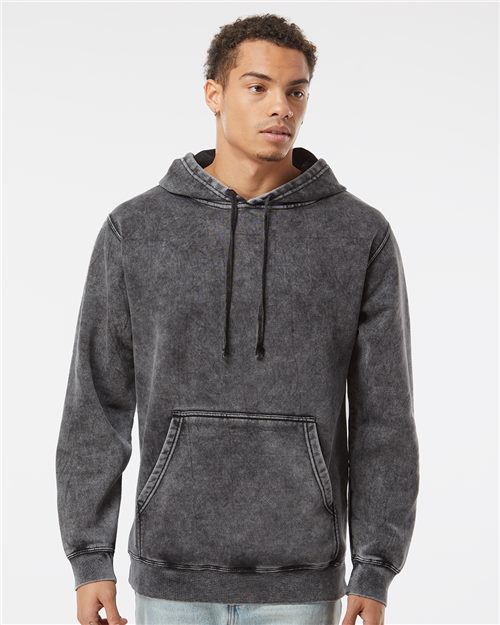
    • Choose PRM4500MW for authentic wash character. The full-garment mineral-wash process gives every hoodie a visibly individual, worn-in appearance. The manufacturer states that no two garments are exactly the same.
    • Choose SS4500 for assortment and continuity. The current manufacturer page presents a large color platform and sizes from XS through 5XL, although not every color is offered in every size.
    • Choose PRM4500MW only after an exact inventory check. Both the manufacturer and Beytees showed it unavailable when this guide was prepared.
    • Use a blocker base for plastisol on PRM4500MW. Independent Trading Co. specifically warns that a poly blocker base is needed to avoid dye migration and says to test before bulk production.
    • Do not plan discharge printing on PRM4500MW. The manufacturer’s printing note states that mineral-wash garments do not discharge.
    • Do not apply one SS4500 recipe to every color. Solid, camo, safety, Ash Heather, Gunmetal Heather, Grey Heather, and other heather groups have different published fiber blends.
    • Sample both styles. A half-ounce weight difference is less important than the wash, face yarn, fit, color, decoration behavior, availability, and finished customer experience.

    Independent Trading Co. Hoodie Comparison Table

    Specification PRM4500MW SS4500
    Manufacturer name 9 oz Unisex Midweight Mineral Wash Pullover Hood 8.5 oz Midweight Pullover Hood
    Primary purpose Vintage, band-merch, and streetwear character Versatile core hoodie programs
    Published weight 9 oz, 300 gsm 8.5 oz, 280 gsm
    Primary blend 80% cotton, 20% polyester Varies by color; solid and camo are 80% cotton, 20% polyester
    Face yarn 100% cotton, 30 singles Solid and camo use 100% cotton, 32 singles; published heather blends use 32-singles face yarn
    Finish Full-garment mineral wash with natural variation Solid, heather, bright, earth-tone, and camo choices without the PRM4500MW mineral-wash effect
    Fit language Standard unisex fit Standard fit; manufacturer overview also describes a generous fit
    Hood Jersey lined Jersey lined
    Seams Split-stitch double-needle sewing on all seams Split-stitch double-needle sewing on all seams
    Neck tape Twill Twill
    Cuffs and waistband 1×1 ribbing 1×1 ribbing
    Eyelets Sewn Metal
    Label listed by manufacturer Verify received units and relabeling needs Tear-away neck label
    Current manufacturer sizes XS through 3XL XS through 5XL in the overall range
    Current manufacturer colors Mineral Wash Black Broad multi-color assortment
    Key print warning Plastisol requires a poly blocker; no discharge printing Decoration recipe must follow the exact color and blend
    Best starting use Secured-inventory premium capsule Evergreen merch, teams, events, schools, and branded programs

    The construction overlap makes both hoodies recognizable members of the same midweight family. The finish and sourcing model create the real divide. PRM4500MW turns wash variation into part of the product. SS4500 turns range, repeatability, and color choice into the product’s operational advantage.

    What the PRM4500MW Mineral Wash Changes

    Mineral wash is not simply another black color. Independent Trading Co. says the PRM4500MW receives a full-garment dyeing process that gives each hoodie unique vintage character. That variation produces the roughed-up, already-lived-in appearance associated with concert merchandise, old band apparel, vintage athletic pieces, and modern streetwear.

    The uniqueness can add real value when the campaign is built around it. A restrained chest logo, distressed back graphic, tonal embroidery, or music-inspired print can feel more complete on a washed ground than on a flat solid. The blank contributes visual depth before decoration begins. Product photography can also show close details, high and low color areas, seams, ribbing, and the way the wash moves across the garment.

    The same variation creates production and customer-service obligations. Two units with the same SKU may not match exactly. A customer expecting uniform flat black can interpret normal mineral-wash variation as inconsistency. Photograph several real garments, write product copy that explains natural variation, approve a reasonable range, and train quality control not to reject every difference or accept every extreme.

    Never sell a digital mockup as though every delivered PRM4500MW will reproduce the same wash map. Use the mockup for artwork placement, then use physical product photography to explain the garment. For other washed fleece options, review the wholesale garment-dyed hoodie guide.

    What the SS4500 Solid Platform Changes

    The SS4500 is built as a broad midweight hoodie platform. The current manufacturer page describes it as a value, quality, and versatility choice for brands, decorators, teams, and events. Its assortment includes standard neutrals, heathers, earth tones, brights, safety colors, and multiple camouflage directions. The overall size range reaches XS through 5XL, although exact size coverage differs by color.

    That breadth supports more business models. A print shop can keep one familiar hoodie family while serving a school, company, team, creator, fundraiser, event, and retail brand. An ecommerce seller can build a controlled core around black, navy, grey, and earth tones, then add seasonal colors after demand is proven. A customer can reorder the same style without forcing a new fit and construction approval every time.

    Broad assortment does not mean identical fabric. The manufacturer currently publishes solid and camo SS4500 colors as 80/20 cotton-polyester with a 100% cotton, 32-singles face. Safety colors are 55/45. Gunmetal Heather and Grey Heather are 75/25. Ash Heather is 60/40. Other heather colors are 55/45. That blend variation can change hand, shade, heat response, migration risk, and decoration performance.

    Treat each meaningful color family as its own production substrate. Qualify one black recipe, one light solid recipe, one heather recipe, and any safety or camo direction separately. Add more groups when testing proves they behave differently.

    Fabric Weight, Face Yarn, and Hand Feel

    The PRM4500MW is published at 9 oz, or 300 gsm. The SS4500 is published at 8.5 oz, or 280 gsm. On paper, the half-ounce difference favors PRM4500MW as the slightly heavier garment. In practice, buyers should not choose from weight alone. Wash, color blend, face yarn, brushing, rib tension, garment measurements, decoration coverage, and laundering can make the perceived difference larger or smaller.

    PRM4500MW uses an 80/20 cotton-polyester blend and a 100% cotton, 30-singles face. SS4500 solid and camo colors use an 80/20 blend with a 100% cotton, 32-singles face. A higher singles number generally indicates finer yarn, but the finished surface still depends on the complete fabric and finishing system. The mineral-wash process means PRM4500MW should be judged as a finished garment, not as a specification sheet.

    Both styles are intended to provide a useful cotton-rich surface for decoration. That is a starting advantage, not a guarantee. Order the exact color and size, decorate it with the production method, wash it, and compare it with an undecorated control. If the artwork uses large solid areas, judge whether the print makes the front panel feel much stiffer than the rest of the fleece.

    For a broader decision across hoodie weights and decoration methods, use the wholesale blank hoodie guide for embroidery and the wholesale sweatshirt guide for DTF printing.

    Construction Details That Affect Decoration

    Both hoodies use a jersey-lined hood, split-stitch double-needle sewing on all seams, twill neck tape, and 1×1 ribbing at the cuffs and waistband. These shared details help create a familiar midweight pullover structure. The PRM4500MW uses sewn eyelets, while the SS4500 manufacturer specification lists metal eyelets and a tear-away neck label.

    Construction affects usable decoration space. The hood and neck tape influence upper-back placement. The pouch pocket limits the lowest safe front-print area. Ribbing and seams require enough clearance for even press pressure and clean screen contact. Eyelet hardware can affect how a heat press closes if the garment is loaded poorly. Always flatten the intended print zone and keep hardware, seams, pocket layers, and drawcord components away from the pressure field.

    For embroidery, the fleece and lining must be stabilized without creating an uncomfortable interior. For patches, confirm edge attachment, heat exposure, and backing. For large back prints, check how the hood sits over the artwork while worn. A design can look centered on a flat table and then lose its upper detail under the hood.

    Screen Printing PRM4500MW and SS4500

    The PRM4500MW needs a mineral-wash-specific screen-print workflow. Independent Trading Co. states that the garment can be printed with plastisol ink, but a poly blocker base must be used to avoid dye migration. The manufacturer also says to test mineral-wash garments before bulk production. This is a direct production warning, not an optional suggestion.

    A blocker adds ink layers, time, material, and hand-feel considerations. Test the exact garment with the intended underbase, color sequence, flash, cure, and artwork coverage. Inspect immediately, after 24 to 72 hours, and after laundering because migration can appear after the print leaves the dryer. Keep a dated control sample and record the full recipe.

    The manufacturer says PRM4500MW mineral-wash garments do not discharge. If the creative concept depends on discharge ink, this style is the wrong substrate for that process. Redesign for an opaque plastisol system with the required blocker, choose another compatible ink system after technical testing, or move to a different blank.

    SS4500 can be a simpler screen-print platform, especially in cotton-face solid colors, but simplicity is relative. Heather, safety, earth-tone, and camo groups have different fiber compositions or dye systems. Test opacity, dye migration, color shift, cure, stretch, adhesion, hand, and wash durability on each approved color family. Do not assume that a successful black SS4500 recipe is approved for every variation.

    DTF Printing on Mineral-Wash and Solid Hoodies

    DTF is useful for short runs, detailed artwork, gradients, names, numbers, and multi-color merch on both styles. It can also cover a wide color range without building a separate screen set for every design. The transfer still must be qualified on the exact hoodie.

    PRM4500MW introduces two special risks. First, heat and pressure can alter the visible washed surface or create a press box. Second, dye behavior can affect the transfer over time. Follow the transfer supplier’s instructions, use the least aggressive recipe that achieves durable adhesion, protect the garment appropriately, and test for migration, edge lift, color change, shine, pressure marks, and wash durability.

    SS4500 gives a more repeatable visual ground, but color families still differ. Safety, heather, and camo variations deserve separate tests. Large DTF panels can overpower soft midweight fleece, so use negative space, sensible print dimensions, and artwork that can flex with the garment. Inspect the hoodie while worn, not only when flat.

    If the program contains both hoodies, create distinct production profiles. Name the style, color family, transfer, press, platen, time, temperature, pressure, peel, repress, and test date. A generic setting called “hoodie” is not enough.

    Embroidery and Patch Programs

    Both styles can support left-chest embroidery, sleeve marks, controlled center designs, and patches when the artwork is digitized for fleece. The standard-fit body and midweight construction create a useful base, but stitch density, backing, hooping, needle selection, topping, and garment distortion still require sampling.

    PRM4500MW is especially attractive for tonal embroidery, vintage type, music graphics, and small premium marks. The wash supplies texture, so the embroidery does not need to carry the entire visual story. Thread colors should be approved on several garments because the mineral-wash ground can vary. A tonal thread may appear more or less contrasted across the wash.

    SS4500 is the stronger operational platform for school, team, corporate, event, and recurring logo embroidery because its color and size range is much broader. Match thread to an approved physical color standard, not a website swatch. Different hoodie colors can change the perceived thread shade.

    For patches, sew-on attachment is often easier to control than a heat-only process, especially when the garment’s dye and surface response are not fully known. If heat is part of the attachment method, test the exact patch adhesive, pressure, dwell, surface change, and wash durability.

    Fit, Size Range, and Customer Expectations

    The PRM4500MW manufacturer specification calls it a standard fit, while its product description refers to a standard unisex fit. The current range lists XS through 3XL in Mineral Wash Black. The SS4500 specification also says standard fit, while the overview describes a generous fit. Its total range lists XS through 5XL, with size availability varying by color.

    Those words do not replace measurements. Order representative sizes, measure chest width, body length, sleeve, shoulder, hood, pocket, cuff, and waistband, then repeat after the approved wash-and-dry cycle. Record the method used to measure each point. Compare garments in the exact colors planned because fabric composition and finishing can influence fit perception.

    A washed fashion hoodie and a solid core hoodie can attract different customer expectations even when both are called standard fit. PRM4500MW buyers may expect a vintage, individual product. SS4500 buyers may expect a consistent team or program fit. Product pages should show actual garment measurements, model size, model height, styling, and any expected variation.

    Color Strategy and Collection Design

    PRM4500MW currently centers on one direction: Mineral Wash Black. That constraint can make a collection stronger. The designer is forced to build around one recognizable vintage ground, which can simplify photography, packaging, thread selection, and artwork storytelling. It can also limit customers who need team colors, corporate matching, light garments, or multiple seasonal choices.

    SS4500 supplies the opposite strategy. Its broad assortment can support classic black and navy, muted earth tones, bright event colors, safety applications, heathers, pastels, and camo. That range is valuable only when it is curated. Listing dozens of slow-moving colors can fragment inventory, complicate photography, increase exchanges, and weaken the collection’s point of view.

    Start with the customer and reorder model. Use PRM4500MW when one specific wash is the story. Use a focused SS4500 palette when the hoodie is a repeatable canvas. Add colors after sales evidence, decoration approval, and supply reliability justify the complexity. The custom apparel inventory management guide explains how to control size and color growth.

    Which Hoodie Fits Each Business Use Case?

    Vintage music and artist merchandise

    PRM4500MW is the more natural creative starting point. The mineral wash echoes old concert apparel and gives each piece individual character. Use it for a limited release only after securing the full size run, test units, spoilage allowance, and replacement stock.

    Streetwear capsule

    Either style can work. Choose PRM4500MW when wash variation is central. Choose SS4500 when the collection depends on multiple colors, repeat drops, or extended sizing. For other premium fleece directions, compare the Comfort Colors 1467 vs 1567 hoodie guide.

    Schools, teams, and clubs

    SS4500 is usually the more practical candidate because its color and size range better supports team identity and inclusive ordering. Exact variation inventory and decoration still must be confirmed. For youth-inclusive programs, qualify the corresponding youth style separately instead of assuming adult and youth garments behave identically.

    Corporate uniforms and employee apparel

    SS4500 offers a more conventional, repeatable surface for logos and a broader neutral palette. The mineral-wash PRM4500MW can work for hospitality, creative, music, or lifestyle businesses that intentionally want variation, but it is not the obvious choice for strict uniformity.

    Evergreen ecommerce products

    SS4500 is the safer base when the listing must remain reorderable across seasons. PRM4500MW fits a limited, numbered, or scarcity-driven release better, especially while live availability is constrained.

    Print-on-demand style fulfillment

    Use the blank that your actual fulfillment network can keep available in the required locations. A beautiful mineral-wash listing fails if the service cannot source it reliably. Validate style mapping, color naming, size coverage, production method, routing, and replacement policy before accepting orders.

    Current Availability and Replenishment Risk

    The strongest creative choice is useless if it cannot be purchased. During the September 2, 2026 research check, the official Independent Trading Co. product data listed PRM4500MW only in Mineral Wash Black, XS through 3XL, with all current variations unavailable. The official SS4500 product data showed the style available overall across a much larger range, although individual variations were mixed.

    The live Beytees Store API reported both product records out of stock during the same check. That difference illustrates why buyers should never infer supplier inventory from manufacturer availability. Stock can differ by distributor, warehouse, color, size, account, and update cycle. Check the exact seller from which the order will be placed.

    For PRM4500MW, obtain written confirmation or a live sellable quantity before opening a preorder. Reserve blanks for testing, setup, spoilage, and customer replacement. Cap sales at the quantity that can actually be fulfilled. Do not promise an open restock until a supplier provides credible replenishment evidence.

    For SS4500, check every size-color cell in the planned run. A style can be available overall while an important size is missing. If substitutions are allowed, define them in writing before production. A different color, blend, hoodie style, or size is not an automatic substitute.

    Blank Cost, Production Cost, and Finished Margin

    Compare the finished program, not only the blank price. Include inbound freight, receiving, artwork preparation, screens or transfers, blocker base, pretreatment where applicable, ink or thread, digitizing, setup, test garments, spoilage, relabeling, packaging, barcodes, storage, pick-and-pack labor, payment fees, returns, customer replacements, and outbound shipping.

    PRM4500MW can justify a premium retail price when the wash, photography, story, and decoration create a clearly differentiated product. That premium must cover additional testing, blocker requirements for plastisol, possible press-mark control, wash variation management, and limited replenishment. Scarcity is not margin if missing sizes create refunds or customer disappointment.

    SS4500 can reduce operational friction through repeatability and assortment, but its color depth can create dead stock. Curate the range, set reorder points, and avoid buying every attractive shade before sales data exists. A lower blank cost can disappear quickly if the program carries too many slow-moving size-color combinations.

    When timing affects margin, use the Beytees wholesale blank apparel shipping guide to separate supplier transit, production time, and final delivery.

    A Practical Wholesale Buying Workflow

    1. Define the customer, use case, quantity, delivery date, target retail price, and whether the hoodie must be replenishable.
    2. Decide whether a unique mineral wash is essential or whether the garment should be a consistent solid platform.
    3. Check the live Beytees product page for the exact style, color, size, price, and availability.
    4. Confirm manufacturer status and do not confuse manufacturer availability with distributor inventory.
    5. For PRM4500MW, secure the full run plus test, spoilage, and replacement units before launching sales.
    6. For SS4500, identify the exact fiber blend for every approved color family.
    7. Order representative colors and sizes, then record garment measurements and visible finish variation.
    8. Create production-size artwork and review placement around the hood, pocket, seams, eyelets, ribbing, and drawcord area.
    9. Run the actual screen print, DTF, embroidery, patch, or other decoration process on each required substrate group.
    10. For plastisol on PRM4500MW, use the required blocker base and test for delayed dye migration.
    11. Do not use discharge printing on PRM4500MW.
    12. Inspect opacity, color, registration, adhesion, surface change, press marks, puckering, stretch, hand feel, and interior comfort.
    13. Wash and dry decorated samples according to the approved care method, then compare them with controls.
    14. Calculate the complete finished cost and reserve realistic spoilage.
    15. Publish actual fit guidance and explain normal mineral-wash variation when selling PRM4500MW.
    16. Create a written substitution rule and require customer approval before changing any blank.
    17. Recheck sellable inventory immediately before accepting the deadline or opening the order.
    18. Retain the approved garment, decorated sample, artwork revision, measurements, settings, and test results.

    Final Verdict

    The Independent Trading Co. PRM4500MW is the better creative tool when the product needs true mineral-wash variation, a worn-in black ground, and a vintage or streetwear identity before decoration. Its 9 oz, 80/20 fleece, 100% cotton 30-singles face, standard unisex fit, sewn eyelets, and individual wash character support premium limited merchandise. Its current availability and print requirements demand careful planning.

    The Independent Trading Co. SS4500 is the better operational tool for most ongoing hoodie programs. Its 8.5 oz midweight fleece, broad color range, overall XS through 5XL size span, tear-away neck label, and current manufacturer availability make it easier to build teams, events, schools, uniforms, ecommerce, and recurring merch. Buyers still need exact variation and fiber-blend checks.

    For the PRM4500MW vs SS4500 choice, start with the business promise. If the promise is “every hoodie has unique vintage character,” qualify and secure PRM4500MW. If the promise is “customers can choose colors and reorder a dependable midweight hoodie,” qualify SS4500. Never substitute one for the other without a new sample, revised mockup, cost review, and approval.

    Browse the Beytees wholesale blank apparel catalog for current alternatives. If SS4500 is the leading option, the Gildan 18500 vs Independent Trading Co. SS4500 comparison provides another useful sourcing checkpoint.

    Frequently Asked Questions

    What is the main difference between PRM4500MW and SS4500?

    PRM4500MW is a 9 oz mineral-wash pullover designed for unique vintage character. SS4500 is an 8.5 oz core midweight pullover offered in a much broader color and size range. The first emphasizes wash individuality, while the second emphasizes versatility and repeatability.

    Is PRM4500MW heavier than SS4500?

    Yes, by published nominal weight. PRM4500MW is 9 oz, or 300 gsm, while SS4500 is 8.5 oz, or 280 gsm. The half-ounce difference does not describe the full hand-feel difference because wash, blend, face yarn, color, decoration, and laundering also matter.

    Are PRM4500MW and SS4500 the same fit?

    Do not assume they fit identically. Independent Trading Co. describes PRM4500MW as a standard unisex fit. SS4500 is specified as standard fit and described in its overview as generous. Compare physical samples and publish actual measurements for the exact sizes offered.

    Can PRM4500MW be screen printed with plastisol?

    Yes, but Independent Trading Co. states that a poly blocker base must be used to avoid dye migration. The manufacturer also says to test mineral-wash garments before bulk production. Approve the full production recipe on the exact garment and inspect for delayed migration.

    Can PRM4500MW be discharge printed?

    No. The manufacturer’s current printing note states that mineral-wash garments do not discharge. Choose a compatible opaque ink system after testing or select a different blank if discharge is essential to the design.

    Which hoodie is better for DTF printing?

    Both can be tested for DTF. SS4500 is generally easier to build into a repeatable multi-color program. PRM4500MW offers a stronger vintage background but requires extra attention to heat marks, wash change, dye behavior, and variation. Test the exact style, color, transfer, and press recipe.

    Which hoodie is better for embroidery?

    Both are viable embroidery candidates after digitizing and stabilization tests. PRM4500MW suits premium tonal or vintage designs. SS4500 suits recurring team, company, school, and event programs because it offers more colors and extended sizes.

    Does every PRM4500MW hoodie look the same?

    No. Independent Trading Co. says the mineral-wash process gives every garment unique vintage character and that no two garments are exactly the same. Explain that variation in product copy and show multiple physical garments in photography.

    Is SS4500 always an 80/20 cotton-polyester blend?

    No. Solid and camo colors are published as 80/20. Safety colors are 55/45. Gunmetal Heather and Grey Heather are 75/25. Ash Heather is 60/40. Other heathers are 55/45. Verify the current specification for the exact color.

    Does SS4500 have a cotton face?

    Solid and camo SS4500 colors are published with a 100% cotton, 32-singles face yarn. The manufacturer also lists 32-singles face yarn for its heather blend groups. The complete fiber blend still varies, so decoration approval must follow the exact color.

    What sizes are available in PRM4500MW and SS4500?

    The current manufacturer range lists PRM4500MW from XS through 3XL. The SS4500 overall range reaches XS through 5XL. Not every color is offered or stocked in every size. Check the exact size-color variation before selling.

    Which hoodie is better for a vintage merch drop?

    PRM4500MW is the more direct choice when visible wash variation is central to the concept. SS4500 can support vintage artwork, but it does not create the same full-garment mineral-wash background. Secure PRM4500MW inventory before announcing the drop.

    Which hoodie is better for schools, teams, or company apparel?

    SS4500 is usually the more practical starting candidate because of its larger color platform and extended size range. Exact stock, color matching, fiber blend, decoration, and wearer fit still need approval.

    Can SS4500 replace PRM4500MW without approval?

    No. The replacement changes weight, finish, wash variation, face yarn, eyelet construction, size and color range, and the finished visual product. Prepare a new sample and mockup, update the cost and product description, and obtain approval before substituting.

    Where can I buy PRM4500MW and SS4500 wholesale?

    Beytees maintains wholesale product records for both Independent Trading Co. hoodies. Both records appeared out of stock when this guide was prepared on September 2, 2026. Check the live product pages for current variations, price, availability, and delivery timing before ordering.

    What should I test before a bulk hoodie order?

    Test fit, measurements, artwork placement, print or embroidery setup, opacity, migration, adhesion, cure, pressure marks, puckering, stretch, hand feel, wash durability, and customer-facing appearance. For PRM4500MW, also approve normal mineral-wash variation and the required blocker workflow.

    Are PRM4500MW and SS4500 good private-label blanks?

    They can support branded merchandise, but verify the exact received labels and all legal fiber, origin, care, and tracking requirements. SS4500 currently specifies a tear-away neck label. PRM4500MW label construction should be confirmed on the received unit before a relabeling plan is approved.

    How often should inventory be checked?

    Check when quoting, before taking payment, before committing the production calendar, and immediately before placing the order. For limited or currently unavailable styles, obtain exact sellable quantities and do not rely on a general product-page status.

  • BELLA + CANVAS 3003 vs 3001: Curved Hem vs Classic Tee

    BELLA + CANVAS 3003 vs 3001: Curved Hem vs Classic Tee

    Choose the BELLA + CANVAS 3003 when a subtle high-low curved hem is essential to a limited fashion or layering concept and you have already secured the required inventory. Choose the BELLA + CANVAS 3001 when you need an active core unisex jersey tee with a broad manufacturer assortment that is easier to size, recolor, and plan around for an ongoing merch program.

    That is the practical answer to the BELLA + CANVAS 3003 vs 3001 decision in 2026. The two styles share a published 4.2 oz, 32-singles Airlume jersey foundation, but they serve different merchandising jobs. The 3003 uses a curved, subtle high-low bottom hem and a men’s retail fit. The 3001 uses a classic straight hem, unisex sizing, shoulder taping, and a much broader active assortment.

    Availability now matters as much as silhouette. BELLA + CANVAS currently marks the 3003 as obsolete on its manufacturer product record. The live Beytees Store API showed both product records as out of stock when this guide was prepared on September 1, 2026, but the 3001 remains an active manufacturer style while the 3003 does not. Check the live BELLA + CANVAS 3003 wholesale product page and BELLA + CANVAS 3001 wholesale product page before quoting a customer, ordering samples, or promising a replenishment date.

    BELLA + CANVAS 3003 vs 3001: Quick Answer

    • Choose the 3003 for silhouette. Its subtle high-low curved bottom hem creates a fashion-forward finish that can work for streetwear layering, boutique capsules, artist merch, and minimalist graphics.
    • Choose the 3001 for repeatability. It is an active, classic unisex tee with an extensive current manufacturer color range and sizes published from XS through 5XL.
    • Do not treat the 3003 as a dependable replenishment blank. The manufacturer record currently labels it obsolete, and Beytees showed it out of stock at publication time.
    • Both start with fine 4.2 oz, 32-singles jersey. Solid-color versions are published as 100% Airlume combed and ring-spun cotton, while some colors use different blends.
    • Approve decoration separately. Hem geometry, fit, color fiber content, artwork scale, press setup, and availability make the production decision different even when the nominal fabric weight matches.
    • Sample the intended size and color. A shared fabric specification does not guarantee the same drape, body length impression, artwork balance, or wearer preference.

    BELLA + CANVAS Tee Comparison Table

    Specification BELLA + CANVAS 3003 BELLA + CANVAS 3001
    Manufacturer product name Men’s Jersey Short Sleeve Tee With Curved Hem Unisex Jersey Short Sleeve Tee
    Published solid-color fabric 100% Airlume combed and ring-spun cotton 100% Airlume combed and ring-spun cotton
    Published weight 4.2 oz/yd² 4.2 oz/yd²
    Yarn detail 32 singles 32 singles
    Hem Subtle high-low curved bottom hem Classic straight bottom hem
    Fit language Men’s retail fit Classic fit with unisex sizing
    Neck and shoulder construction 3/8-inch neck binding Shoulder taping; current Beytees record also lists a coverstitched collar and sleeves
    Side seams Yes Yes
    Pre-shrunk Yes Yes
    Current manufacturer status Obsolete Active
    Current published manufacturer sizes Verify remaining inventory; Beytees currently lists S through 2XL variations XS through 5XL
    Current assortment direction Limited legacy fashion style Broad core assortment with 86 manufacturer-listed colors
    Best starting use Secured-inventory capsules where the curved hem is part of the design Ongoing merch, teams, events, uniforms, ecommerce, and repeat programs

    The shared weight and yarn count can make these tees look interchangeable in a spreadsheet. They are not. The 3003’s hem changes the outline of the finished garment, while the 3001’s active status, size span, and color depth make it operationally safer for most wholesale programs.

    The First Decision Is Availability, Not Artwork

    A merch program cannot be built on a silhouette that cannot be replenished. BELLA + CANVAS currently identifies the 3003 as obsolete in the product data embedded on its official page. Beytees still maintains a useful 3003 product record and product imagery, but the live Store API reported the style out of stock when this article was prepared. That means the 3003 should be treated as a legacy or opportunistic blank unless a supplier confirms exact sellable units for the required colors and sizes.

    The 3001 is the stronger operational default. BELLA + CANVAS lists it as active, publishes sizes from XS through 5XL, and presents 86 colors. The live Beytees Store API also reported the 3001 product record as out of stock at publication time, so it is not an immediate inventory promise. Unlike the obsolete 3003, however, the active 3001 gives a buyer a more credible base for future repeat orders, team programs, evergreen ecommerce listings, and color extensions when exact variations are available.

    If you already own verified 3003 inventory, it can still support a controlled capsule. Count every sellable unit by size and color, reserve spoilage replacements, and cap customer sales at the quantity you can actually fulfill. Do not launch an open-ended preorder or a permanent uniform program from a discontinued blank without a written substitution plan.

    Curved Hem vs Classic Straight Hem

    The 3003’s defining feature is its subtle high-low curved bottom hem. The front and back contour make the tee feel more styled than a conventional straight-hem blank. It can show beneath a jacket, overshirt, hoodie, or cropped outer layer, and it can help a simple chest mark feel like part of a complete fashion product rather than an ordinary promotional shirt.

    That silhouette is especially useful when the blank itself carries the design story. Streetwear capsules, boutique collections, music merch, creator drops, fitness lifestyle collections, and monochrome logo programs can benefit from a hem that remains visible even when the artwork is restrained. The curved edge can also affect how a customer perceives torso length and layering, so photographs should show the actual tee on a wearer instead of relying on a flat mockup.

    The 3001 uses the familiar straight-hem shape expected from a versatile retail-fit jersey tee. That is an advantage for broad programs. It works with standard product photography, common print placements, familiar size expectations, and mixed audiences. The straight hem is also easier to combine with existing merch when customers may reorder the same graphic in another color or size.

    Neither hem is universally better. The 3003 makes a visual statement, while the 3001 reduces explanation. If the curved hem is not visible in the final photography, styling, or customer experience, it may not create enough value to justify the sourcing risk.

    Fabric, Weight, and Hand Feel

    Both styles are published at 4.2 oz/yd² with 32-singles Airlume combed and ring-spun cotton in solid colors. Fine yarn and combed, ring-spun construction create a smoother starting surface than a coarse promotional tee. That can support detailed printing and a soft retail hand, but it does not eliminate the need for production testing.

    The official 3003 record says heather colors use 52% Airlume combed and ring-spun cotton and 48% polyester while retaining the published 4.2 oz weight. The current 3001 manufacturer record states that Ash is 99% Airlume cotton and 1% polyester. Other 3001 colors and blend families can have different compositions, so verify the exact color’s product specification and sewn label instead of applying the solid-color fiber statement to the entire assortment.

    A matching nominal weight does not guarantee identical hand feel. Dye, fiber blend, color, garment geometry, production tolerance, decoration, and laundering can change how each sample feels and hangs. A large transfer or thick ink deposit can also overwhelm a lightweight jersey blank. Approve the physical decorated garment, not just the fabric specification.

    For a broader explanation of how ounces per square yard affect print planning, read the blank T-shirt weight guide for different decoration methods.

    Fit and Sizing for Real Customers

    BELLA + CANVAS describes the 3003 as a men’s retail-fit tee. It is side-seamed, pre-shrunk, and finished with 3/8-inch neck binding. Beytees currently lists legacy 3003 variations from S through 2XL. Because remaining inventory may be incomplete, the usable size range for a specific order can be narrower than the catalog’s historical list.

    The 3001 is described as a classic fit with unisex sizing. It is side-seamed and shoulder-taped, and the manufacturer currently publishes XS through 5XL. That broader range is a major advantage for schools, teams, employee programs, fundraisers, events, and ecommerce brands that need a defensible size offering.

    Do not translate “men’s” and “unisex” into an automatic size conversion. Order representative samples in the actual colors, then record chest width, body length, shoulder, sleeve opening, hem behavior, and post-wash measurements. Photograph each sample on people who represent the intended customer base. A curved hem can change the visual length even when a flat measurement seems familiar.

    For preorder programs, publish garment measurements and clear fit photographs. State whether the model sized up, down, or wore a usual size. That evidence reduces guesswork, exchanges, and customer service tickets more effectively than a generic “retail fit” label.

    Color Strategy and Assortment Depth

    The 3003’s remaining Beytees record currently shows seven color names: Black, Dark Grey, Heather Cool Grey, Heather Sand Dune, Navy, Oxblood Black, and White. Those colors cover useful neutral, dark, and muted directions, but a catalog record is not inventory. The style was out of stock in the live store data at publication time, and the obsolete manufacturer status makes future replenishment uncertain.

    The 3001 is designed as a core color platform. BELLA + CANVAS currently presents 86 colors, and the Beytees product record spans neutrals, team colors, earth tones, brights, pastels, and vintage directions. The larger palette helps brands separate collections, match event identities, build school or team programs, and add seasonal color without changing the base fit.

    Color depth also affects purchasing efficiency. A brand can qualify one 3001 fit and decoration workflow, then test additional colors within the same style. Every added color still needs an exact fiber-content check, press or ink test, and inventory review, but the active style creates a more coherent expansion path.

    Do not promise a color from a screen image. Order the exact variation, review it under the lighting used for sales and production, and retain an approved reference sample. Named colors can render differently across monitors, photographs, dye lots, and fiber blends.

    Screen Printing on the 3003 and 3001

    Both tees can provide a smooth starting surface for screen printing, but the artwork should be approved on the exact style and color. Fine 32-singles jersey can reproduce detail well, while the 4.2 oz weight makes ink deposit, opacity, cure, stretch, and hand feel important. A print that is technically durable can still feel too heavy for the garment.

    On the 3003, position the artwork in relation to the curved hem and the final worn silhouette. A conventional large center print can work, but a design placed too low may appear closer to the rising side curve than expected. Print a full-size paper or film mockup, place it on the sample, and review it on a wearer before screens are burned.

    On the 3001, standard center-chest and left-chest layouts are easier to repeat across a broad size run. Even so, one placement measurement may not look balanced from XS through 5XL. Define placement rules by size group, record platen setup, and inspect the smallest and largest approved garments.

    For both styles, confirm the exact color’s fiber content before choosing ink, underbase, flash, and cure settings. Test opacity, registration, dye interaction, scorch risk, stretch, wash durability, and finished hand. Keep an approved decorated sample beside the production line.

    DTF and Heat Transfer Considerations

    DTF can support detailed, full-color, and lower-quantity merch on either silhouette, but the transfer should be engineered for lightweight jersey. Large solid areas can make a 4.2 oz tee feel much stiffer than the undecorated blank. Negative space, separated artwork, and realistic print dimensions can preserve more of the garment’s natural drape.

    The 3003 requires extra placement review because the curved hem changes the lower boundary of the printable visual field. Keep the transfer far enough from the curved edge and side seams to maintain even pressure. Check the sample while worn, because a flat table can hide how the hem and graphic interact around the torso.

    The 3001 offers a more conventional platen and placement workflow. Its active assortment makes it a better candidate for documented repeat production, but different solid, Ash, and heather compositions can still react differently to heat and pressure. Do not copy a recipe from one color to the entire range.

    Follow the current transfer supplier and press manufacturer instructions for temperature, time, pressure, peel, and post-press. Test for color change, press marks, scorching, edge lift, adhesion, cracking, stretch, and laundering. The wholesale blank T-shirt guide for DTF printing provides additional questions for qualifying a tee before a production run.

    DTG Printing and Artwork Detail

    The Airlume cotton surface makes both styles reasonable DTG sample candidates, especially in solid colors. The smooth jersey can support fine lines, gradients, and photographic artwork, but pretreatment, white ink, curing, garment moisture, and color still control the result. A published cotton composition is not a production approval.

    Evaluate pretreatment staining, white-ink opacity, color accuracy, edge detail, hand feel, and wash durability. On heather or blended variations, qualify the exact fiber composition and test for the behavior of the chosen ink system. Record pretreatment volume and cure method by style and color.

    The 3003 can elevate a small, refined DTG design because the curved hem contributes to the retail presentation. The 3001 can carry the same artwork across more sizes and colors, which is valuable for an ecommerce catalog. Decide whether the commercial advantage comes from the garment silhouette or from the ability to scale the art across a stable blank.

    Embroidery, Patches, and Lightweight Jersey

    Embroidery can work on lightweight jersey when the design is digitized for the fabric, but neither style should be treated like a polo, cap, or heavy sweatshirt. Excessive density can cause puckering, distortion, uncomfortable backing, and a rigid decorated panel.

    Favor realistic letter sizes, controlled stitch counts, appropriate underlay, a suitable needle, and backing that supports the design without overpowering the tee. A small left-chest mark is generally a more natural starting sample than a large, dense fill. Inspect the front, inside comfort, drape, and wash result.

    The 3003’s fashion silhouette can pair well with restrained embroidery, but its discontinued status makes setup cost harder to recover through repeat volume. The 3001 is the safer base for a recurring embroidered program because the blank can support a broader size and color offering. That operational advantage does not replace the need for a sew test.

    Private Label and Brand Presentation

    The current Beytees product records list tear-away labels on both styles, which can simplify a relabeling workflow. A tear-away label is only one part of private labeling. The brand must still address legal fiber, country-of-origin, care, tracking, and other required information for the exact market and product.

    The 3003 can create a more distinctive private-label silhouette, but a discontinued base garment can undermine continuity. If the style disappears after the first drop, customers may not be able to reorder the same fit, and a brand may need new photography, measurements, decoration tests, and product copy for a replacement.

    The 3001 creates less silhouette differentiation but offers a more stable platform for neck branding, packaging, size expansion, and color releases. A strong private-label program can differentiate through artwork, fit communication, color curation, neck treatment, packaging, photography, and customer experience rather than relying on an unusual hem alone.

    Review the wholesale tear-away label T-shirt guide before building a relabeling workflow.

    Which Tee Fits Each Merch Program?

    Choose the 3003 for a controlled fashion capsule

    The 3003 can still be useful when a buyer has verified inventory and the curved hem is visible in the finished concept. Good candidates include limited artist releases, boutique drops, editorial merchandise, fitness lifestyle capsules, layered streetwear, and monochrome collections where the garment shape carries part of the value.

    Keep the program closed and countable. Confirm exact sellable units, allocate blanks for decoration tests and spoilage, cap sales, and disclose the measured fit. Do not market an unavailable variation or assume another supplier can replace sold inventory.

    Choose the 3001 for an evergreen merch system

    The 3001 is better suited to ongoing ecommerce listings, school and team programs, corporate merchandise, event shirts, creator basics, print shops, fundraisers, subscription boxes, and customer designs that may be reordered. Its unisex sizing, active manufacturer status, size breadth, and large color assortment reduce operational friction.

    For brands comparing other core retail-fit options, the BELLA + CANVAS 3001 vs Gildan 64000 guide explains how the 3001 fits into a broader blank-tee decision. If soft heather and blend options are central, use the 3001CVC vs Gildan 64000CVC comparison.

    Use a substitute only after requalification

    If the 3003 silhouette is required but stock is unavailable, do not silently replace it with the 3001. A straight-hem unisex tee changes the product. Qualify an alternate curved-hem style with new samples, measurements, decoration tests, photography, cost, and customer approval.

    The streetwear blank T-shirt guide can help define alternative weight and silhouette directions when a discontinued fashion blank no longer supports the program.

    Blank Cost, Risk, and Finished Margin

    Do not compare only the displayed blank price. Calculate the complete finished cost: blank, inbound freight, artwork cleanup, screens or transfer, pretreatment, ink, embroidery digitizing, labor, setup, test garments, spoilage, relabeling, packaging, barcodes, cartons, payment fees, returns, and outbound shipping.

    The 3003 carries an additional continuity cost. A discontinued blank can create partial size runs, dead inventory, unavailable replacements, customer service work, and forced redevelopment of the product. A discounted legacy unit is not necessarily inexpensive if the program needs another production run.

    The 3001 can reduce continuity risk, but a broad color catalog can tempt a brand to carry too many slow-moving variations. Start with proven colors and sizes, set reorder points, and add assortment only when sales data supports it. The custom apparel inventory management guide provides a framework for controlling size-color complexity.

    A Practical Wholesale Buying Workflow

    1. Define the customer, selling channel, quantity, delivery date, target retail price, and whether the shirt must be reorderable.
    2. Decide whether the curved hem is essential to the product or simply attractive in one mockup.
    3. Check the live Beytees product record for exact style, color, size, price, and availability.
    4. For the 3003, obtain supplier confirmation of actual sellable inventory and do not assume replenishment.
    5. For the 3001, confirm the exact color’s fiber content and warehouse timing even though the style is active.
    6. Order representative sizes and colors before committing to a bulk program.
    7. Measure chest, body, shoulder, sleeve, and hem, then photograph each sample on intended wearers.
    8. Prepare production-size artwork in relation to the actual hem and fit.
    9. Run the intended screen print, DTF, DTG, heat transfer, or embroidery process on every approved color family.
    10. Inspect alignment, opacity, hand feel, press evidence, puckering, edge lift, cure, and interior comfort.
    11. Wash and dry decorated samples according to the approved care method, then compare them with undecorated controls.
    12. Build the complete finished cost, including testing, spoilage, relabeling, packaging, freight, and returns.
    13. Reserve replacement blanks and cap sales at verified capacity for any discontinued style.
    14. Create a written substitution rule and require approval before changing the blank.
    15. Recheck inventory immediately before accepting the customer deadline or opening a preorder.
    16. Retain the approved blank, decorated sample, artwork revision, settings, measurements, care test, and quality standard.

    If delivery timing drives the decision, review the Beytees wholesale blank apparel shipping guide. Supplier transit estimates, warehouse allocation, decoration capacity, and final delivery are separate parts of the schedule.

    Final Verdict

    The BELLA + CANVAS 3003 wins only when the curved, subtle high-low hem is central to a limited product concept and the required inventory is already verified. Its 4.2 oz Airlume jersey, retail fit, and distinctive lower silhouette can produce a strong fashion presentation. Its obsolete manufacturer status and current Beytees out-of-stock state make it a poor foundation for an open-ended or replenishment-dependent program.

    For the BELLA + CANVAS 3003 vs 3001 decision, the 3001 is the better default for most merch brands once exact stock is confirmed. It keeps the lightweight 4.2 oz, 32-singles Airlume jersey foundation while adding active manufacturer support, unisex sizing, sizes published from XS through 5XL, shoulder taping, a conventional straight hem, and an extensive color range. Those characteristics make it easier to sample, sell, photograph, reorder, and expand.

    Make the final choice from live inventory and decorated physical samples. If the 3003 is unavailable, do not pretend the 3001 is the same garment. Decide whether the program truly needs a curved hem, qualify an available substitute if it does, or choose the 3001 and design intentionally around its classic silhouette. Browse the Beytees wholesale blank apparel catalog to confirm current alternatives, pricing, and exact variations.

    Frequently Asked Questions

    What is the main difference between BELLA + CANVAS 3003 and 3001?

    The 3003 has a subtle high-low curved bottom hem and a men’s retail fit. The 3001 has a classic straight hem, unisex sizing, shoulder taping, a much broader active assortment, and sizes currently published from XS through 5XL.

    Is the BELLA + CANVAS 3003 discontinued?

    BELLA + CANVAS currently marks the 3003 as “obsolete” in the product data on its official 3003 manufacturer page. The Beytees catalog also showed the style out of stock when this guide was prepared on September 1, 2026. Verify live supplier inventory before planning a purchase.

    Is the BELLA + CANVAS 3001 still active?

    Yes. The official BELLA + CANVAS 3001 product record currently identifies the style as active and publishes sizes from XS through 5XL. Exact size-color inventory can still change by supplier and warehouse.

    Are the 3003 and 3001 the same fabric weight?

    Both styles are published at 4.2 oz/yd² with 32-singles Airlume combed and ring-spun cotton in solid colors. Matching nominal weight does not guarantee identical drape or hand because color, blend, construction, hem, decoration, and production tolerance can differ.

    Are BELLA + CANVAS 3003 and 3001 100% cotton?

    Solid-color versions are published as 100% Airlume combed and ring-spun cotton. The 3003 manufacturer record says heathers are 52/48 cotton/polyester. The 3001 record lists Ash as 99/1 cotton/polyester, and other color families may have their own blends. Verify the exact color specification.

    Which tee is better for streetwear layering?

    The 3003 has the more visible layering feature because its curved, subtle high-low hem can extend the silhouette beneath an overshirt, jacket, or hoodie. Use it only when exact inventory is secured. The 3001 is easier to replenish but has a conventional straight hem.

    Which tee is better for a recurring merch program?

    The 3001 is the stronger starting point for recurring merch because it is active, uses unisex sizing, has a broad size range, and offers an extensive color assortment. Current availability still must be confirmed before each order.

    Which tee is better for DTF printing?

    Both can be tested for DTF, but the 3001 is operationally safer for repeat production. On either 4.2 oz tee, control transfer size and solid coverage so the decoration does not overpower the fabric. Test the exact style, color, blend, and press recipe.

    Which tee is better for screen printing?

    Both offer a fine 32-singles Airlume jersey starting surface. The 3003 requires artwork placement review around the curved hem, while the 3001 supports a more conventional, repeatable placement workflow. Ink, underbase, cure, opacity, and wash durability still require exact-color testing.

    Can the same artwork placement be used on both styles?

    Use the same artwork as a starting point, but approve placement separately. The 3003’s curved hem changes the lower visual boundary, and the fit language differs. Review production-size artwork on the actual garment and wearer before printing.

    Do the 3003 and 3001 fit the same?

    Do not assume so. BELLA + CANVAS describes the 3003 as a men’s retail fit and the 3001 as a classic fit with unisex sizing. Compare physical samples and publish actual garment measurements for the sizes offered.

    Can the 3001 replace the 3003 without customer approval?

    No. The 3001 changes the hem, sizing system, assortment, and finished silhouette. Treat it as an alternate product, create a new sample and mockup, and obtain customer approval before substituting it in an existing order.

    Do both tees have tear-away labels?

    The current Beytees product records list tear-away labels on both styles. Confirm the exact received unit and preserve all legally required fiber, origin, care, and tracking information when relabeling.

    Where can I buy BELLA + CANVAS 3003 and 3001 wholesale?

    Beytees maintains wholesale product pages for both styles. The 3003 was out of stock when this article was prepared and is currently marked obsolete by the manufacturer. The 3001 is the active core option. Check the live product pages for current variations, prices, warehouse availability, and delivery estimates before ordering.

  • Comfort Colors 1467 vs 1567: Lightweight vs Heavyweight Garment-Dyed Hoodies

    Comfort Colors 1467 vs 1567: Lightweight vs Heavyweight Garment-Dyed Hoodies

    Choose the Comfort Colors 1467 when you want a lighter, 6.4 oz, 100% ring-spun cotton hoodie for year-round layering and warm-climate merch. Choose the Comfort Colors 1567 when you want a more substantial, 9.5 oz, 80/20 cotton-polyester hoodie with three-end cotton-face fleece, a pouch pocket, side seams, and a back neck patch for customization.

    That is the short answer to the Comfort Colors 1467 vs 1567 decision. The better wholesale hoodie depends on how the finished garment should feel, when customers will wear it, what decoration process you will use, and how much blank cost your program can carry. Both styles are garment-dyed, relaxed-fit hoodies sold by Beytees in sizes S through 3XL, but they are not interchangeable blanks.

    Start with the live Comfort Colors 1467 wholesale product page and Comfort Colors 1567 wholesale product page. Product pricing, size-color inventory, warehouse availability, and delivery estimates can change. Confirm the exact variation before promising a launch date or accepting a customer order.

    Comfort Colors 1467 vs 1567: Quick Answer

    • Choose the 1467 for lightweight comfort. Its published 6.4 oz fabric is 100% ring-spun U.S. cotton with 31 singles. It works as a seasonless layer, a warm-weather evening hoodie, and a coordinated match for the lightweight 1468 shorts and 1469 sweatpants.
    • Choose the 1567 for a heavier premium feel. Its published 9.5 oz fabric is an 80/20 ring-spun cotton-polyester blend with three-end cotton-face fleece and 100% cotton threads.
    • Choose the 1467 when cotton composition is central to the brief. The body is published as 100% cotton. Always verify the sewn label on the exact production unit when fiber-content labeling matters.
    • Choose the 1567 when structure and cold-weather utility matter more. It has a pouch pocket, side seams, and a back neck patch for easy customization in the current product specification.
    • Sample both for decoration. The 1467 has less fabric mass, while the 1567 is thicker and blended even though it has a cotton face. DTF, screen printing, DTG, HTV, and embroidery settings must be approved on the exact color and style.
    • Do not choose from mockups alone. Weight, drape, hood shape, dye character, artwork scale, and wearer preference are physical decisions.

    Comfort Colors Hoodie Comparison Table

    Specification Comfort Colors 1467 Comfort Colors 1567
    Published fabric weight 6.4 oz/yd² US 9.5 oz/yd² US
    Published fiber content 100% ring-spun cotton 80/20 ring-spun cotton/polyester
    Yarn detail 31 singles 30 singles
    Face and thread detail Soft ring-spun cotton fabric with 100% cotton threads Three-end cotton-face fleece with 100% cotton threads
    Fit Relaxed Relaxed
    Hood Jersey lined, natural flat drawcord; white drawcord on White Jersey lined, color-matched flat drawcord
    Shoulder Rolled forward Rolled forward
    Cuffs and waistband 1×1 rib 1×1 rib
    Additional published construction Signature twill label Back neck patch, pouch pocket, side seams, signature twill label
    Current Beytees size range S through 3XL S through 3XL
    Current Beytees color count 11 listed colors 11 listed colors
    Best starting use case Lightweight layers, spring and summer programs, travel, resort, and coordinated lounge sets Fall and winter merch, substantial premium hoodies, campus programs, and cold-weather retail

    The 1567 is 3.1 oz/yd² heavier by the published U.S. fabric figures, which is about 48% more nominal fabric weight than the 1467. That percentage describes the listed fabric weight, not the exact shipping weight of a finished garment. Hoods, pockets, seams, rib, dye, size, and manufacturing tolerance also affect the physical unit.

    The Biggest Difference Is Fabric Weight and Composition

    A hoodie can look similar in a front-facing catalog image while feeling entirely different on a person. The Comfort Colors 1467 uses a 6.4 oz, 100% ring-spun cotton construction. Comfort Colors describes it as lightweight, seasonless fleece intended for year-round wear. It is the clearer starting point when the product brief calls for breathable layering, a softer transition between a long-sleeve shirt and traditional fleece, or a hoodie that can remain relevant beyond cold weather.

    The 1567 uses 9.5 oz, 80/20 ring-spun cotton-polyester fabric. Its three-end cotton-face fleece gives decorators a published cotton face while the polyester content remains part of the body construction. The extra mass makes it the more substantial option for a classic premium hoodie experience, colder weather, and a retail program in which perceived weight is part of the value story.

    Neither weight is universally better. A heavy hoodie can feel impressive in a fall drop but too warm for an outdoor summer event. A lightweight hoodie can be ideal for layering and travel but may not satisfy a customer specifically shopping for thick winter fleece. Define the selling season, climate, indoor or outdoor use, target price, and wearer expectation before ordering samples.

    If you are also building crewnecks, the Comfort Colors 1466 vs 1566 crewneck comparison applies the same lightweight-versus-substantial decision to companion sweatshirt styles. For a broader category view, use the wholesale garment-dyed hoodie guide.

    What the Garment-Dyed Finish Means

    Both hoodies are garment-dyed for the lived-in Comfort Colors appearance. The current product records also say the process produces almost no shrinkage at home. Treat that as the manufacturer’s published product statement, not a license to promise zero change under every wash condition. Follow the sewn care label, provide the customer with approved care instructions, and wash-test a decorated sample.

    Garment dye is part of the product character. It can create a softer, broken-in visual direction that works for vintage merch, destination retail, alumni collections, lifestyle brands, and relaxed corporate apparel. It also means the blank should not be sold as if it were a perfectly flat, laboratory-matched color surface. Approve a physical production color under the lighting used for sales and photography.

    Decoration can interact with the dyed surface. Heat, pressure, pretreatment, curing, adhesive, cleaning chemistry, and repeated laundering can affect the finished appearance. Do not transfer a recipe from an undyed sweatshirt, a different color, or the other Comfort Colors hoodie without a production-equivalent test.

    Color Assortment: Shared Core Colors and Different Merch Directions

    The live Beytees catalog currently lists 11 colors for each style. The five shared color names are Blue Jean, Crimson, Grey, Pepper, and White. Those shared names help a shop build a related assortment, but they do not eliminate the need to compare physical units. Fabric construction, dye lot, surface, and garment geometry can change how the same named color appears.

    The 1467 currently adds Black, Butter, Hydrangea, Ivory, Neon Violet, and Peachy. That group supports a useful mix of neutral, pastel, and bright lifestyle directions. Butter, Hydrangea, Ivory, and Peachy can work in spring, resort, bridal-party, creator, and gift programs. Black and Neon Violet can support stronger graphic or event concepts.

    The 1567 currently adds Blue Spruce, Denim, Flo Blue, Light Green, Seafoam, and True Navy. This palette leans into blue, green, coastal, campus, outdoor, and traditional dark-neutral stories. True Navy can make the 1567 easier to position in classic school or organization programs, while Blue Spruce and Seafoam support a more washed lifestyle direction.

    These are current catalog observations, not inventory promises. A listed color-size combination may be unavailable at the warehouse needed for your deadline. Recheck the live variation, quantity, shipping estimate, and substitute policy immediately before the purchase order is approved.

    Fit, Sizing, Hood, and Wear Experience

    Both styles are published as relaxed fit and currently appear on Beytees in S through 3XL. A shared size label does not guarantee the same perceived fit. Fabric weight changes drape, layering capacity, warmth, and how the garment settles around the torso, shoulders, sleeves, cuff, and waistband.

    The 1467 is the more natural candidate for wearing over a T-shirt in mild weather. Its lighter cotton body should be evaluated for the desired amount of flow and cling after decoration. The 1567 has more fleece mass, so test it over the actual base layer a customer will wear in fall or winter. Do not size a bulk program from a flat measurement chart alone.

    Both have rolled-forward shoulders, jersey-lined hoods, and 1×1 rib cuffs and waistbands. The drawcord treatment differs. The 1467 uses a natural-colored flat drawcord, except White uses a white drawcord. The 1567 uses a color-matched flat drawcord. That detail affects the front presentation and should be visible in product photography and artwork approval.

    Order representative sizes in both styles. Record chest width, body length, sleeve behavior, hood coverage, waistband recovery, layering room, and post-wash measurements. If a program includes unisex customers with different fit preferences, publish the measured sample information and garment photos rather than relying only on “relaxed fit.”

    Comfort Colors 1467 vs 1567 for DTF Printing

    Both hoodies can be considered for DTF, but the 1467 and 1567 need separate approvals. The 1467 is a 100% cotton lightweight garment. The 1567 is an 80/20 blend with a published cotton face. Transfer film, powder, artwork, press, platen, garment moisture, temperature, time, pressure, peel, and post-press procedure all affect the result.

    On the 1467, the lighter fabric makes hand feel and press evidence especially important. A large, solid transfer may visually dominate a lightweight hoodie or make the decorated panel feel much less flexible than the blank. Test the artwork at production size. Consider whether the design can use negative space, a smaller print area, or separated elements while still delivering the brand message.

    On the 1567, thicker fleece changes how the garment sits on the platen and how seams, the pouch pocket, drawcord, and hood affect contact. The cotton face can be useful for decoration, but the polyester in the body means the style should not be treated as if it were identical to a 100% cotton blank. Stabilize the printable area and follow the current transfer and equipment instructions for the exact garment.

    For both styles, keep seams, pocket edges, drawcords, and hood bulk out of the press contact area when the equipment and design allow. Test for color change, gloss, pressure marks, scorching, dye interaction, edge lift, adhesion, cracking, and wash durability. The DTF printing on Comfort Colors guide provides a broader production workflow, while the wholesale sweatshirt DTF guide helps compare other fleece blanks.

    Screen Printing and DTG Considerations

    The 1467’s 100% ring-spun cotton body is a straightforward material starting point for shops experienced with cotton screen printing or DTG. The 1567’s three-end cotton face also gives the print surface a published cotton construction, even though the overall garment is an 80/20 blend. Fiber content alone does not approve an ink system, pretreatment, cure profile, or finished claim.

    For screen printing, test ink opacity and cure on every approved color. A lighter hoodie may need artwork and ink deposit choices that preserve flexibility. A more substantial 1567 can carry a heavier visual treatment, but an unnecessarily thick ink film can still produce a stiff finished garment. Inspect color accuracy, underbase, surface texture, stretch, cure, and wash performance.

    For DTG, verify pretreatment behavior, white-ink opacity, color reproduction, hand feel, and wash results on the garment-dyed surface. Do not assume the same pretreatment volume or curing method should be used across both weights. The 1567’s polyester component also makes a production sample necessary even with a cotton face.

    Print at the actual retail dimensions and view the result on a person. A graphic that looks balanced on the thicker 1567 may feel oversized on the lighter 1467. Likewise, a small minimalist design selected for the 1467 may not communicate enough value on a premium winter hoodie unless the blank itself is central to the product story.

    Embroidery, Applique, and Neck Customization

    The 1567 is the stronger starting sample when the decoration brief includes substantial left-chest embroidery, applique, or a premium outerwear treatment. Its heavier fleece provides more body, and the published back neck patch gives decorators a defined customization feature. That does not guarantee that a dense logo will sew cleanly. Digitizing, stabilizer, needle, thread, hooping, placement, stitch count, and garment construction still need approval.

    The 1467 can support embroidery when the design is engineered for lightweight cotton fleece. Favor realistic letter size, controlled density, appropriate underlay, and a backing system that supports the design without turning the panel into a rigid board. Inspect puckering, pull compensation, edge quality, interior comfort, and how the garment hangs after sewing.

    Never move the same digitized file unchanged between the two styles just because the logo dimensions match. Run one decorated sample of each finalist. Compare the finished chest on a hanger and on a wearer, then wash according to the approved care process. If embroidery is the main purchase driver, review the wholesale blank hoodie embroidery guide for alternative styles and production questions.

    Which Hoodie Fits Each Merch Program?

    Choose the 1467 for lightweight lifestyle collections

    The 1467 is well suited to spring releases, beach and lake destinations, summer evenings, travel, studio and wellness brands, warm-climate schools, creators, festivals, and transitional retail. Its 100% cotton composition and 6.4 oz weight let the hoodie occupy a space between a long-sleeve tee and traditional heavy fleece.

    It also coordinates with the Comfort Colors 1468 lightweight sweat shorts and 1469 sweatpants. The Comfort Colors 1468 sweat shorts guide explains how to build a related set without assuming named colors will always match perfectly across garments or dye lots.

    Choose the 1567 for premium cold-weather drops

    The 1567 is the more logical starting point for fall collections, winter merch, bookstores, campus and alumni programs, coffee shops, breweries, outdoor brands, employee gifts, premium event goods, and retail customers who evaluate hoodies by weight. Its pouch pocket and heavier fleece support the familiar cold-weather hoodie use case.

    The 1567 can also carry a higher perceived product tier when the blank, decoration, packaging, and photography all support that position. Do not assume a higher blank cost automatically creates higher value. The finished product needs strong artwork, correct color selection, clean production, a useful size mix, and a retail price the audience accepts.

    Use both only when the assortment logic is clear

    A brand can sell the 1467 as a lightweight seasonal layer and the 1567 as a substantial core hoodie. Name the distinction clearly in product copy. Customers should understand the weight, fiber content, and intended wear before choosing. Avoid offering two nearly identical mockups with no explanation, because that creates confusion and returns instead of useful choice.

    Blank Cost, Decoration Cost, and Retail Margin

    The live Beytees catalog currently positions the 1467 below the 1567 in blank price, which matches the difference in weight and construction. Prices can change by size, quantity, inventory source, and time, so use the live product page for every quote. Do not copy today’s price range into a permanent customer proposal without an expiration date.

    Calculate the finished unit cost, not just the blank. Include artwork cleanup, film or screens, pretreatment, ink or transfer, embroidery digitizing, stitch time, setup, test garments, spoilage, relabeling, neck customization, folding, bagging, barcode labels, cartons, freight, rush fees, payment fees, returns, and replacement units.

    The lighter 1467 can open a lower retail tier or protect margin in a warm-weather program. The 1567 can support a higher ticket when the audience values weight and cold-weather utility. Neither margin works unless the finished retail price is tested against the actual customer and selling channel.

    Use Published Sustainability Language Carefully

    The current Beytees records for both styles say they use OEKO-TEX certified low-impact dyes and salt-free clean pigment dye colors. They also identify the products as Made With Respect and state that Comfort Colors is a member of the U.S. Cotton Trust Protocol. The product records further say the manufacturing mill partnered with the Fair Labor Association and that the facility is WRAP certified.

    Use those statements only in their verified scope and current wording. Do not convert them into unsupported claims such as “organic,” “carbon neutral,” “fair trade,” “plastic-free,” or “made in the USA.” Fiber origin, sewing origin, certification scope, dye claim, and facility claim are different facts. If sustainability language is central to a campaign or institutional bid, obtain current documentation for the exact product and claim.

    A Practical Buying Decision Workflow

    1. Define the customer, climate, selling season, use case, target retail price, quantity, and delivery date.
    2. Decide whether a lightweight 6.4 oz cotton layer or a 9.5 oz blended fleece hoodie better matches the promise.
    3. Select exact live Beytees colors rather than using a manufacturer palette as a stock guarantee.
    4. Order the same representative sizes in both styles for side-by-side fit and hand-feel review.
    5. Photograph the blanks on the intended wearer with the actual base layer.
    6. Prepare production-size artwork for each garment rather than applying one mockup automatically.
    7. Run the intended DTF, screen print, DTG, HTV, embroidery, or applique process on the exact colors.
    8. Inspect print area, seams, hood, drawcord, pocket, rib, puckering, press evidence, opacity, adhesion, and hand feel.
    9. Wash and dry the decorated samples according to the approved care method, then compare them with undecorated controls.
    10. Measure the samples before and after care, and record any change rather than promising zero shrinkage.
    11. Build a size mix from real demand and fit testing, not a generic ratio copied from another hoodie.
    12. Calculate complete landed and decorated cost, then validate the retail price and margin.
    13. Recheck live inventory, warehouse timing, price, and substitutions before accepting the deadline.
    14. Retain the approved sample, artwork revision, color name, production settings, care test, and quality standard.
    15. Inspect production throughout the run and again at final pack-out.

    Recurring programs should document reorder points, approved alternatives, and retained samples using the custom apparel inventory management guide. If freight timing is part of the decision, review the Beytees wholesale shipping guide.

    Final Verdict

    The Comfort Colors 1467 wins the lightweight brief. Its 6.4 oz, 100% ring-spun cotton construction is the better starting point for year-round layering, warm-weather merch, travel, coordinated lounge sets, and customers who want a hoodie without traditional heavy fleece.

    The Comfort Colors 1567 wins the substantial hoodie brief. Its 9.5 oz, 80/20 construction, three-end cotton face, pouch pocket, side seams, and back neck patch make it the stronger starting point for fall and winter retail, premium cold-weather merch, and programs where weight is part of the value.

    The final decision should come from two physical samples and two decorated tests. Compare fit, warmth, drape, color, artwork scale, press or sew behavior, wash performance, blank cost, and retail margin. Then use the live Comfort Colors 1467 and Comfort Colors 1567 pages to confirm current pricing and exact size-color availability.

    Frequently Asked Questions

    What is the main difference between Comfort Colors 1467 and 1567?

    The 1467 is a 6.4 oz, 100% ring-spun cotton lightweight hoodie. The 1567 is a 9.5 oz, 80/20 ring-spun cotton-polyester hoodie with three-end cotton-face fleece, a pouch pocket, side seams, and a back neck patch.

    Is the Comfort Colors 1467 100% cotton?

    Yes. The current Beytees and Comfort Colors 1467 product records publish the style as 100% soft ring-spun U.S. cotton with cotton threads. Verify the sewn label on the exact unit when legal fiber labeling is required.

    Is the Comfort Colors 1567 a heavyweight hoodie?

    The 1567 is published at 9.5 oz/yd², making it substantially heavier than the 6.4 oz 1467. The official product name is Adult Hooded Sweatshirt. Whether a seller markets 9.5 oz as heavyweight should be stated with the exact weight rather than used as an undefined promise.

    Which is warmer, Comfort Colors 1467 or 1567?

    The 1567 is the stronger starting choice for warmth because its published fabric weight is 9.5 oz versus 6.4 oz for the 1467. Actual comfort also depends on fit, base layers, weather, activity, moisture, and individual preference.

    Which Comfort Colors hoodie is better for summer?

    The 1467 is the better starting sample for summer evenings and warm climates because Comfort Colors positions its 6.4 oz fleece for seasonless, year-round wear. Test it in the actual climate and use case before making a comfort claim.

    Which Comfort Colors hoodie is better for DTF printing?

    Both can be used for a DTF sample. The 1467 is lightweight 100% cotton, while the 1567 is a heavier 80/20 blend with a cotton face. Approve separate transfer and press tests because weight, fiber content, garment dye, seams, and fleece thickness change production behavior.

    Which hoodie is better for embroidery?

    The heavier 1567 is the stronger starting sample for substantial embroidery, while the 1467 can work with artwork and stabilization engineered for lighter fleece. Neither style removes the need for capably digitized artwork, backing tests, wear review, and wash testing.

    Do the 1467 and 1567 fit the same?

    Both are published as relaxed fit and currently run from S through 3XL at Beytees. The different fabric weights can change drape, layering, and perceived fit, so compare physical samples in the sizes your customers will wear.

    Do Comfort Colors 1467 and 1567 come in the same colors?

    They share Blue Jean, Crimson, Grey, Pepper, and White in the current Beytees catalog. Each also has six distinct listed colors. Availability can change by size and warehouse, and the same color name should still be approved on the physical style.

    Does the Comfort Colors 1567 have a pouch pocket?

    Yes. The current Comfort Colors 1567 manufacturer record and Beytees product record list a pouch pocket. The 1567 specification also lists side seams and a back neck patch for easy customization.

    Does the Comfort Colors 1467 match the 1468 sweat shorts?

    Comfort Colors presents the 1468 shorts and 1469 sweatpants as matching lightweight companions to the 1467. Confirm exact color names, physical shade, current inventory, and dye-lot appearance before promising a perfectly matched set.

    Will Comfort Colors hoodies shrink?

    The current product records say garment dye provides almost no shrinkage at home. Do not translate that into a zero-shrink guarantee. Follow the care label, measure a decorated sample before and after laundering, and publish the tested care instructions.

    Can one decoration file be used on both styles?

    Use the same brand artwork as a starting point, but approve production separately. The lighter 1467 and heavier 1567 can require different print dimensions, transfer choices, platen setup, ink deposit, embroidery density, backing, or placement.

    Where can I buy Comfort Colors 1467 and 1567 wholesale?

    Beytees lists both styles online with current variations and wholesale ordering. Review the live product pages, select the exact color and size, confirm inventory and delivery, and order representative samples before approving a decorated bulk run. You can also browse the complete Beytees wholesale blank apparel catalog.

  • Richardson 258 Rope Cap: Wholesale Embroidery and Patch Guide for Golf and Lifestyle Merch

    Richardson 258 Rope Cap: Wholesale Embroidery and Patch Guide for Golf and Lifestyle Merch

    The Richardson 258 is a structured, five-panel Mid Pro rope cap made from 100% performance polyester, with a precurved bill, grey undervisor, Stay-Dri performance sweatband, and adjustable snapback closure. For golf shops and lifestyle brands, its value is the combination of a polished rope-cap silhouette and a front crown that can be developed for compact embroidery or a properly sized patch.

    That does not mean every logo belongs on this cap. The rope, curved bill, crown seams, polyester surface, and structured shape all affect decoration access and artwork engineering. A successful Richardson 258 wholesale program begins with the exact color, a representative wearer sample, production-size artwork, and a decorated test—not with a generic cap mockup.

    Review the live Richardson 258 Five-Panel Classic Rope Cap product page before purchasing. Beytees currently lists the style as adjustable and publishes a 7 to 7 3/4-inch hat-sizing range with OSFM as the numerical size. Colors, warehouse inventory, and delivery estimates can change, so confirm the exact variation at checkout rather than treating this guide as a stock promise.

    Richardson 258 Wholesale: Quick Answer

    • Choose the Richardson 258 when a program needs a structured five-panel rope hat with a performance-polyester shell, Mid Pro shape, precurved bill, and adjustable closure.
    • Use compact embroidery when thread dimension, a classic club look, and a relatively simple mark fit the brief. Digitize for the actual cap and keep stitch count, density, small text, and interior finish under control.
    • Use a patch when the logo needs a defined border, small lettering that is better rendered in a woven construction, a heritage badge treatment, or a separate branded element applied to the crown.
    • Do not cover or crowd the rope. Approve the decoration’s height and vertical position on the physical cap so the design has visual breathing room above the braid and below the crown seams.
    • Do not assume one size fits every wearer. The supplier-connected record lists an adjustable 7 to 7 3/4-inch range and OSFM. Fit-test the intended team, club, or customer group before committing to a bulk order.
    • Do not promise every manufacturer color. The live Beytees catalog currently shows 13 color combinations. Confirm inventory by exact color and warehouse at the time of purchase.

    Verified Richardson 258 Specifications

    Specification Current published detail What it means for a merch program
    Style Richardson 258 Five-Panel Classic Rope Cap Use the full style number on purchase orders, samples, and production records.
    Fabric 100% polyester, performance Approve heat, thread, needle, backing, and adhesive processes on the exact production color.
    Shape and profile Structured, five-panel, Mid Pro The crown holds a defined silhouette; decoration still needs to follow the real crown contour and seams.
    Bill Precurved bill with grey undervisor Photograph the finished product from front and side; the curve and underside are part of its retail appearance.
    Crown detail Rope braid Treat the rope as a permanent design element and keep it clear during hooping, clamping, sewing, and finishing.
    Sweatband Stay-Dri performance sweatband Useful for active and warm-weather positioning, but it is not a substitute for wearer testing or care instructions.
    Closure Adjustable snapback Supports a flexible retail or team assortment while remaining limited by the published fit range.
    Published size Adjustable; OSFM; 7 to 7 3/4-inch hat sizing Fit-test representative wearers, especially when an order is tied to a fixed roster.
    Current Beytees colors 13 listed combinations Approve the exact cap, rope, and artwork-color combination; similar color names are not physical standards.

    The current Richardson manufacturer record independently identifies the 258 as an adult, adjustable, structured five-panel cap with a Mid Pro shape, performance polyester, precurved bill, snapback, and Stay-Dri sweatband. That agreement is useful, but the live Beytees product record should control the Beytees order. Richardson may show a broader manufacturer assortment than Beytees currently carries.

    The supplier-connected record also lists Bangladesh, China, and Vietnam as possible countries of origin. That does not mean every individual cap comes from all three countries. Buyers with labeling, government-contract, or country-of-origin requirements should inspect the exact unit and its sewn label before making a compliance statement.

    The Beytees product page displays a “Sustainable Style” badge without explanatory product text. A badge by itself is not enough evidence for a recycled-content, certification, reduced-impact, or responsible-sourcing claim. If sustainability language is required for a campaign, obtain current substantiating documentation and use only the claim that documentation supports.

    Why the Five-Panel Rope Design Works for Golf and Lifestyle Merch

    A rope cap communicates a different product story from a standard mesh-back trucker. The braided rope creates a horizontal visual line at the base of the crown, while the structured Mid Pro shape gives the cap a defined front profile. The combination can support country-club merchandise, tournaments, course shops, resorts, breweries, outdoor retailers, destination brands, alumni programs, and modern vintage-inspired collections.

    The five panel rope hat format does not make artwork automatic. A cap front is curved in multiple directions and interrupted by construction seams, eyelets, the top button, the bill, and the rope. The usable decoration zone depends on the artwork, machinery, clamping or hooping system, backing, cap size, and exact vertical placement. Never publish a maximum logo dimension copied from another cap without validating it on the 258.

    Build the design around the rope rather than treating it as background. A shallow horizontal wordmark can echo the rope line. A compact crest can sit above it with deliberate spacing. A circular patch can create a heritage-club direction, but it needs enough clearance that the bottom edge does not appear to rest on the braid. The approved sample should be viewed on a person from normal retail distance, not only enlarged on a computer screen.

    For buyers deciding whether the rope look belongs in a broader headwear assortment, the Richardson 115 versus 112 wholesale cap comparison explains two mesh-back alternatives. The 258 is not simply another profile of those caps: it uses an all-performance-polyester, five-panel rope construction instead of the published cotton-polyester twill front and polyester mesh back used by those trucker styles.

    Fit, OSFM Sizing, and Sample Approval

    The Richardson 258 is listed as adult, adjustable, and OSFM, with a published hat-sizing range of 7 through 7 3/4 inches. “One size fits most” is an assortment label, not a promise that the cap will fit every person. Head circumference, crown preference, hair volume, snap position, bill curve, and how high or low the wearer places the cap all change the experience.

    For a golf event or uniform roster, ask representative wearers to try the same current sample that will be decorated. Record whether the cap sits securely through movement, whether the sweatband feels comfortable, whether the crown height suits the group, and how many snap positions remain at the preferred fit. If the program includes people outside the approved fit range, select and test a companion style before the order is sold.

    Retail photography should show front, side, back, and on-head views. A front-only image does not communicate the precurved bill, crown depth, snapback, or fit. If customers are buying online, state that OSFM is adjustable and publish the verified 7 to 7 3/4-inch range instead of implying universal fit.

    Current Richardson 258 Colors at Beytees

    At the time of review, the live Beytees product page lists 13 color combinations: Black/ White, Dark Grey/ White, Dark Olive Green/ White, Light Blue/ White, Light Grey/ Black, Light Grey/ White, Navy/ White, Red/ White, Smoke Blue/ White, Soft Blue/ Navy, White/ Kelly Green, White/ Navy, and White/Black.

    The slash matters because each listing describes a coordinated cap and rope combination, not a single flat color. A Black/ White cap and a White/Black cap reverse the dominant visual relationship. Light Grey/ Black and Light Grey/ White share a crown concept but use different rope contrast. Soft Blue/ Navy creates a quieter tonal direction, while White/ Kelly Green makes the rope a stronger accent.

    Choose artwork color only after reviewing the complete cap. A white logo on Black/ White may compete with the rope differently from a tonal black logo. White/ Navy may support a classic golf palette, while Dark Olive Green/ White can fit outdoor and lifestyle branding. These are merchandising directions, not guarantees of color match. Order physical samples and compare crown, rope, thread or patch, packaging, and any companion apparel under the lighting used for photography and retail.

    The Richardson manufacturer site currently lists an additional Kelly-White colorway in its own broader record. That does not establish Beytees availability. Use the live Beytees color selector and inventory table for a Beytees purchase, and recheck exact size-color stock immediately before promising a delivery date.

    Richardson 258 Embroidery Guide

    Richardson 258 embroidery works best as a cap-specific production project. A logo digitized for a polo, jacket, or flat bag should not be moved onto the crown without revision. The digitizer needs the final artwork size, cap construction, polyester surface, desired stitch appearance, and actual embroidery equipment.

    Control stitch count and density

    Dense fill can make a front logo stiff, distort the crown, pull against seams, or create visible puckering. Simplify unnecessary detail, remove hidden overlaps, and build underlay for the actual cap. Small lettering needs realistic stroke widths and spacing; reducing a complex horizontal logo until it technically fits can make it unreadable.

    Plan the sew order for a structured cap

    Cap embroidery commonly needs a sequence that stabilizes the design and manages the crown’s curve. The correct sequence depends on the digitized file, machinery, clamping system, backing, and logo. Run a production-equivalent sample and inspect registration, column edges, outlines, small counters, thread tension, and shape before authorizing the order.

    Protect the rope, bill, and sweatband

    The rope sits immediately above the bill, so loading and sewing access need special attention. Keep the braid out of the sewing path and avoid flattening, stretching, marking, or catching it during clamping. Confirm the precurved bill can be loaded without forcing it into a shape the equipment was not designed to accept. Inspect the Stay-Dri sweatband and interior after decoration for punctures, trapped backing, rough trimming, or distortion.

    Approve appearance on the whole cap

    A thread chart cannot predict the final visual relationship among crown, rope, undervisor, and logo. Review the cap straight on, from the side, and on head. Check that the mark is level relative to the finished cap—not merely level inside the hoop—and that its bottom edge has comfortable separation from the rope.

    Richardson’s current headwear decoration page lists direct embroidery among its decoration capabilities. That manufacturer reference establishes embroidery as a recognized headwear method; it does not approve a particular third-party digitizing file, machine recipe, or decoration size on a Beytees unit. Your decorated production sample remains the approval standard.

    Richardson 258 Patch Guide

    The 258 is a useful cap for patches when the patch is engineered for the crown rather than ordered as a generic badge. Buyers comparing caps for patches should evaluate crown contour, rope clearance, attachment access, and finished comfort—not only the blank front view. Patches can define a border, separate the logo from the cap color, and support golf-club, resort, outdoor, workwear, beverage, and heritage brand stories. Richardson’s decoration overview lists patches, leather, applique, transfers, and direct embroidery as available headwear directions.

    Choose the patch construction from the artwork

    • Embroidered patches can create a classic textured appearance, but very small type and fine linework still need simplification and a sewn sample.
    • Woven-style detail can be evaluated when the identity uses smaller lettering or finer lines than standard embroidery can reproduce cleanly. Confirm the supplier’s actual material and edge options.
    • Leather or leather-look patches can support a premium outdoor or heritage direction. Verify composition, marking method, color consistency, edge finish, and care claims rather than using “leather” generically.
    • Flexible molded or specialty patches may suit technical and outdoor branding, but weight, stiffness, edge lift, crown conformity, heat sensitivity, and long-term attachment must be tested.

    No construction wins every job. The right patch is the one that reproduces the mark, follows the cap’s curve, stays comfortable, and passes the intended wear and care test.

    Keep the patch proportional to the crown

    A large patch can overpower the Mid Pro silhouette, fight the rope, bridge crown contours, or lift at the edges. A patch that is too small can make text illegible from normal distance. Print the outline at actual size, place it on a sample cap, and evaluate the view from several feet away before manufacturing the patch.

    Validate the attachment process

    Whether the patch is sewn, heat-applied, or attached through a supplier-specific process, approve the complete system on the exact color. A polyester performance shell and structured crown should not be exposed to generic temperature, time, pressure, needle, or adhesive settings. Follow the patch-system and equipment suppliers’ current instructions, then inspect the cap for shine, color change, distortion, adhesive bleed, edge lift, missed stitches, rope damage, and interior discomfort.

    Test wear, sweat, and cleaning

    Golf and lifestyle caps are handled by the bill, exposed to perspiration, transported in bags, and worn outdoors. Simulate the intended use. Check patch edges after repeated flexing, inspect thread or adhesive after the approved care process, and confirm the patch does not make the front crown uncomfortably rigid.

    Building Golf Merch with the Richardson 258

    The 258’s published golf classification, performance-polyester shell, precurved bill, rope styling, and Stay-Dri sweatband make it a logical candidate for golf merchandise. Those features support the brief, but the program still needs to be designed around its audience and selling environment.

    Pro shops and course merchandise

    Use the course crest, initials, location, or a simplified icon that remains legible on the crown. Develop at least one restrained core color and one seasonal accent only after verifying live stock. Photograph the finished cap with polos, quarter-zips, towels, or bags so customers understand the collection.

    Tournaments and sponsor programs

    Do not force a long sponsor list onto the front. Give the primary event mark a clear hierarchy, then evaluate side or back decoration only if the equipment, cap construction, budget, and brand approvals support it. A cap with five tiny sponsor logos is not automatically more valuable than a cap people will wear after the event.

    Member gifts and team kits

    Fit-test representative members, approve the decoration from normal viewing distance, and define how names or roles will be handled. If personalization changes placement or production time, quote and schedule it separately. Pack each cap so the crown, bill, rope, and decoration are not crushed during distribution.

    Corporate golf programs that also need shirts can use the wholesale polo guide for corporate embroidery to coordinate cap and apparel specifications without assuming the same embroidery file works on both.

    Lifestyle, Resort, and Retail Use Cases

    Rope caps wholesale can support more than golf. The 258’s clean performance fabric and classic rope detail can be developed for resorts, lake and coastal shops, breweries, restaurants, outdoor guides, university groups, automotive brands, real estate teams, festivals, and creator merchandise. The product should still feel intentional for the audience rather than like a logo placed on a trending silhouette.

    A lifestyle collection can use a small icon patch, abbreviated location, founding year, course coordinates, mascot, or restrained wordmark. Avoid false heritage cues: do not invent an establishment date, certification, club affiliation, or destination claim simply because the rope cap has a vintage reference.

    For a broader washed and heritage headwear direction, compare the 258 with the best wholesale garment-washed and pigment-dyed caps guide. If the program needs a familiar mesh-back silhouette instead, review the Richardson 112 wholesale trucker hat guide and the live Richardson 112 Snapback Trucker Cap.

    Richardson 258 vs 112 and 115

    Style Published construction Starting use case
    Richardson 258 100% performance polyester; structured five-panel Mid Pro; rope braid; precurved bill; grey undervisor; Stay-Dri sweatband; snapback Golf, resort, club, and lifestyle programs that specifically want an all-fabric rope-cap appearance
    Richardson 112 60/40 cotton/polyester with 100% polyester mesh back; structured six-panel Mid Pro; precurved bill; adjustable plastic snapback Classic trucker-cap programs that prioritize the familiar Mid Pro mesh-back silhouette
    Richardson 115 60/40 cotton/polyester twill with 100% polyester mesh back; structured six-panel Low Pro; precurved bill; snapback Mesh-back programs seeking a lower-profile starting point

    This is a construction comparison, not a universal ranking. The 258 is the relevant sample when rope styling, performance polyester, and an all-fabric five-panel body are central to the brief. The 112 is the classic Mid Pro trucker direction, while the 115 moves to a Low Pro mesh-back shape. Review live details on the Richardson 115 Low Pro Trucker Cap and test all finalists on the intended wearers.

    How to Quote Richardson 258 Bulk Orders

    A wholesale quote needs more than the blank cost. Include artwork cleanup, digitizing, patch development, samples, thread or patch materials, machine setup, special clamps or handling, spoilage, personalization, finishing, trimming, inspection, labeling, packaging, freight, rush labor, and replacement units. If the decoration changes by cap color, quote each approved combination as its own production variation.

    Do not publish a fixed cap price from this article. Live product pricing, quantity breaks, warehouse inventory, freight, and decoration costs can change. Use the current product page and actual production requirements to create the quote.

    Lock these fields before buying blanks:

    • Exact style: Richardson 258 Five-Panel Classic Rope Cap
    • Exact Beytees color name and approved physical sample
    • Quantity by color, with live inventory rechecked before purchase
    • Fit approval within the published adjustable 7 to 7 3/4-inch range
    • Artwork revision, production dimensions, color values, and placement
    • Decoration method, digitized file or patch specification, attachment system, and approved sample
    • Rope, bill, sweatband, closure, crown, and interior quality checks
    • Personalization roster and proof owner, if applicable
    • Labeling, folding or shaping, bagging, carton, barcode, and shipping requirements
    • Deadline, replacement policy, shortage plan, reorder policy, and authorized substitutes

    Recurring shops can use the custom apparel inventory management guide to document reorder points, approved substitutions, retained samples, and size-color demand. Buyers planning delivery from Texas can also review the wholesale blank apparel shipping guide. Browse the Richardson product category or the complete Beytees wholesale catalog when the 258 is not the only style in the program.

    Richardson 258 Ordering and Production Checklist

    1. Define the audience, sales channel, use case, target price, quantity, and required delivery date.
    2. Confirm that a structured five-panel Mid Pro rope cap matches the intended silhouette.
    3. Choose only from the exact colors listed in the current Beytees catalog.
    4. Order representative cap and color samples before selling the program.
    5. Fit-test the sample against the published adjustable size range and intended audience.
    6. Inspect crown structure, seams, rope, bill curve, grey undervisor, sweatband, and snapback.
    7. Prepare production-size artwork for the cap rather than reusing an apparel file unchanged.
    8. Select direct embroidery or a defined patch construction from the artwork and desired product story.
    9. Approve the exact location and clearance above the rope on the physical cap.
    10. Create one decorated sample with production-equivalent equipment and materials.
    11. Inspect registration, puckering, crown shape, rope condition, bill, attachment, interior comfort, and readability.
    12. Complete the intended wear and care test, then compare the result with an undecorated control.
    13. Retain the approved cap, artwork revision, digitized file or patch specification, and full production record.
    14. Recheck live inventory, color quantities, delivery estimates, and purchase cost before accepting the final deadline.
    15. Inspect production units against the retained sample throughout the run, not only at final pack-out.
    16. Perform final quality control for style, color, fit, decoration, rope, bill, closure, labels, packaging, and count.

    Final Verdict

    The Richardson 258 is a focused wholesale choice for golf and lifestyle merchandise that needs a performance-polyester, structured five-panel Mid Pro cap with a braided rope, precurved bill, grey undervisor, Stay-Dri sweatband, and adjustable snapback. Its defining feature is not just the rope; it is the complete silhouette created by crown, bill, braid, and color combination.

    The best decoration is the one designed for that silhouette. Keep embroidery compact and cap-specific, select patch construction from the artwork, preserve clearance above the rope, approve the exact color, and test fit within the published range. Do not convert a catalog badge into an unsupported sustainability claim or a manufacturer color into a Beytees availability promise.

    Visit the live Richardson 258 wholesale product page to review current pricing, colors, inventory, and delivery options. Then build the bulk order around a physical decorated sample and a written production specification.

    Frequently Asked Questions

    What is the Richardson 258 made of?

    The current Beytees and Richardson records list the 258 as 100% performance polyester. Approve the exact embroidery, patch, attachment, and care process on the production color because a fabric description does not supply a universal decoration recipe.

    Is the Richardson 258 a five-panel cap?

    Yes. It is published as a structured five-panel cap with a Mid Pro shape. The crown’s real seams and curves still need to be considered when positioning embroidery or a patch.

    Does the Richardson 258 have a rope?

    Yes. The published specification lists a rope braid above the precurved bill. Treat the rope as a permanent visual and production element: keep the design clear of it and protect it during clamping, sewing, attachment, and finishing.

    What size is the Richardson 258?

    The supplier-connected Beytees record lists Adjustable, OSFM, with hat sizing from 7 to 7 3/4 inches. OSFM does not guarantee a fit for every wearer, so use an on-head sample for teams, member gifts, or other roster-based programs.

    How many Richardson 258 colors does Beytees list?

    The live Beytees product page listed 13 color combinations at the time of review. Catalog listing does not guarantee inventory in every warehouse, and the broader Richardson manufacturer assortment should not be treated as Beytees stock.

    Is the Richardson 258 good for golf merch hats?

    It is a logical style to sample because Richardson classifies it for golf and publishes a performance-polyester shell, precurved bill, rope detail, and Stay-Dri sweatband. The final decision should follow fit, decoration, wear, and current inventory approval.

    Can the Richardson 258 be embroidered?

    Direct embroidery is a recognized headwear decoration method. Digitize the logo specifically for the 258, control density and small detail, protect the rope and bill during loading, and approve a production-equivalent sewn sample before the bulk run.

    Is the Richardson 258 suitable for patches?

    It can be a strong patch candidate when the patch is sized for the actual Mid Pro crown, follows its curve, remains clear of the rope, and uses a validated attachment method. Test edge behavior, stiffness, crown distortion, interior comfort, wear, and care performance.

    Should I choose embroidery or a patch for the Richardson 258?

    Choose from the artwork and product brief. Embroidery can deliver classic thread dimension for a compact, simplified mark. A patch can add a defined border or a distinct heritage, leather, woven, or specialty appearance. Sample both when the decision affects a large order.

    Does the Richardson 258 have a flat bill?

    No. The current specification lists a precurved bill and grey undervisor. Approve artwork and photography on the finished cap because the bill curve affects both production access and the product’s visual profile.

    What closure does the Richardson 258 use?

    The 258 uses an adjustable snapback closure. Confirm snap position, comfort, and remaining adjustment on representative wearers rather than relying only on the OSFM label.

    Does the Richardson 258 have a performance sweatband?

    Yes. The published specification lists a Stay-Dri performance sweatband. Inspect it after decoration and include wearer testing for active or warm-weather programs; the feature does not prove universal comfort or moisture performance for every person.

    Is the Richardson 258 sustainable?

    The Beytees page shows a “Sustainable Style” badge but does not currently provide explanatory product text that substantiates a specific sustainability claim. Do not claim recycled content, certification, or a defined environmental benefit without current supporting documentation.

    What should I approve before ordering Richardson 258 caps wholesale?

    Approve the exact style and color, representative fit, live inventory, artwork revision, decoration method, placement, physical sample, wear and care result, production schedule, packaging, replacement policy, and authorized substitute. Keep the approved cap and full production record for reorders.

  • BELLA + CANVAS 3005 vs 3005CVC: Jersey vs CVC V-Neck T-Shirts for DTF

    BELLA + CANVAS 3005 vs 3005CVC: Jersey vs CVC V-Neck T-Shirts for DTF

    The BELLA + CANVAS 3005 and 3005CVC use the same lightweight 4.2 oz V-neck platform, retail fit, unisex size range, and 32-singles yarn specification. The buying decision is primarily fabric and color: choose the 3005 for a mostly 100% Airlume combed and ring-spun cotton jersey with a solid-color-led palette, or the 3005CVC for heather and blend colors built around a 52/48 cotton-polyester CVC fabric.

    That sounds simple, but the fiber change affects color appearance, artwork planning, heat testing, inventory, product descriptions, and customer expectations. A DTF shop should not treat the two style numbers as interchangeable just because the body measurements match. This wholesale comparison uses the current public Beytees product records and supplier-fed catalog data available on August 29, 2026.

    You can review the live BELLA + CANVAS 3005 Unisex Jersey V-Neck Tee and BELLA + CANVAS 3005CVC Unisex Heather CVC V-Neck Tee before choosing exact colors and sizes. Catalog assortment and warehouse inventory can change, so verify the live variation rather than quoting from a saved screenshot.

    BELLA + CANVAS 3005 vs 3005CVC: Quick Answer

    • Choose the 3005 when the program calls for a cotton-forward jersey, classic solid colors, a broad retail palette, or a smooth base that will be tested with DTF, screen printing, DTG, or heat transfer.
    • Choose the 3005CVC when the collection needs heather texture, blended color depth, or the specific 52/48 cotton-polyester CVC construction used by most of its colorways.
    • Do not choose by style name alone. Athletic Heather and Black Heather in the 3005CVC are listed as 90/10 cotton/polyester, while its other standard colors are listed as 52/48. The 3005 is listed as 100% cotton except Ash at 99/1 cotton/polyester.
    • Fit is not the deciding factor in the current catalog. Both list XS through 3XL, and their supplier-fed body length and laid-flat chest width measurements match size for size.
    • For DTF, both require an exact-color production test. The transfer supplier’s current time, temperature, pressure, and peel instructions come first. The polyester content in the 3005CVC adds a reason to inspect dye movement, surface change, press marks, adhesion, and wash performance rather than copying a cotton recipe.

    3005 vs 3005CVC Wholesale Comparison

    Specification BELLA + CANVAS 3005 BELLA + CANVAS 3005CVC
    Product name Unisex Jersey V-Neck Tee Unisex Heather CVC V-Neck Tee
    Fabric weight 4.2 oz./yd² in the U.S. 4.2 oz./yd² in the U.S.
    Core fiber content 100% Airlume combed and ring-spun cotton 52/48 Airlume combed and ring-spun cotton/polyester
    Listed exceptions Ash: 99/1 cotton/polyester Athletic Heather and Black Heather: 90/10 cotton/polyester
    Yarn 32 singles 32 singles
    Fit and sizing Retail fit, unisex sizing, XS-3XL Retail fit, unisex sizing, XS-3XL
    Construction listed by Beytees Pre-shrunk, coverstitched V-neck and hemmed sleeves, shoulder-to-shoulder taping, side seams, tear-away label Pre-shrunk, shoulder taping, side seams, tear-away label
    Current catalog colors 24 color names 20 color names
    Best starting point Solid-color retail, merch, event, and brand programs Heather, vintage, fitness, team, and blended-look collections
    Main production control Approve the exact color, hand, neckline, and decoration recipe Approve the exact blend, color, heat response, and decoration recipe

    The table is a purchasing shortcut, not a substitute for a sample. The current 3005CVC product record does not repeat every construction phrase shown on the 3005 record. That omission should not be converted into a claim that a feature is present or absent. If coverstitching, sleeve finishing, collar construction, or another detail matters to a customer, inspect the exact received garment.

    Jersey vs CVC: What the Fabric Names Mean

    “Jersey” describes a knit structure, while “CVC” describes a cotton-rich fiber blend. These terms are not opposites in a strict textile sense. The commercial comparison here is between the 3005’s cotton jersey offering and the 3005CVC’s heather CVC assortment.

    The 3005’s current core specification is 100% Airlume combed and ring-spun cotton. Combing and ring spinning are part of the yarn preparation story; the listed 32-singles yarn and 4.2 oz weight help position the garment as a lightweight retail blank. Ash is a specific 99/1 cotton-polyester exception, so a purchase order should include the exact style and color rather than saying only “100% cotton V-neck.”

    The 3005CVC is listed at the same weight and yarn count, but its standard construction is 52/48 Airlume combed and ring-spun cotton/polyester. Athletic Heather and Black Heather are listed as 90/10. That means one 3005CVC color cannot automatically validate every other 3005CVC color for feel, opacity, heat response, or decoration.

    CVC stands for chief value cotton, a cotton-rich blend. In this product, the blend creates the heather-oriented color story many merch brands want. It does not make the garment universally “better” for DTF or automatically more durable. Finished performance depends on the exact color, transfer or ink system, artwork coverage, press or cure process, laundering, and customer use.

    Buyers who need more context on cotton-poly blends can use the wholesale CVC T-shirt guide for DTF printing. The goal is to match the fiber and appearance to the product plan, not to turn one fabric label into a universal quality score.

    Fit, V-Neck Shape, and Finished Measurements

    Both products are currently described as retail fit with unisex sizing. Their public supplier feed lists the same body length and laid-flat chest width from XS through 3XL. This is useful for a program that wants solid and heather V-necks under one size chart, but it does not eliminate sampling. Fabric composition can change how a garment feels, drapes, recovers, and looks on body even when the flat measurements match.

    Size Body length Chest width, laid flat
    XS 26 3/4 in. 16 1/2 in.
    S 27 3/4 in. 18 in.
    M 28 3/4 in. 20 in.
    L 29 3/4 in. 22 in.
    XL 30 3/4 in. 24 in.
    2XL 31 3/4 in. 26 in.
    3XL 32 3/4 in. 28 in.

    The live feed lists a one-inch body-length tolerance and a one-inch chest tolerance. A finished-garment chart is not a body-size chart: a laid-flat 20-inch chest is approximately 40 inches around before ease, but the intended fit depends on the wearer and styling. Publish the measurement method, explain tolerance, and provide samples for uniforms, event crews, teams, subscriptions, or any program where exchanges would be expensive.

    The V-neck also changes visual fit. Some buyers prefer it because it opens the neckline and creates a more retail-oriented silhouette than a crewneck. Others need a crewneck for uniform consistency or upper-chest artwork. Photograph the blank on the intended audience and show the neckline honestly; a flat mockup cannot communicate V depth, shoulder position, or drape.

    Solid Colors vs Heather Colors

    At the time of review, the public Beytees catalog lists 24 colors for the 3005: Ash, Asphalt, Black, Brown, Canvas Red, Cardinal, Dark Grey, Deep Teal, Kelly, Maroon, Mauve, Military Green, Mustard, Natural, Navy, Orange, Pink, Red, Steel Blue, Team Purple, True Royal, Vintage Black, Vintage White, and White.

    The 3005CVC currently lists 20: Athletic Heather, Black Heather, Dark Grey Heather, Deep Heather, Heather Cardinal, Heather Deep Teal, Heather Dust, Heather Grass Green, Heather Green, Heather Mauve, Heather Navy, Heather Red, Heather Slate, Heather Stone, Heather True Royal, Neon Green, Neon Pink, Neon Yellow, Solid Black Blend, and Solid White Blend.

    The style names reveal the merchandising difference. The 3005 supports classic black, white, navy, red, natural, team, and fashion solids. The 3005CVC is built around heather texture, with neon options and two solid-blend names. Similar concepts such as Navy and Heather Navy are not color matches. They have different visual texture and fiber content, and screen photographs can make them appear closer than they are.

    For a coordinated collection, order physical samples together and review them under the lighting used for photography, retail, or the workplace. Approve the blank, printed result, and washed result. If a customer expects a solid youth shirt, heather adult V-neck, and staff hoodie to match exactly, explain the cross-fabric limitation before production.

    Do not launch all available colors simply because the catalog is broad. Start with a controlled palette supported by audience demand, artwork contrast, size availability, and reorder depth. A black or deep heather garment may need a white underbase, while White, Natural, Heather Dust, or another light color may allow a different print plan. The custom apparel inventory management guide covers size curves, reorder points, approved substitutes, and retained samples.

    Which V-Neck Is Better for DTF Printing?

    Neither style wins every DTF job. The 3005 is the simpler first sample when a shop wants a mostly cotton blank and solid colors. The 3005CVC is the relevant first sample when the design needs a heather or blend look. The correct choice is the garment that passes the exact production test and fits the customer’s color, feel, price, and use case.

    DTF testing on the 3005

    The 3005’s listed 100% cotton core makes it a familiar DTF candidate, but “cotton” is not a press recipe. Follow the transfer manufacturer’s current instructions and document the actual platen temperature, dwell time, pressure, peel, finishing press, cover sheet, and garment color. Inspect for pressure boxes, scorching, shine, collar distortion, incomplete adhesion, excessive hand, and changes after laundering.

    Ash is a 99/1 exception and should be treated as its own approved variation. Dark colors and light colors can behave differently because the transfer includes different ink coverage and underbase needs. A recipe validated on White does not automatically approve Black, Navy, Red, or Vintage Black.

    DTF testing on the 3005CVC

    The 3005CVC’s polyester content adds variables. Test for dye movement into light ink, visible press marks, surface flattening, color change, and adhesion after cooling and washing. Athletic Heather and Black Heather use a different listed blend from the standard 52/48 colors, so keep separate sample records when the order spans those groups.

    Do not lower temperature, shorten time, or reduce pressure by guesswork. Use a transfer system designed for the garment and follow its validated range. If the garment cannot pass the required transfer process without damage or migration, change the transfer, garment, artwork, or decoration method before accepting production.

    Artwork size and V-neck placement

    A V-neck reduces the stable upper-chest field compared with a crewneck. A large design placed from the same top reference used on a crewneck can sit too close to the V, look low after correction, or collide visually with the neckline. Set placement on an actual garment in the smallest production size.

    Measure from repeatable reference points and center to the body, not to a folded edge that may be uneven. Keep the neckline seam outside the active pressure field when possible. If a full-front transfer requires the platen to sit near the V, load the garment so seam bulk does not create uneven pressure. Record separate placement rules for XS-S, M-L, and XL-3XL if the design needs scaling.

    Screen Printing, DTG, HTV, and Embroidery

    Screen printing

    Both 32-singles, 4.2 oz blanks are reasonable screen-print test candidates. The 3005’s solid palette can support crisp brand and event graphics, while the 3005CVC’s heather surface can give artwork a softer visual context. Control mesh, ink deposit, off-contact, flash, cure, platen adhesive, and garment temperature. Polyester-containing colors may require an ink and cure strategy designed to control migration.

    Large opaque prints can dominate a lightweight retail shirt. Distressed art, halftones, water-based systems, or a smaller image may preserve more drape, but every method has its own cure and wash requirements. Approve hand and opacity on the actual garment, not on a fabric swatch or another BELLA + CANVAS style.

    Direct-to-garment printing

    DTG output depends on pretreatment, white ink, color profile, platen setup, cure, garment color, and fiber content. A cotton-forward 3005 may be the natural first test for a detailed DTG graphic. The 3005CVC may still work in a validated system, but heather and polyester content can influence color appearance and process requirements. Keep the V seam flat and outside the main print zone.

    Heat-transfer vinyl and specialty transfers

    Names, numbers, small logos, and simple retail graphics can be tested with HTV on either shirt. Confirm material compatibility with the exact fiber blend, then inspect carrier marks, shine, edge lift, stretch, hand, and wash behavior. A flexible material generally suits a lightweight tee better than a dense, rigid block, but the final decision belongs to the approved sample.

    Embroidery

    Small embroidery can work for boutiques, hospitality, wellness, and staff apparel, but lightweight jersey is not a structured woven shirt. Control stitch count, density, needle, backing, hoop tension, design size, and interior comfort. A dense left-chest logo can pucker the body or make it hang unevenly. Wash the sample and inspect it on body before approving a full run.

    For a broader category view, compare these styles with the best wholesale blank V-neck T-shirts guide. Buyers evaluating fabric weight across decoration methods can also use the blank T-shirt weight guide.

    Which Style Fits Each Wholesale Program?

    Choose the BELLA + CANVAS 3005 for:

    • Retail and creator merchandise built around solid black, white, navy, red, natural, or team colors
    • DTF, DTG, or screen-print sampling that starts with a cotton-forward base
    • Restaurants, salons, events, boutiques, and staff programs that need a lightweight V-neck
    • Collections where the product description specifically promises a mostly cotton garment
    • Artwork whose color needs a cleaner solid background rather than heather texture
    • Programs that want 24 current catalog color names, subject to live size and warehouse availability

    Choose the BELLA + CANVAS 3005CVC for:

    • Fitness, lifestyle, team, vintage, and casual merchandise that benefits from a heather look
    • Collections built around Heather Navy, Heather Red, Heather Mauve, Heather Slate, or another listed heather
    • Bright capsules using the current neon green, pink, or yellow options after print testing
    • Programs that intentionally want a cotton-polyester CVC product rather than a solid cotton jersey story
    • Designs whose visual style works with texture showing around or through distressed artwork
    • Merch lines that already use approved CVC blanks and want a V-neck extension

    If a buyer is comparing other CVC platforms, the BELLA + CANVAS 3001CVC vs Gildan 64000CVC guide explains how fiber, fit, color, and production controls influence a crewneck decision. Do not assume that a recipe from those crewnecks transfers unchanged to this V-neck.

    Wholesale Cost, Production Time, and Margin

    Compare the exact style-color-size variations available at the time of purchase, not only a displayed parent price. Blank cost can change by size, color, inventory source, and timing. A small per-shirt difference may matter on a large run, but it should be evaluated beside production labor, spoilage risk, sell-through, and retail positioning.

    A complete quote should include:

    • Exact blank cost for every approved style, color, and size
    • Inbound freight and split-shipment costs
    • Artwork cleanup, transfer setup, screens, separations, or digitizing
    • Ink, film, powder, pretreatment, HTV, thread, backing, and other consumables
    • Sampling, wash testing, press setup, and operator time
    • Spoilage, replacement units, and a reorder buffer
    • Folding, bagging, labeling, barcodes, and fulfillment
    • Payment processing, platform fees, returns, and customer service
    • Required gross margin and a buffer for cost changes

    The 3005 may support a clear cotton and solid-color retail story. The 3005CVC may support a higher perceived value when heather texture is central to the design. Neither margin is guaranteed. The better commercial garment is the one customers want, the shop can reproduce reliably, and the buyer can reorder without creating a warehouse full of slow colors.

    Label and Manufacturing Claims

    Both current Beytees product records include the same BELLA + CANVAS manufacturing statement: the brand uses Bluesign-certified dyes, dye houses that follow California EPA requirements for wastewater treatment and usage, partial solar power at Los Angeles cutting facilities, and recycling programs for paper waste and fabric scraps.

    Use that wording carefully. It is a brand manufacturing statement, not permission to market every finished decorated shirt as sustainable, eco-friendly, recycled, organic, carbon neutral, or made in the USA. The live supplier feed currently lists Nicaragua as the country of origin for both product records. Verify the label on received goods and use only claims supported by current documentation for the exact product.

    3005 vs 3005CVC Sampling and Production Checklist

    1. Define the audience, artwork, decoration method, quantity, retail price, and delivery deadline.
    2. Decide whether the collection needs solid cotton-forward color or heather CVC texture.
    3. Select the exact 3005 or 3005CVC record and exact color; never write only “BELLA + CANVAS V-neck” on the purchase order.
    4. Confirm live size and warehouse availability before quoting.
    5. Order the smallest production size, a core size, and the largest relevant size for approval.
    6. Compare neckline, shoulder, chest, length, sleeves, side seams, label, shade, hand, opacity, and drape.
    7. Measure the received garments and record normal manufacturing tolerance.
    8. Create production-size artwork for the smallest garment.
    9. Approve vertical placement in relation to the V-neck, not a crewneck template.
    10. Load the garment so the neckline and seams do not create uneven pressure or off-contact.
    11. Follow the current transfer, ink, pretreatment, HTV, or embroidery system instructions.
    12. Record temperature, time, pressure, peel, cure, equipment, platen, consumables, and artwork revision.
    13. Inspect color, opacity, adhesion, hand, shine, pressure marks, migration, puckering, and neckline distortion.
    14. Wash and dry the sample according to the intended care instructions.
    15. Reinspect measurements, decoration, shade, seams, hand, and drape.
    16. Get approval on the actual garment or an accurately documented production sample.
    17. Lock style, color, size roster, artwork, placement, recipe, packaging, and ship date.
    18. Purchase a controlled replacement and spoilage allowance.
    19. Compare production units with the approved sample during the run, not only at final packing.
    20. Retain one finished control for reorders and document any approved substitution.

    Frequently Asked Questions

    What is the main difference between BELLA + CANVAS 3005 and 3005CVC?

    The primary difference is fabric and color assortment. The 3005 is listed as 100% Airlume combed and ring-spun cotton except Ash at 99/1. The 3005CVC is listed as 52/48 cotton/polyester except Athletic Heather and Black Heather at 90/10. The 3005 palette is solid-color-led, while the 3005CVC is heather- and blend-led.

    Are the 3005 and 3005CVC the same weight?

    Yes. The current Beytees records list both at 4.2 oz./yd² in the United States and 32 singles. Matching weight does not mean the fabrics feel or decorate identically because their fiber content and colors differ.

    Do the BELLA + CANVAS 3005 and 3005CVC fit the same?

    Both are listed as retail fit, unisex sizing, XS through 3XL. Their current supplier-fed body length and laid-flat chest width measurements match size for size. Physical samples are still required because fiber, color, lot, and manufacturing tolerance can affect wearable feel.

    Is the BELLA + CANVAS 3005 100% cotton?

    The current core specification is 100% Airlume combed and ring-spun cotton. Ash is a listed exception at 99/1 cotton/polyester. Verify the exact color record and received label before making a fiber claim to a customer.

    Is the BELLA + CANVAS 3005CVC a 50/50 shirt?

    No. Its standard listed blend is 52/48 Airlume combed and ring-spun cotton/polyester. Athletic Heather and Black Heather are listed as 90/10. It should not be described as a generic 50/50 V-neck.

    Which one is better for DTF printing?

    The 3005 is a logical first sample for solid, cotton-forward programs. The 3005CVC is the logical first sample when a heather CVC appearance is required. Either can be selected only after the exact garment color and transfer system pass adhesion, appearance, heat-response, and wash tests.

    Can polyester in the 3005CVC cause dye migration?

    Polyester content makes dye movement one of the conditions a printer should test, especially with light ink on a dark or bright garment. Risk varies by dye, color, transfer, heat, and process. Do not promise a migration-free result without testing the exact received garment.

    Which style has more colors?

    The public Beytees catalog listed 24 color names for the 3005 and 20 for the 3005CVC on August 29, 2026. The larger count does not guarantee that every size-color combination is currently in stock.

    Can I use one size chart for both styles?

    The current catalog lists matching body length and chest width measurements for XS through 3XL, so one accurately labeled chart may be practical. State the measurement method and tolerance, and verify current data and physical samples before publishing it.

    Should a V-neck print use the same placement as a crewneck print?

    Not automatically. The V changes the available upper-chest field and the visual relationship between neckline and artwork. Approve production-size art on the actual smallest garment and document a repeatable reference point.

    Are the 3005 and 3005CVC pre-shrunk?

    Both current product records list pre-shrunk fabric. That does not mean zero dimensional change. Wash and dry a decorated sample, record the result, and provide care instructions appropriate to the approved process.

    Can I mix 3005 solids and 3005CVC heathers in one merch collection?

    Yes, if the collection intentionally uses different surface looks and the colors, fit, artwork, and decorated results are approved together. Do not present Navy and Heather Navy, Black and Black Heather, or other related names as exact matches.

    Final Verdict

    The BELLA + CANVAS 3005 is the stronger starting point for a lightweight, cotton-forward V-neck collection centered on solid colors. The 3005CVC is the stronger starting point when heather texture and a cotton-polyester blend are part of the design brief. Because weight, yarn count, fit category, size range, and core body measurements are closely aligned, the decision should be made through fabric, color, decoration, and inventory requirements.

    Sample the exact style, color, and size before committing to a run. Test the real DTF, screen-print, DTG, HTV, or embroidery process, wash the finished sample, and retain the approved control. When you are ready to buy, check current 3005 and 3005CVC availability in the Beytees wholesale blank apparel shop.

  • Comfort Colors 1745 Colorblast vs 1717: Which Garment-Dyed Tee Is Best for Vintage Merch?

    Comfort Colors 1745 vs 1717 is a comparison between two heavyweight, garment-dyed T-shirts that share a relaxed fit but create very different vintage merch programs. Both styles are listed at 6.1 oz./yd² in the US, use 100% ring-spun cotton with 100% cotton threads, and arrive with the lived-in character associated with Comfort Colors. The decisive difference is the finish and assortment. The Comfort Colors 1745 Colorblast™ Heavyweight T-Shirt is the statement option, with a concentrated ten-color Colorblast palette and 20-singles fabric. The Comfort Colors 1717 Garment-Dyed Heavyweight T-Shirt is the versatile core option, with 30-singles fabric and a much broader color program.

    The quick recommendation is straightforward. Choose the Comfort Colors 1745 when the blank itself needs to supply a distinctive washed visual for limited drops, music merch, destination retail, vintage graphics, or fashion-led collections. Choose the Comfort Colors 1717 when you need more color flexibility, broader listed sizing, easier assortment building, and a familiar heavyweight base for repeat programs. Neither is universally better. The right answer depends on whether visual differentiation or operational flexibility matters more to the business.

    This guide compares verified product specifications, Colorblast and standard garment-dyed aesthetics, yarn count, fit, screen printing, DTF, DTG, embroidery, color planning, inventory risk, and wholesale program economics. Product availability and pricing change, so use the live Beytees product pages to confirm the exact color and size combination before accepting an order.

    Comfort Colors 1745 vs 1717 at a Glance

    Feature Comfort Colors 1745 Colorblast Comfort Colors 1717
    Listed US fabric weight 6.1 oz./yd² 6.1 oz./yd²
    Fiber 100% ring-spun cotton with 100% cotton threads 100% ring-spun cotton with 100% cotton threads
    Listed yarn count 20 singles 30 singles
    Finish Garment-dyed soft ring-spun Colorblast™ fabric Soft ring-spun garment-dyed fabric
    Fit Relaxed fit Relaxed fit
    Collar Topstitched, classic-width rib collar Topstitched, classic-width rib collar
    Shoulder construction Shoulder-to-shoulder twill tape Shoulder-to-shoulder twill tape
    Label Signature twill label Signature twill label
    Colors shown on the live Beytees record at review 10 67
    Sizes shown on the live Beytees record at review S through 3XL S through 4XL
    Best strategic role Statement capsule, vintage drop, premium visual differentiation Core heavyweight tee, broad color program, repeat merch

    The shared 6.1 oz. weight means this is not a heavyweight versus lightweight decision. It is a comparison between two different ways to use a heavyweight garment-dyed tee. The 1745 builds the visual effect into the blank. The 1717 gives the decorator a more neutral and flexible base across many more colors.

    What Is the Comfort Colors 1745 Colorblast T-Shirt?

    The Comfort Colors 1745 is listed as a 6.1 oz./yd², 100% ring-spun cotton, 20-singles heavyweight T-shirt. Its defining feature is the garment-dyed soft ring-spun Colorblast™ fabric. The live product record also lists a relaxed fit, 100% cotton threads, a topstitched classic-width rib collar, shoulder-to-shoulder twill tape, and a signature twill label.

    The current Beytees record presents ten Colorblast shades: Amethyst, Citrine, Clay, Fern, Fiji Blue, Hibiscus, Ocean, Seaglass, Smoke, and Umber. This palette does not try to cover every school, corporate, or team color. It is a curated range of washed tones that can make a small design feel more intentional because the shirt already carries visual depth.

    That strength also creates a design obligation. The blank is not a silent background. Artwork, ink color, transfer opacity, photography, and the rest of the collection need to cooperate with the wash. A complicated full-color graphic can compete with a visually active garment, while a restrained mark, distressed illustration, tonal print, or bold high-contrast logo can use the Colorblast effect as part of the composition.

    What Is the Comfort Colors 1717 T-Shirt?

    The Comfort Colors 1717 is also listed at 6.1 oz./yd² with 100% ring-spun cotton and 100% cotton threads, but it uses a 30-singles specification and the standard soft garment-dyed construction. It shares the relaxed fit, topstitched classic-width rib collar, shoulder-to-shoulder twill tape, and signature twill label.

    The live Beytees record showed 67 colors at the time of review, ranging from Black, White, Navy, Red, and Grey to garment-dyed favorites such as Pepper, Blue Jean, Yam, Moss, Blossom, Bay, Watermelon, and Seafoam. It also showed sizes S through 4XL. An option appearing in the master product record is not a guarantee that every color-size combination is available now, but the breadth creates far more ways to build coordinated programs.

    The 1717 is a strong core blank because it can support many brand directions without forcing the wash effect to become the headline. It can carry bold event graphics, simple company marks, tourist merchandise, campus art, creator drops, brewery designs, and retail basics. For a deeper product-specific overview, read the Comfort Colors 1717 wholesale buying guide.

    Colorblast vs Standard Garment Dye: The Main Difference

    Both shirts are garment-dyed, so both are intended to have a soft, lived-in character. The 1745 adds the Colorblast treatment as its defining visual language. In practical merchandising terms, it behaves more like a statement garment. The 1717 provides a more even garment-dyed color field and behaves more like a versatile premium basic.

    Choose the 1745 when the wash is part of the artwork

    The 1745 makes sense when a buyer would still find the blank interesting before any logo is added. That makes it especially relevant to vintage-inspired merch, resort and destination collections, music and festival drops, outdoor lifestyle brands, surf or coastal themes, boutique retail, and small capsule releases.

    Plan the garment and graphic together. A Colorblast shirt can support:

    • Small left-chest marks with a larger vintage back graphic
    • One-color or two-color screen prints that let the wash remain visible
    • Distressed typography and heritage illustrations
    • Tonal artwork that creates a quiet premium effect
    • High-contrast graphics designed to remain readable over the washed ground
    • Limited color capsules where the garment color does much of the storytelling

    Choose the 1717 when the graphic or color system needs more control

    The 1717 is usually easier to use when a customer arrives with a defined brand palette, a broad size curve, or a repeat-order requirement. Its much larger master color range gives buyers more chances to find an acceptable match without changing the design concept.

    It is also the safer default for programs that need one blank to serve several departments, events, seasons, or customer segments. A business can build a neutral core, add seasonal colors, and keep the same garment story. Review the related Comfort Colors 1717 vs 4017 comparison if the assortment also needs a lighter-weight option.

    20 Singles vs 30 Singles: What the Yarn Count Means

    The 1745 is listed at 20 singles, while the 1717 is listed at 30 singles. In cotton yarn numbering, a lower singles number generally indicates a thicker yarn. That does not make one shirt automatically softer, stronger, smoother, or better. Yarn count interacts with knitting, finishing, dye treatment, fabric density, and the complete garment construction.

    For decorators, the useful lesson is to treat the shirts as separate substrates even though both are 6.1 oz. ring-spun cotton. A print recipe approved on the 1717 should not be copied to the 1745 without a first-article test. Surface character, color, moisture, wash treatment, and lot can affect how ink or a transfer looks after application.

    For customers, the 20-singles 1745 may communicate a more textured, substantial vintage character, while the 30-singles 1717 supports the familiar Comfort Colors heavyweight hand. Those are merchandising interpretations, not a substitute for samples. Let the target buyer handle both decorated shirts, then measure preference rather than assuming the spec sheet decides the winner.

    Comfort Colors 1745 vs 1717 for Screen Printing

    Both shirts can be strong screen-printing blanks, but the 1717 is the more flexible canvas and the 1745 is the more visually distinctive canvas. The shared 100% ring-spun cotton construction and 100% cotton threads give printers a familiar starting point. The wash and exact color still need production testing.

    Screen printing the Comfort Colors 1745

    Begin with the relationship between art and garment. The Colorblast finish can remain visible through negative space, distressed texture, halftones, and limited-color artwork. A large opaque rectangle may cover the feature that justified buying the 1745 in the first place. The best design is often the one that turns the wash into an additional visual layer.

    Print a first article on every garment color in the order. Check the underbase, ink opacity, flash behavior, surface texture, cure, and final contrast. A formula that looks balanced on Smoke may not have enough contrast on Hibiscus or Ocean. Keep the approved decorated sample beside the press during production.

    Screen printing the Comfort Colors 1717

    The 1717 gives the art department more control because the garment color is generally less visually active than Colorblast. It can handle simple spot-color logos, large back prints, vintage illustrations, simulated process work, and event graphics. The large color program can also help a brand create several drops from one art system.

    Garment-dyed cotton still deserves process discipline. Test dark and saturated colors for the required underbase and opacity. Confirm cure with the chosen ink system and equipment. Avoid treating all 67 listed colors as identical printing surfaces.

    For additional substrate planning, see the blank T-shirt weight and print-method guide and the heavyweight blank T-shirt wholesale guide.

    Comfort Colors 1745 vs 1717 for DTF Printing

    DTF can decorate both styles, but transfer choice and artwork coverage matter. The film creates its own surface over the shirt, so a large, solid transfer can dominate the hand of a soft ring-spun garment. That issue is especially important when the customer is paying for a premium washed blank.

    DTF strategy for the 1745

    • Use transparent negative space in the art so the Colorblast finish remains part of the design.
    • Test white-ink opacity and edge definition over every selected shirt color.
    • Keep unnecessary solid coverage low when a soft finished hand is a priority.
    • Follow the transfer supplier’s current time, temperature, pressure, and peel instructions.
    • Inspect for platen marks, shine, color change, scorching, and pressure differences.
    • Wash test the exact shirt, color, transfer, and press recipe before bulk production.

    DTF strategy for the 1717

    The 1717 is a versatile DTF base because buyers can choose from many garment colors and use the same style across multiple designs. It still requires separate tests for materially different shades. Dark, bright, neon, and washed colors can react differently to heat and can change the perceived edge or opacity of a transfer.

    Pre-press only as needed to manage moisture and flatten the print area. Use consistent pressure, allow the garment and transfer to follow the supplier’s peel requirements, and perform the recommended finishing press. Record the approved recipe rather than relying on operator memory. The DTF printing on Comfort Colors guide provides a more detailed workflow.

    What About DTG and Embroidery?

    DTG printing

    DTG buyers should test pretreatment, white ink, color accuracy, wash durability, and hand on the exact garment. Garment-dyed surfaces and dramatic washed effects can influence the final appearance. A Colorblast background can show through the visual composition even when the print itself is technically successful.

    The 1717 may be easier when the design requires consistent color presentation across a broad run. The 1745 may be more interesting when the creative direction welcomes interaction between the printed image and the garment finish. Neither assumption replaces an approved sample and laundering test.

    Embroidery

    Small embroidery can work on either heavyweight tee when the design is engineered for knit fabric. Use appropriate backing, needle, thread, stitch density, hooping, and placement. Avoid forcing a dense jacket-style logo onto a T-shirt. Excessive density can cause puckering, stiffness, distortion, and an uncomfortable inside surface.

    The 1745 can pair well with a small tonal or heritage-style embroidered mark because the wash supplies visual interest. The 1717 can support broader company, campus, retail, and event applications where the customer wants a specific garment color. Sew one first article and inspect it on-body before running the full order.

    Fit and Size Planning

    Both live product records describe a relaxed fit, but shared language does not guarantee that every production unit or size will feel identical. The same fabric weight also does not eliminate the influence of yarn, finish, measurements, and laundering. Compare current size charts and physical samples.

    At review time, the 1745 master record showed S through 3XL, while the 1717 showed S through 4XL. That gives the 1717 a listed extended-size advantage. Current inventory may be narrower than the master option list, so verify every required color-size combination before quoting the customer.

    For a serious program, measure at least one representative size before decoration and after the planned wash cycle. Record body width, body length, collar behavior, and any customer-critical point of measure. If the customer moves from the 1717 to the 1745, do not promise identical sizing based only on the words relaxed fit.

    Color Assortment and Inventory Strategy

    The 1745’s ten-color palette is a creative advantage and an operational constraint. A capsule can feel cohesive because every color belongs to the same washed story. It is also easier to over-fragment a small drop if too many Colorblast shades are opened at once.

    A disciplined 1745 launch might use one hero color, one alternate, and a tightly edited size curve. Let sales data earn additional colors. Photograph the actual decorated samples because the wash is central to the product.

    The 1717’s 67 listed colors offer more flexibility, but a larger master range can create even greater inventory complexity. Do not stock a color merely because it exists. Build a permanent core around proven neutrals and brand colors, then use seasonal shades for planned releases. Review the custom apparel inventory management guide

    Best Use Cases for Each Shirt

    Choose Comfort Colors 1745 for:

    • Limited vintage merch drops
    • Music, festival, creator, and tour merchandise
    • Surf, coastal, outdoor, and destination retail
    • Boutique capsules where the blank needs a distinct visual identity
    • Simple graphics that intentionally reveal the washed background
    • Premium programs with strong product photography and storytelling

    Choose Comfort Colors 1717 for:

    • Core heavyweight retail and merch programs
    • Schools, camps, breweries, local businesses, and organizations
    • Programs that require broad color choice
    • Repeat orders that need one stable style architecture
    • Collections using several graphics on coordinated garment colors
    • Orders that may require a listed 4XL option

    If the buyer is exploring other washed aesthetics, compare the best wholesale mineral-wash and vintage-look T-shirts. Mineral wash, pigment dye, Colorblast, and standard garment dye can produce related moods, but they should not be treated as identical finish specifications.

    Wholesale Cost: Compare the Whole Program

    Live prices can change by time, color, size, and availability, so this guide does not freeze a dollar amount. Compare the exact live combination when ordering. Then calculate the finished program rather than judging the blanks by base price alone.

    • Blank cost by color and size
    • Decoration materials and production labor
    • Sampling, wash testing, and spoilage allowance
    • Relabeling, folding, bagging, and fulfillment when applicable
    • Photography and creative production
    • Inbound and outbound shipping
    • Inventory carrying cost and unsold color-size risk
    • Reorder continuity and substitution risk
    • Expected retail price and gross profit per finished unit

    The 1745 can justify a higher creative position when the Colorblast effect is visible in the product story and customers value it. It becomes an expensive choice if a large graphic hides the finish or if too many colors create slow inventory. The 1717 can create stronger program economics when its color breadth and repeatability increase sales, but it can also create dead stock if the buyer opens too many shades.

    How to Test Comfort Colors 1745 and 1717 Before a Bulk Order

    1. Confirm the exact style. Record 1745 or 1717 on the purchase order, sample, production traveler, and customer approval.
    2. Select real program colors. Do not test an unrelated neutral when the order will use a saturated or washed statement color.
    3. Order representative sizes. Include core sizes and an extended size when the program requires one.
    4. Inspect the blank. Review wash appearance, surface, seams, collar, label, measurements, and any visible variation.
    5. Decorate first articles. Use the actual ink, transfer, pretreatment, thread, artwork, and equipment planned for production.
    6. Evaluate the design relationship. Make sure the Colorblast finish supports rather than competes with the graphic.
    7. Wash and dry consistently. Follow the intended care process and inspect adhesion, cure, cracking, color change, pilling, distortion, and measurements.
    8. Approve on-body. Check fit, graphic scale, placement, comfort, and the visual balance of shirt and artwork.
    9. Save the recipe. Document time, temperature, pressure, ink, mesh, cure, pretreatment, transfer lot, and other relevant settings.
    10. Verify live availability. Recheck the complete color-size matrix immediately before committing to a delivery schedule.
    11. Hold a retention sample. Keep one approved decorated piece as the standard for production and reorders.
    12. Reapprove material changes. A new garment color, transfer, ink, lot, or decoration method can require another controlled test.

    Common Buying Mistakes

    Assuming both shirts are interchangeable because they weigh 6.1 oz.

    The weight is the same, but the finish, yarn count, color architecture, and listed size range differ. Treat each as its own product.

    Covering the Colorblast effect with the wrong artwork

    If a high-coverage graphic hides most of the wash, the 1745 may not deliver enough additional visual value. Design the negative space and garment together.

    Promising every catalog option as live stock

    A product record shows the style’s option structure, not a permanent stock guarantee. Confirm every required variation before accepting a deadline.

    Approving one color for every decoration recipe

    Garment color and finish can affect print appearance and heat response. Test materially different colors, especially when contrast and opacity are critical.

    Choosing the 1717 only because it has more colors

    More choice is useful only when the program needs it. A focused 1745 capsule can be more distinctive and easier for customers to understand.

    Choosing the 1745 only because it looks premium

    A distinctive blank must still fit the audience, graphic, size requirements, price point, and reorder plan. Visual excitement does not eliminate operational risk.

    Final Verdict: Comfort Colors 1745 or 1717?

    The Comfort Colors 1745 Colorblast is the better choice when the garment finish is central to the creative concept. It gives vintage merch a built-in visual effect, a focused palette, and a strong statement before decoration. It is especially compelling for limited capsules and brands that can photograph, explain, and price the wash as part of the product.

    The Comfort Colors 1717 is the better all-purpose wholesale choice. It retains the heavyweight, relaxed, garment-dyed Comfort Colors identity while providing a much wider listed color program and a broader listed size range. That flexibility makes it easier to use for recurring merch, organizations, destinations, schools, businesses, and multi-design collections.

    For many sellers, the strongest assortment uses both styles with clearly different jobs. Keep the 1717 as the dependable core heavyweight tee, then use the 1745 for limited Colorblast drops. Sample the exact colors, decorate first articles, wash test, approve on-body, and check current availability before production.

    Frequently Asked Questions

    What is the main difference between Comfort Colors 1745 and 1717?

    The 1745 uses garment-dyed Colorblast™ fabric and a focused washed-color palette, while the 1717 uses the standard soft garment-dyed finish and offers a much broader master color range. The 1745 is listed at 20 singles and the 1717 at 30 singles.

    Are Comfort Colors 1745 and 1717 the same weight?

    Yes. Both live Beytees product records list a US fabric weight of 6.1 oz./yd². They are both heavyweight tees, so the decision is driven more by finish, yarn count, assortment, and use case than by weight.

    Are both shirts 100% cotton?

    Yes. Both are listed as 100% ring-spun cotton with 100% cotton threads. Always verify the current product record for the exact item being ordered.

    Which is better for vintage merch, Comfort Colors 1745 or 1717?

    The 1745 is usually the stronger statement choice because the Colorblast finish adds a more distinctive washed visual. The 1717 is better when vintage merch needs a broader color selection, more neutral backgrounds, or a repeatable core style.

    Which is better for screen printing?

    Both can work well. Choose the 1745 when the art intentionally interacts with the Colorblast effect. Choose the 1717 when the printer needs a more flexible garment background across many colors. Test ink, underbase, opacity, cure, and wash performance on the exact shirt color.

    Can you use DTF transfers on Comfort Colors 1745 and 1717?

    Yes, both can be decorated with DTF transfers. Use the transfer supplier’s current application instructions and test the exact style and color. On the 1745, design with enough negative space to preserve the value of the Colorblast finish.

    Does the Comfort Colors 1745 come in as many colors as the 1717?

    No. At the time of review, the live Beytees record showed ten colors for the 1745 and 67 colors for the 1717. The 1745 is a curated statement palette, while the 1717 is designed for broader assortment flexibility.

    Which style has the broader listed size range?

    At the time of review, the 1745 record showed S through 3XL and the 1717 showed S through 4XL. Live availability can differ by color and date, so confirm the complete matrix before quoting an order.

    Do Comfort Colors 1745 and 1717 fit the same?

    Both are described as relaxed fit, but that does not prove identical measurements or on-body feel. Compare current size information and physical samples, especially when substituting one style for the other.

    Do these shirts shrink?

    Both product records state that they are garment-dyed for a lived-in feel and almost no shrinkage at home. Almost no shrinkage is not the same as zero dimensional change. Wash and measure a decorated sample using the planned care process.

    Are the labels tear-away?

    The live records list a signature twill label, not a tear-away label. Inspect a current sample and plan any private-label workflow around the actual construction and applicable labeling requirements.

    Where can I buy Comfort Colors 1745 and 1717 wholesale?

    Beytees lists both the Comfort Colors 1745 Colorblast Heavyweight T-Shirt and the Comfort Colors 1717 Garment-Dyed Heavyweight T-Shirt. Review the live pages for current colors, sizes, pricing, and availability.

  • Independent Trading Co. SS3000 vs Gildan 18000: Which Wholesale Crewneck Wins for Custom Apparel?

    Independent Trading Co. SS3000 vs Gildan 18000 is a close wholesale crewneck comparison, but the two sweatshirts serve different custom apparel strategies. The SS3000 is an 8.5 oz. midweight fleece with a cotton-rich construction in its solid, camo, and Gunmetal Heather colors, a 100% cotton face yarn for those colors, split-stitch double-needle seams, and a retail-oriented color range. The Gildan 18000 is an 8 oz. Heavy Blend crewneck built around a practical 50/50 cotton and polyester fleece, a broad color assortment, classic fit, and an updated MVS Air surface designed to reduce pilling and print more smoothly.

    The short answer is simple: choose the Independent Trading Co. SS3000 when fabric hand, cotton-face decoration, construction details, and fashion-forward merchandising matter most. Choose the Gildan 18000 when you need a dependable, widely recognizable crewneck platform for schools, teams, staff programs, fundraisers, repeat orders, and price-conscious decorated apparel. Both can work for DTF, screen printing, heat-applied graphics, and embroidery, but neither should go into production without testing the exact color and decoration system.

    This guide compares verified specifications, fabric composition, print behavior, embroidery use, fit, color planning, relabeling, ordering risk, and the best business use cases for each blank. Review the live Independent Trading Co. SS3000 product page and Gildan 18000 product page for current colors, sizes, availability, and ordering details.

    Independent Trading Co. SS3000 vs Gildan 18000 at a Glance

    Feature Independent Trading Co. SS3000 Gildan 18000
    Listed fabric weight 8.5 oz./yd² in the US 8 oz./yd² in the US
    Primary listed blend Solid, camo, and Gunmetal Heather: 80/20 cotton/polyester fleece with 100% cotton 20-singles face yarn 50/50 cotton/polyester, 20 singles
    Blend exceptions Grey Heather: 75/25; listed other heathers: 55/45 cotton/polyester Selected listed heathers: 60/40 polyester/cotton
    Fit Classic fit Classic fit
    Construction highlights Split-stitch double-needle sewing on all seams; twill neck tape 1×1 rib with spandex for enhanced stretch and recovery
    Ribbing 1×1 ribbing at collar, cuffs, and waistband 1×1 rib with spandex
    Label Tear-away label Tear-away label
    Decoration advantage Cotton face on specified colors and structured seam details MVS Air construction is listed as creating a smoother printing surface
    Best general use Premium merch, lifestyle brands, retail capsules, embroidery, private-label programs Schools, teams, events, uniforms, fundraisers, broad repeat-order programs

    The 0.5 oz. weight difference matters less than the complete specification. Buyers should compare the fiber blend of the exact color, the face yarn, rib recovery, seam construction, color continuity, size availability, decoration method, and total landed cost. A heavier number alone does not guarantee a better garment for every program.

    Independent Trading Co. SS3000 Specifications

    The Independent Trading Co. SS3000 is listed as an 8.5 oz./yd² US midweight crewneck sweatshirt. Solid colors, camo colors, and Gunmetal Heather use an 80/20 cotton and polyester blend fleece with a 100% cotton 20-singles face yarn. Grey Heather is listed at 75/25 cotton and polyester. Charcoal Heather, Classic Navy Heather, Royal Heather, and Army Heather are listed at 55/45 cotton and polyester.

    Those color-specific blends are important. A buyer should never approve one sample color and assume every heather or camo option has the same fiber composition, print response, surface appearance, or dye behavior. Keep the color name and blend attached to every production test.

    The live SS3000 record also lists:

    • Classic fit
    • Split-stitch double-needle sewing on all seams
    • Twill neck tape
    • 1×1 ribbing at the collar, cuffs, and waistband
    • Tear-away label
    • Production in a WRAP-certified facility

    At the time of verification, the Beytees listing presented sizes from XS through 5XL and a color assortment that included core neutrals, heathers, earth tones, pastels, and camo options. The presence of an option on a product record does not guarantee that every color-size combination is currently in stock, so confirm the live matrix before promising a customer delivery date.

    Gildan 18000 Specifications

    The Gildan 18000 Unisex Heavy Blend Crewneck Sweatshirt is listed at 8 oz./yd² in the US with a primary 50/50 cotton and polyester composition and 20-singles yarn. Heather Dark Green, Heather Dark Maroon, Heather Dark Navy, Heather Deep Royal, and Heather Scarlet Red are listed as 60/40 polyester and cotton. Safety Green is listed as compliant with ANSI/ISEA 107 high-visibility standards.

    Gildan states that the updated Heavy Blend collection uses finer yarns and MVS Air spinning technology. The listed benefits are reduced pilling, enhanced durability, and a smoother printing surface. That specification makes the 18000 especially relevant to decorators who want a familiar fleece platform for repeat DTF or screen-print programs, but a controlled press and wash test is still required.

    The live Gildan 18000 record also lists:

    • Classic fit
    • 1×1 rib with spandex for enhanced stretch and recovery
    • Tear-away label
    • Membership in the U.S. Cotton Trust Protocol
    • OEKO-TEX-certified low-impact dyes
    • Additional listed responsible-manufacturing attributes

    The current Beytees record presents sizes from XS through 5XL and a large selection of core, bright, heather, safety, school, and team colors. Verify the exact live availability rather than treating the master option list as a stock promise. For a deeper single-product overview, read the Gildan 18000 wholesale buying guide.

    Fabric Weight and Hand Feel: Is 8.5 oz. Better Than 8 oz.?

    The SS3000 carries a half-ounce advantage on the published US fabric weight, but the practical difference depends on more than the scale. Its specified solid and camo construction uses more cotton and a cotton face, which can support a dry, substantial hand and a merch-oriented presentation. The Gildan 18000 uses a 50/50 base blend that prioritizes a balanced fleece platform and repeatable utility across many program types.

    Neither garment should be described as universally warmer, softer, or more durable based on weight alone. Warmth is affected by knit density, brushing, garment fit, air retention, layering, and laundering. Softness changes with color, fiber blend, finishing, and wash history. Durability depends on seams, abrasion, decoration, care, and actual use.

    Use the published weight as a planning input, then compare physical samples side by side. Wash them under the same conditions, measure dimensional change, inspect pilling, check rib recovery, and let the target customer handle both. If you are building a larger fleece assortment, the blank apparel weight and print-method guide explains why fabric weight should be evaluated with fiber and decoration requirements.

    Which Crewneck Is Better for DTF Printing?

    Both the SS3000 and Gildan 18000 can be strong DTF crewnecks when the exact garment and transfer system are tested together. The SS3000 offers a 100% cotton face yarn on its specified solid, camo, and Gunmetal Heather colors. The Gildan 18000 is explicitly listed with an updated smoother printing surface from its MVS Air construction. These are useful starting points, not substitutes for production testing.

    DTF advantages of the SS3000

    • The listed cotton face on specified colors can provide a familiar surface for heat-applied graphics.
    • The 8.5 oz. fleece can support a substantial merch presentation.
    • The broad mix of earth tones, heathers, camo, and fashion colors can help a collection feel differentiated.
    • The crewneck body provides an uninterrupted front area without a hood or pouch pocket.

    DTF advantages of the Gildan 18000

    • Gildan specifically identifies its MVS Air update as producing a smoother printing surface.
    • The broad color ecosystem can support schools, teams, organizations, and repeat uniform programs.
    • The 50/50 base blend is familiar to many decorators.
    • The uninterrupted crewneck front simplifies center-chest, left-chest, full-front, and back placements.

    For either style, pre-press only as long as necessary to manage moisture and flatten the print zone. Use a lower platen or pillow when seams interfere with pressure. Follow the transfer supplier’s current time, temperature, pressure, and peel instructions. Polyester-rich heathers and dark colors deserve additional dye-migration observation. Do not apply one universal recipe to every color.

    Run a first-article approval and a wash test before pressing the full order. Inspect edge adhesion, fine detail, color shift, gloss, platen marks, scorching, and post-wash stretch. For more workflow detail, see the wholesale blank sweatshirt guide for DTF printing.

    Which Crewneck Is Better for Screen Printing?

    Screen printers should evaluate surface texture, ink system, underbase behavior, flash settings, registration, cure, and the exact garment color. The SS3000’s cotton face on specified colors can be attractive for a soft-hand retail print strategy. Its heavier listed weight and construction details may also fit premium merch positioning. The Gildan 18000’s MVS Air surface and broad repeat-program utility make it a practical candidate for production shops handling schools, events, teams, and company apparel.

    Color-specific fiber content remains critical. The SS3000’s heather blends differ from its solid and camo specification. Selected Gildan 18000 heathers are polyester-rich. Adjust ink, underbase, flash, blocker, and cure decisions to the actual garment. A successful white sample does not automatically approve a dark heather.

    Keep a decorated retention sample from the approved lot. Document mesh, ink, additives, underbase, flash time, dryer settings, and final cure verification. If a reorder moves to a different garment color or lot, repeat the relevant controls.

    Which Crewneck Is Better for Embroidery?

    The SS3000 has a strong specification for embroidery-oriented merch: 8.5 oz. fleece, split-stitch double-needle sewing, twill neck tape, and a cotton-rich construction on specified colors. Those details can support a substantial finished presentation for left-chest logos, small center-chest marks, sleeve elements, and appliqué. The Gildan 18000 can also work well for school, team, staff, and organization embroidery where color breadth, coordinated ordering, and program familiarity matter.

    Garment weight does not eliminate the need for proper embroidery engineering. Test stitch density, backing, topping, needle, thread, hoop tension, placement, and logo size. Avoid excessive density that makes the fleece stiff or causes puckering. Confirm that rib edges, seams, and the collar do not prevent the hoop from sitting flat.

    For small runs, sew one approved sample in the exact size and color. For large runs, create a first production piece after the machine setup and inspect registration, thread tension, distortion, and placement before continuing.

    Fit, Ribbing, and Construction Differences

    Both product records describe a classic fit, but that phrase does not prove identical measurements or the same worn silhouette. Brand blocks can differ in body width, length, sleeve shape, armhole, shoulder, collar, cuff, and waistband. Do not substitute the same size across brands without comparing current size charts and physical samples.

    The SS3000 explicitly lists split-stitch double-needle sewing on all seams and twill neck tape. It also lists 1×1 ribbing at the collar, cuffs, and waistband. The Gildan 18000 emphasizes 1×1 rib with spandex for enhanced stretch and recovery. Those are meaningful but different construction signals: the SS3000 highlights seam and neck-tape details, while the Gildan 18000 highlights resilient rib behavior.

    For a mixed-size program, measure representative units rather than only the medium sample. Record chest width, body length, sleeve, collar behavior, and post-wash change. If the customer is moving from one blank to the other, communicate the switch and reapprove the size set.

    Color Range and Merchandising Strategy

    The SS3000 color assortment is well suited to collections built around neutrals, earth tones, heathers, soft fashion colors, and camo. Options visible in the product record include Bone, Brown, Cement, Dusty Sage, Lavender, Mint, Sandstone, Storm Blue, Black Camo, and Forest Camo alongside core colors. That mix can help lifestyle, outdoor, streetwear, and boutique programs build a more curated palette.

    The Gildan 18000 record includes a wider mix of standard team shades, brights, heathers, safety colors, and familiar basics. That breadth can make it easier to serve schools, leagues, departments, fundraisers, family reunions, and organizations that need a recognizable color family or frequent reorders.

    Do not choose based on the total color count alone. Start with the customer’s approved brand colors, then check size coverage, current availability, blend exceptions, decoration risk, and reorder continuity. A smaller palette with reliable size depth can be more valuable than a large palette with gaps in the required sizes.

    Private Label and Brand Presentation

    Both crewnecks list a tear-away label, which can simplify certain relabeling workflows. A tear-away label is not complete private-label authorization or a finished branding system. Buyers still need to confirm current label construction, legal fiber and care disclosures, country-of-origin requirements, trademark use, and the decoration process for the replacement label.

    The SS3000 may be the stronger merchandising canvas when the brand story depends on cotton-rich fleece, fashion colors, camo, structured construction, and premium positioning. The Gildan 18000 may be stronger when the brand promise centers on accessible group apparel, dependable basics, many color choices, coordinated replenishment, or standardized program ordering.

    Before launching, test the full customer experience: garment hand, fit, decoration, inside label, folding, packaging, wash performance, and reorder instructions. The blank is only one part of the final product.

    Wholesale Cost: Compare Total Program Economics

    Wholesale prices and availability change, so this guide does not freeze a dollar figure. Compare the live cost of the exact color and size mix at the time of purchase. Then calculate the complete program cost rather than comparing one base unit.

    • Blank garment cost by color and size
    • Extended-size and special-color differences
    • Decoration labor, ink, transfer, thread, and consumables
    • Testing, spoilage allowance, and replacement units
    • Inbound and outbound shipping
    • Sorting, relabeling, folding, bagging, and fulfillment
    • Inventory carrying risk and reorder fragmentation
    • Customer service and remake exposure

    A lower blank price can lose its advantage if the program creates color gaps, size substitutions, added testing, or more finishing labor. A higher-cost blank needs a real business reason, such as stronger perceived value, a better match for the audience, a differentiated palette, or a more profitable selling price. Use the custom apparel inventory management guide to plan size curves, safety stock, and reorders.

    Best Use Cases for the SS3000 and Gildan 18000

    Choose the Independent Trading Co. SS3000 for:

    • Premium merch drops and lifestyle collections
    • Streetwear, outdoor, music, and boutique brands
    • Programs that benefit from earth tones, pastels, heathers, or camo
    • Embroidery and appliqué projects that value substantial construction details
    • DTF or screen printing on specified cotton-face colors
    • Private-label programs where the blank must support an elevated product story

    Choose the Gildan 18000 for:

    • School spirit wear, clubs, teams, and fundraisers
    • Company apparel, staff uniforms, and community events
    • Broad color programs and recurring group orders
    • Price-sensitive projects that still require a proven fleece platform
    • DTF and screen-print workflows that benefit from the updated smoother Heavy Blend surface
    • Programs that may coordinate with youth Gildan Heavy Blend styles

    If the order also includes pullover hoodies, compare the related Gildan 18500 vs Independent Trading Co. SS4500 hoodie guide. For a wider field of fleece options, review the best wholesale blank crewneck sweatshirts.

    How to Test Before a Bulk Order

    1. Confirm the exact style. Separate SS3000 from other Independent Trading Co. fleece and adult Gildan 18000 from youth 18000B.
    2. Verify color-specific composition. Do not apply the solid-color blend to every heather or camo.
    3. Order representative sizes. Include the smallest, core, and largest required sizes when possible.
    4. Record baseline measurements. Measure body width, length, sleeve, and the customer-critical fit points.
    5. Decorate first articles. Test the actual transfer, ink, or embroidery file on each materially different color group.
    6. Wash and dry consistently. Follow the planned care method and record dimensional change, pilling, cracking, lifting, migration, and hand feel.
    7. Approve in writing. Store the style, color, size, artwork, placement, decoration recipe, and approval photos.
    8. Recheck live availability. Confirm the complete size-color matrix immediately before committing to the customer.
    9. Build a spoilage plan. Hold enough replacement units for decoration and fulfillment risk.
    10. Retain a finished sample. Use it as the standard for quality control and reorders.

    This workflow is more reliable than choosing a blank from a specification sheet alone. It turns a subjective preference into a documented production decision.

    Independent Trading Co. SS3000 vs Gildan 18000: Final Verdict

    The SS3000 wins for premium-feeling merch strategy, cotton-face decoration on specified colors, fashion-oriented color planning, and detailed construction. The Gildan 18000 wins for broad program utility, team and school colors, familiar 50/50 fleece, updated print-surface technology, and repeat group ordering.

    That verdict should guide sampling, not replace it. Choose two or three candidate colors, confirm their fiber blends, decorate both garments with the real production method, wash them, compare fit, and calculate the total landed program cost. The best wholesale crewneck is the one that meets the customer’s visual standard and survives the actual workflow at the required margin.

    For current product options, review the SS3000 at Beytees and the Gildan 18000 at Beytees. Confirm live color, size, availability, and ordering information before making customer commitments.

    Frequently Asked Questions

    What is the main difference between the Independent Trading Co. SS3000 and Gildan 18000?

    The SS3000 is listed at 8.5 oz. with an 80/20 cotton/polyester fleece and 100% cotton face yarn for its solid, camo, and Gunmetal Heather colors, plus separate heather blends. The Gildan 18000 is listed at 8 oz. with a primary 50/50 cotton/polyester blend and an MVS Air update intended to reduce pilling and create a smoother printing surface.

    Is the SS3000 heavier than the Gildan 18000?

    Yes. The published US weights are 8.5 oz./yd² for the SS3000 and 8 oz./yd² for the Gildan 18000. Weight is only one decision factor; compare fiber content, face yarn, construction, fit, color, decoration, and total cost.

    Which crewneck is better for DTF printing?

    Both can work well with a validated process. The SS3000 offers a cotton face on specified colors, while Gildan lists a smoother printing surface from MVS Air construction. Test the exact garment color with the transfer supplier’s current instructions before bulk production.

    Which crewneck is better for screen printing?

    The SS3000 can suit cotton-face, soft-hand, premium merch applications on specified colors. The Gildan 18000 can suit repeat school, team, event, and uniform production. The correct choice depends on garment color, fiber blend, ink system, cure requirements, customer positioning, and margin.

    Which crewneck is better for embroidery?

    The SS3000’s 8.5 oz. fleece, split-stitch double-needle seams, and twill neck tape make it especially attractive for premium embroidery programs. The Gildan 18000 remains a practical embroidery option for teams, schools, organizations, and staff apparel. Test the actual stitch file, backing, density, and placement.

    Do the SS3000 and Gildan 18000 fit the same?

    Both are described as classic fit, but that does not mean their measurements or silhouettes are identical. Compare current size charts and physical samples, especially when substituting one style for the other.

    Do all SS3000 colors have the same fabric blend?

    No. The product record lists solid, camo, and Gunmetal Heather at 80/20 cotton/polyester with a cotton face; Grey Heather at 75/25; and specified other heathers at 55/45 cotton/polyester. Confirm the exact current record for the selected color.

    Do all Gildan 18000 colors have the same fabric blend?

    No. The primary specification is 50/50 cotton/polyester, but selected heather colors are listed at 60/40 polyester/cotton. Color-specific composition can affect decoration testing and should remain attached to the production record.

    Can the SS3000 and Gildan 18000 be relabeled?

    Both product records list a tear-away label. Relabeling still requires compliance with applicable fiber, care, country-of-origin, and brand rules. Inspect a current sample and verify the complete relabeling workflow before production.

    Where can I buy the SS3000 and Gildan 18000 wholesale?

    Beytees lists both the Independent Trading Co. SS3000 and the Gildan 18000. Use the live product pages to review current options and ordering information.

  • Gildan 18500 vs Independent Trading Co. SS4500: Best Wholesale Hoodie for DTF, Screen Printing, and Embroidery

    If you are comparing Gildan 18500 vs Independent Trading Co. SS4500, the decision comes down to the kind of hoodie you want to sell and decorate. The Gildan 18500 Unisex Heavy Blend Hooded Sweatshirt is an 8 oz./yd², 50/50 cotton and polyester fleece hoodie with a classic fit, double lined hood, and a fabric system designed to provide a smooth printing surface. The Independent Trading Co. SS4500 Unisex Midweight Hooded Sweatshirt is an 8.5 oz./yd² hoodie whose solid and camo colors use 80/20 ring spun cotton and polyester fleece with a 100% cotton face.

    The quick answer: start with the Gildan 18500 when you need a familiar, versatile wholesale hoodie for broad programs, team orders, events, and repeatable print production. Start with the SS4500 when the selling story depends on a cotton face, slightly more fabric weight, metal eyelets, reinforced seam construction, and a more retail oriented color assortment. Both can work for DTF, screen printing, embroidery, HTV, and branded merch. Neither is automatically best for every shop, because the final result depends on the garment color, artwork, decoration recipe, audience, and total decorated cost.

    Gildan 18500 vs Independent Trading Co. SS4500 at a Glance

    Feature Gildan 18500 Independent Trading Co. SS4500
    U.S. fabric weight 8 oz./yd² 8.5 oz./yd²
    Primary fabric 50% cotton, 50% polyester 80% ring spun cotton, 20% polyester for solid and camo colors
    Face and yarn details 20 singles, finer yarns using MVS Air spinning technology 20 singles, 100% cotton face for solid and camo colors
    Fit Classic fit Classic fit
    Hood Double lined hood with color matched drawcord Jersey lined hood
    Construction highlights 1×1 rib with spandex for stretch and recovery Split stitched double needle sewing on all seams, twill neck tape, metal eyelets
    Shared features Pouch pocket, tear away label, classic fit, ribbed cuffs and waistband
    Best starting use Versatile, broad appeal print programs Retail focused merch with a cotton face and upgraded construction details

    Fiber content changes in selected colors for both models. Always confirm the live product record for the exact color before approving a decoration recipe, quoting a customer, or making a fiber content claim.

    The Main Difference: Fabric Blend and Cotton Face

    The half ounce weight difference is real, but it is not the most important distinction. The bigger difference is how each fleece is built. The standard Gildan 18500 uses a balanced 50/50 cotton and polyester blend. Gildan also states that the current Heavy Blend collection uses finer yarns and MVS Air spinning technology to reduce pilling, improve durability, and create a smoother printing surface.

    The SS4500 uses an 80/20 ring spun cotton and polyester blend with a 100% cotton face in solid and camo colors. That cotton face is attractive to decorators who want a cotton rich exterior for screen printing or DTF while retaining polyester within the fleece structure. It also helps the blank support a retail merch story that emphasizes ring spun yarn and surface feel.

    Do not turn this into a simple cotton versus polyester argument. Polyester content can contribute to fleece performance, while cotton at the surface can affect print behavior and hand. The correct comparison is the finished system: garment, color, print method, curing conditions, artwork coverage, wash result, and customer expectation.

    Fabric Weight, Warmth, and Finished Hand

    At 8 oz./yd², the Gildan 18500 sits in a widely used midweight range. At 8.5 oz./yd², the SS4500 is only 0.5 oz./yd² heavier. Customers may notice a difference when handling the blanks side by side, but that number alone does not make the SS4500 a heavyweight hoodie or the 18500 a lightweight hoodie.

    Weight also does not predict warmth by itself. The knit, loft, blend, hood construction, fit, and layering all matter. If warmth or perceived quality is central to the program, order both blanks in the same size and a similar color family. Compare them after decoration and laundering, not only when new.

    Choose by the product promise

    • Choose the 18500 when the offer needs a versatile everyday fleece hoodie with familiar construction and broad application.
    • Choose the SS4500 when the offer benefits from slightly more body, a cotton face, metal eyelets, and reinforced seam details.
    • Offer both as separate tiers if your audience includes price sensitive group buyers and customers seeking a more retail focused blank.

    Fit, Hood, and Construction Details

    Both product records describe a classic fit, but shoppers should not assume that two classic fit hoodies will wear identically. Pattern dimensions, arm shape, hood structure, rib recovery, and fabric drape can change how the same labeled size feels. Build separate decorated samples and measure each style rather than copying one size chart across both products.

    Gildan 18500 construction

    The 18500 has a double lined hood with a color matched drawcord, a pouch pocket, and 1×1 rib with spandex for enhanced stretch and recovery. It also uses a tear away label, which supports relabeling and custom merch presentation when the replacement label and application method comply with applicable labeling rules.

    Independent Trading Co. SS4500 construction

    The SS4500 has a jersey lined hood, split stitched double needle sewing on all seams, twill neck tape, 1×1 ribbing at the cuffs and waistband, metal eyelets, a pouch pocket, and a tear away label. Those visible and internal details can matter when a brand wants the blank itself to contribute to a more developed retail presentation.

    Run a physical fit test

    1. Order both hoodies in representative sizes and the exact colors under consideration.
    2. Measure chest width, body length, sleeve length, hood opening, cuffs, and waistband before decoration.
    3. Apply the planned front, back, sleeve, or hood decoration.
    4. Launder the samples using the care instructions you will give customers.
    5. Measure again and inspect rib recovery, seam shape, print surface, and overall drape.
    6. Publish style specific measurements and sample photos for customers.

    Color Assortment and Fiber Content Exceptions

    Color is often the commercial reason to choose one hoodie over another. The Gildan 18500 product record includes classic team, school, safety, neutral, and bright color families. The SS4500 record includes standard colors along with earth tones, heathers, camo options, and fashion oriented shades. Live availability changes, so treat the product pages as the source for current options.

    Color choice also affects composition. The Gildan product record states that Heather Dark Green, Heather Dark Maroon, Heather Dark Navy, Heather Deep Royal, and Heather Scarlet Red use a 60/40 polyester and cotton blend. It also states that Safety Green complies with ANSI and ISEA 107 high visibility standards.

    For the SS4500, the solid and camo colors are listed as 80/20 ring spun cotton and polyester with a 100% cotton face. Plum, Cement, Dusty Sage, Dusty Pink, and Storm Blue are 70/30 cotton and polyester. Other heathers, safety colors, and Neon Pink are 55/45 cotton and polyester, while Grey Heather and Gunmetal Heather are 75/25 cotton and polyester.

    These exceptions matter for decoration. A print recipe approved on a solid black SS4500 should not automatically be approved on every heather or safety color. The same caution applies to the Gildan 18500. Confirm the exact fiber mix, then test the exact production color.

    Which Hoodie Is Better for DTF Printing?

    The SS4500 has a useful material advantage for DTF on its standard solid and camo colors because the product record specifies a 100% cotton face. The Gildan 18500 remains a practical DTF blank because its current fabric system is designed to create a smoother printing surface. In a real shop, transfer quality depends more on a validated recipe than on choosing a winner from specifications alone.

    DTF on the Gildan 18500

    The smoother surface described for the current Heavy Blend fabric can help support clean detail. Begin with the transfer supplier’s approved time, temperature, pressure, peel, and post press guidance. Use a proper pressing pillow or platen setup to keep the pouch pocket, drawcord area, and seams from creating uneven pressure.

    DTF on the SS4500

    The cotton face on solid and camo colors gives decorators a familiar exterior for transfer application. However, the garment still contains polyester, and selected colors use different total blends. Test for dye migration, color change, press marks, fabric compression, adhesive visibility, and edge lift before production.

    Control transfer coverage

    A large solid transfer can make any fleece hoodie feel stiff. Use intentional negative space where the artwork allows, choose a transfer system appropriate for apparel, and avoid unnecessary adhesive coverage. A successful DTF print should survive the approved wash test without making the front of the hoodie feel like a rigid panel.

    For a broader production workflow, read the Beytees guide to wholesale blank sweatshirts for DTF printing.

    Which Hoodie Is Better for Screen Printing?

    Both hoodies are strong screen printing candidates. The Gildan 18500 offers a surface specifically described as smoother under the current Heavy Blend fabric update. The SS4500 offers a 100% cotton face on solid and camo colors. Either specification can support a clean result when mesh, ink, underbase, flash, squeegee setup, platen adhesive, and cure are controlled.

    The better screen printing hoodie is the one that passes the shop’s production test with the artwork and color actually being sold. A simple one color chest mark, a large multicolor back print, and a soft hand water based design do not create the same requirements.

    • Print the actual production color, because dye and blend behavior can vary.
    • Use the ink manufacturer’s current instructions for substrate compatibility and cure.
    • Check for dye migration, scorching, fibrillation, ghosting, and unwanted gloss.
    • Measure cure using an approved method instead of relying only on dryer settings.
    • Wash test the finished sample and record the approved recipe by style and color.

    If you are evaluating the Gildan option in depth, see the dedicated Gildan 18500 wholesale buying guide.

    Which Hoodie Is Better for Embroidery?

    The SS4500 gets a slight starting advantage for more substantial embroidery because it is 8.5 oz./yd² and uses split stitched double needle sewing on all seams. That does not mean the blank can accept unlimited stitch density. The Gildan 18500 can also produce excellent left chest, center chest, or sleeve embroidery when the design is digitized for fleece.

    For either hoodie, avoid placing a dense design across a pocket edge, drawcord path, or bulky seam. Select hooping, stabilizer, needle, thread, and tension as one system. Inspect the reverse side for wearer comfort and check the finished garment on body, because a design that looks flat on the hoop can pull when worn.

    Run a wash test before releasing the order. Fleece, thread, and stabilizer can recover differently after laundering, which may reveal puckering that was not obvious at the machine. The Beytees guide to wholesale blank hoodies for embroidery explains the broader sampling process.

    Best Choice by Customer and Program

    School and team spirit wear

    Best starting point: Gildan 18500. Its familiar Heavy Blend positioning, broad color approach, classic fit, and print focused surface make it a logical sample for schools, clubs, and teams. The SS4500 becomes attractive when the program wants a more retail oriented upgrade or a specific earth tone, heather, or camo look.

    Creator merch and streetwear

    Best starting point: SS4500. The cotton face, slightly heavier body, metal eyelets, seam construction, and fashion color options can help the blank contribute to the merch story. The 18500 can still win when the creator prioritizes a familiar everyday hoodie or needs a color better served by the Gildan assortment.

    Corporate apparel and employee uniforms

    Either can work. Sample the 18500 for broad uniform programs and repeat orders. Sample the SS4500 when the garment needs more visible construction detail or a retail feel. Confirm dress code, work environment, logo size, laundering, and replacement cadence before choosing.

    Events, fundraisers, and short lead programs

    Do not select from reputation alone. Compare the live price and stock for the required sizes and colors, then calculate the decorated unit cost. If both pass, use the blank with the more reliable current availability for the actual event order and keep the other as an approved substitute only after a decorated test.

    Boutique and destination retail

    The SS4500 is a strong first sample when earth tones, heathers, or upgraded details support the collection. The 18500 is a strong first sample when a recognizable classic hoodie silhouette and broad color strategy matter more. In either case, merchandise the finished product by its specific benefits, not only by the blank model number.

    Wholesale Cost and Margin Planning

    Wholesale pricing changes by color, size, quantity, and availability. Do not publish or promise a static blank price from an old quote. Check the live Beytees product pages when you are ready to buy, then compare the complete cost of a saleable hoodie.

    Your calculation should include the blank, inbound freight, decoration, setup, test pieces, spoilage allowance, labor, packaging, payment fees, outbound fulfillment, returns, and customer acquisition. A lower blank price can still produce a worse margin if production waste is higher or the finished item cannot support the intended retail price.

    Use gross profit dollars as well as margin percentage. A more expensive blank may earn more dollars per order if customers value the finished product, but that result needs evidence from your audience. Test a small drop, preorder, or controlled launch before committing deeply to a size and color curve.

    The Beytees custom apparel inventory management guide covers reorder points, size curves, and controlled buying. When timing matters, review the wholesale blank apparel shipping guide and confirm the current order details before promising a delivery date.

    A Practical Decision Framework

    1. Define the customer. Identify whether the buyer values broad utility, retail details, a particular color family, or the lowest complete decorated cost.
    2. Choose the exact colors. Fiber blends vary, so the color decision comes before final process approval.
    3. Match the decoration. Consider artwork coverage, stitch count, ink system, transfer hand, placement, and cure requirements.
    4. Order physical samples. Compare the same labeled size, decorate both, and measure before and after washing.
    5. Calculate the complete unit economics. Include every cost that turns the blank into a delivered customer order.
    6. Validate demand. Use a sample sale, preorder, or limited drop when the audience preference is uncertain.
    7. Document the approved setup. Record the style, color, size, art, equipment, recipe, and quality checks so repeat orders remain consistent.

    Common Buying and Decoration Mistakes

    • Choosing only by the 0.5 oz./yd² weight difference and ignoring fabric construction.
    • Calling every SS4500 color 80/20 without checking the listed blend exception.
    • Assuming every Gildan 18500 color is 50/50.
    • Using one heat press or screen print recipe across all fleece colors without testing.
    • Publishing one generic size description for both classic fit hoodies.
    • Putting dense embroidery over a seam, pocket edge, or drawcord path.
    • Comparing blank prices while ignoring decoration waste, freight, labor, and fulfillment.
    • Promising current stock, colors, or delivery dates from a saved screenshot.
    • Buying deeply before the audience has approved the fit and finished hand.

    Frequently Asked Questions

    What is the main difference between Gildan 18500 and Independent Trading Co. SS4500?

    The standard Gildan 18500 is an 8 oz./yd², 50/50 cotton and polyester fleece hoodie. The SS4500 is 8.5 oz./yd², and its solid and camo colors use 80/20 ring spun cotton and polyester fleece with a 100% cotton face. Construction and color assortments also differ.

    Is the SS4500 heavier than the Gildan 18500?

    Yes. The SS4500 is listed at 8.5 oz./yd², while the Gildan 18500 is listed at 8 oz./yd². The 0.5 oz. difference is smaller than the difference in their primary fabric systems.

    Which hoodie is better for DTF printing?

    The SS4500 has a 100% cotton face in solid and camo colors, while the current Gildan Heavy Blend fabric is designed to provide a smoother printing surface. Both are practical DTF candidates. Test the exact color, transfer, press settings, and wash result before production.

    Which hoodie is better for screen printing?

    Both can screen print well. The Gildan 18500 offers a print focused smooth surface, and the SS4500 offers a cotton face on key colors. Artwork, ink, color, cure, and wash testing will determine the better result for a specific shop.

    Which hoodie is better for embroidery?

    The SS4500 is a strong first sample for more substantial embroidery because it is slightly heavier and uses reinforced seam construction. The Gildan 18500 is also suitable for embroidery when the artwork, digitizing, stabilizer, and placement are matched to fleece.

    Do the Gildan 18500 and SS4500 fit the same?

    Both are described as classic fit hoodies, but that does not guarantee identical garment measurements or on body drape. Measure and wear test both styles in representative sizes before publishing a size recommendation.

    Does the SS4500 always use an 80/20 blend?

    No. Solid and camo colors are listed as 80/20, but earth tones, heathers, safety colors, and Neon Pink include other blends. Check the current product record for the exact color.

    Does the Gildan 18500 always use a 50/50 blend?

    No. The standard fabric is 50/50, but selected heather colors are listed as 60% polyester and 40% cotton. Confirm the exact color before making a fiber claim or approving a decoration recipe.

    Do both hoodies have tear away labels?

    Yes. The current product records list a tear away label on both the Gildan 18500 and Independent Trading Co. SS4500.

    Where can I buy Gildan 18500 and Independent Trading Co. SS4500 wholesale?

    Beytees lists both styles for wholesale purchase. Review the live Gildan 18500 product page and Independent Trading Co. SS4500 product page for current options, pricing, and availability.

    Final Verdict: Gildan 18500 or Independent Trading Co. SS4500?

    Choose the Gildan 18500 as the first sample for a versatile wholesale hoodie program that values a familiar classic fit, a balanced 50/50 fleece system, a double lined hood, stretch recovery at the rib, and a surface designed for printing. Choose the Independent Trading Co. SS4500 as the first sample when a cotton face, slightly heavier body, metal eyelets, reinforced seams, and retail oriented colors strengthen the finished product.

    The most reliable answer comes from evidence, not a specification sheet alone. Order the exact colors, decorate both with the final artwork, wash test them, calculate the complete delivered cost, and let the customer experience decide. That process will identify the better hoodie for DTF, screen printing, embroidery, or a complete merch collection.

Chat with us